Heavy kona low rains cause flooding, close Highway 11 in Kaʻū
A flood advisory and extended watches were issued after kona low rains brought 1–2 in/hour rates to Hilo, Pāhoa and Kaʻū, prompting road closures and localized flooding.
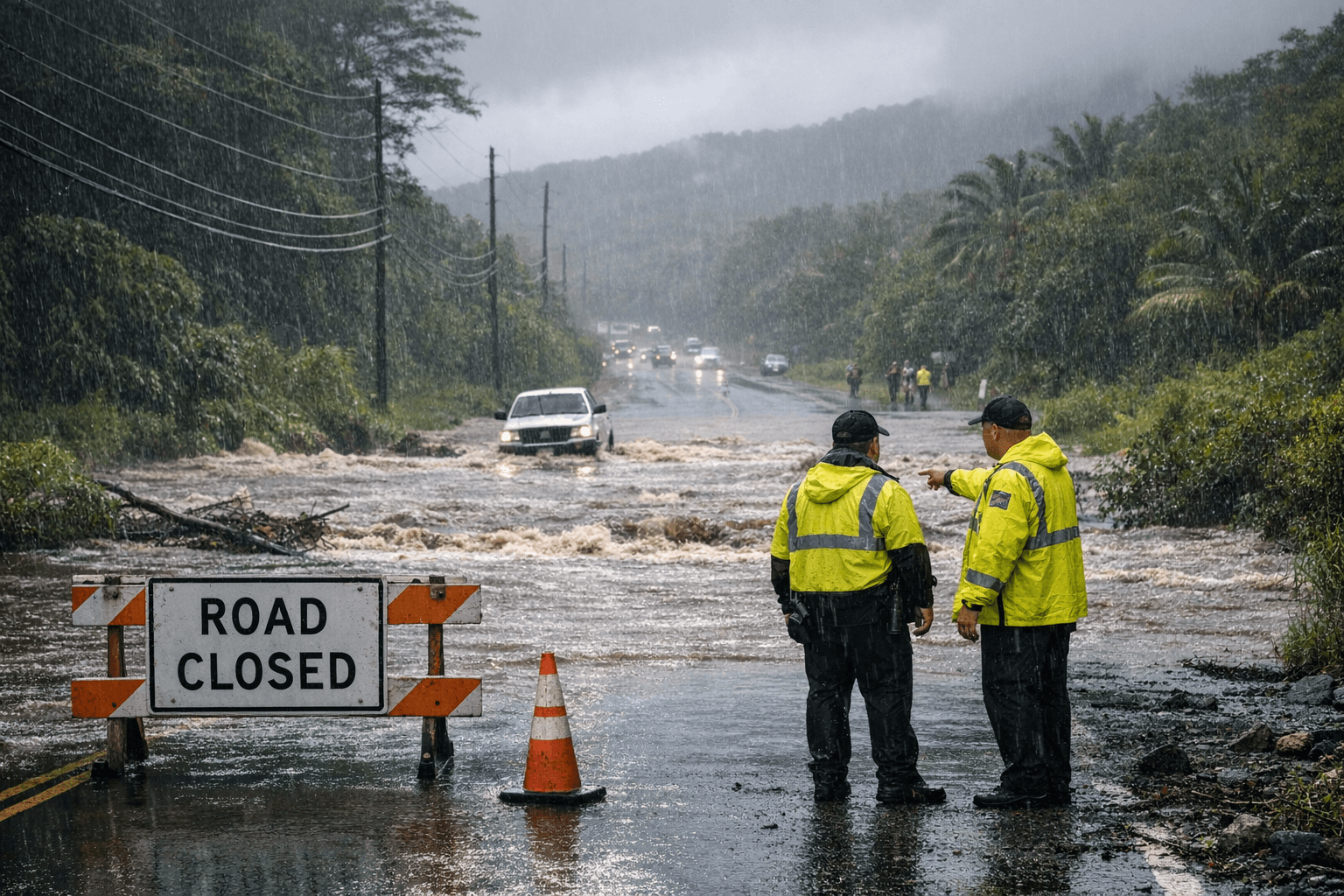
The National Weather Service issued a Flood Advisory and extended watches for eastern and southeastern Hawai‘i Island after a persistent upper-level low - commonly called a kona low - produced heavy rainfall across the island on Jan. 5–6. Radar showed rain rates of 1 to 2 inches per hour in communities including Hilo, Hawaiian Paradise Park, Honoka‘a, Volcano, Mountain View, Pāhoa and Kaʻū, creating conditions for rapid runoff and poor drainage.
Advisories warned of minor flooding of roads, low-lying areas and streams, and noted the potential for road closures. Hawaii County authorities closed a portion of Highway 11 in Kaʻū because of flooding or hazardous conditions, disrupting access on a key south island route. Local roads in Pāhoa, Mountain View and parts of Hilo saw standing water and localized travel impacts as crews monitored conditions.
The heaviest rains fell over densely settled and circulation-sensitive areas where drainage infrastructure can be overwhelmed by concentrated storms. For residents that means neighborhoods built on valley floors, along stream channels and in subdivision lots with limited drainage are most at risk of short-duration flooding. Commuters and emergency responders faced slower travel and detours where county crews implemented closures or placed warning signs.
Institutionally, the sequence underscored how rapid storm evolution during kona low events requires near-real-time coordination between the National Weather Service and county emergency management. The extended watches covered eastern and southeastern sectors of the island to give officials and the public time to react as radar updates tracked bands of heavy rain. Local emergency crews staged resources and monitored known flood-prone routes while public works assessed road conditions after water receded.
For the Big Island community the impacts are practical and local: delayed commutes, potential access interruptions for deliveries and services, and the recurring need to inspect property after intense rain. Residents in Kaʻū and Pāhoa who rely on Highway 11 for school, work or emergency travel experienced the most immediate disruption. Agricultural operations in low-elevation areas may contend with saturated soils that affect field access and equipment.
Our two cents? Treat standing water as impassable, avoid driving through flooded roadways, and keep gutters and drains clear to reduce backyard and driveway pooling. Monitor National Weather Service and Hawaii County emergency updates before traveling and plan alternate routes if you live in valley or low-lying areas. Staying aware and cautious will reduce the chance that a heavy kona low turns a bad commute into a dangerous situation.
Sources:
Know something we missed? Have a correction or additional information?
Submit a Tip