Home Depot Faces Multiple BIPA Lawsuits Over In-Store Facial Biometrics
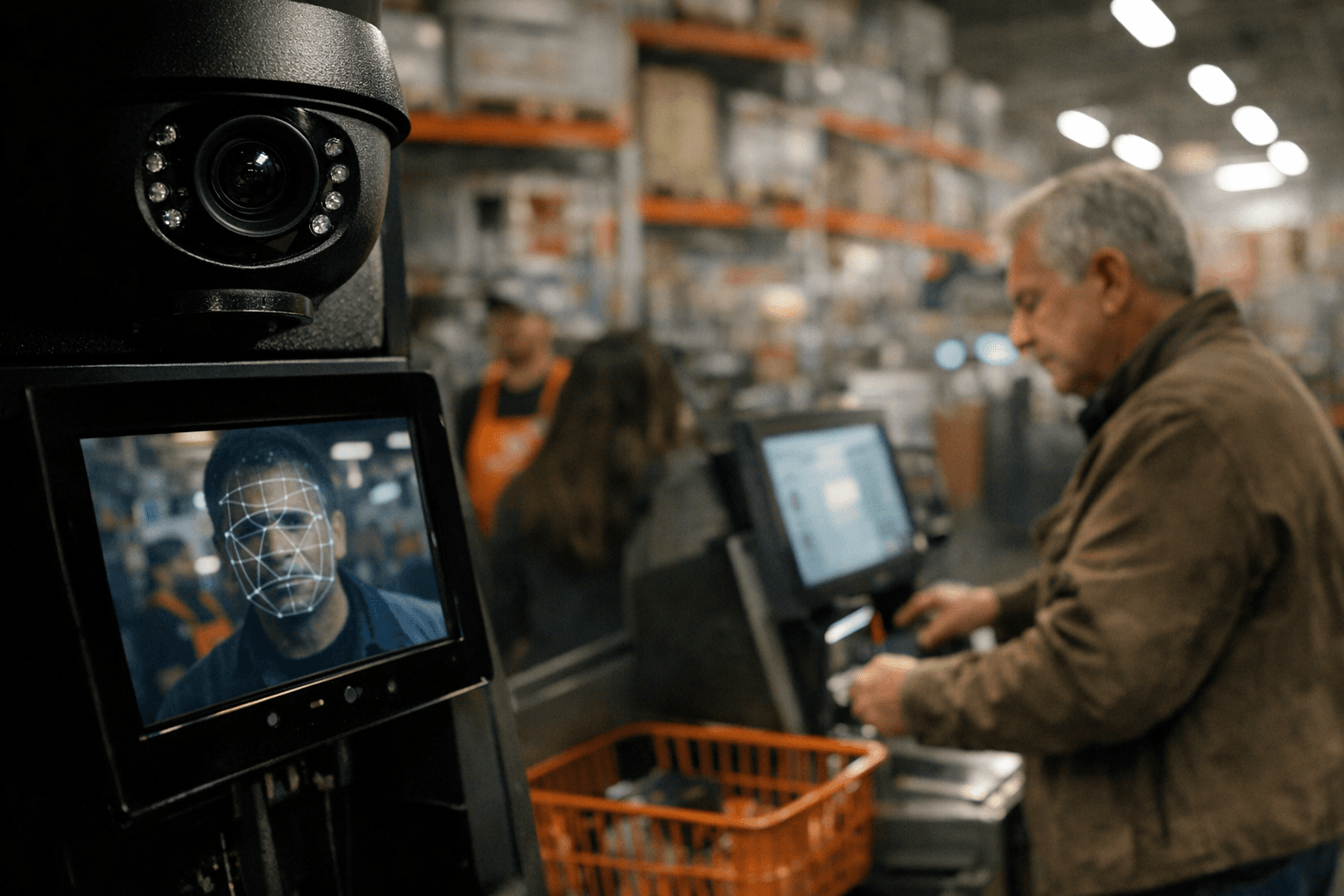
Multiple putative class actions filed in 2024–2025 allege Home Depot’s self-checkout systems or in-store cameras capture and process customers’ facial geometry and other biometric identifiers without the informed written consent required under Illinois’ Biometric Information Privacy Act. The litigation, active in several venues, raises immediate compliance and operational questions for store managers, hourly associates, and vendors about signage, consent practices, and use of image analytics.
Multiple putative class actions brought in 2024 and 2025 claim Home Depot’s in-store surveillance and self-checkout camera systems capture biometric identifiers, including facial geometry, and convert images into biometric templates without the informed written consent that Illinois law requires. Plaintiffs allege the company’s deployment of surveillance and AI-driven image processing produces biometric data that was collected and used without the disclosures and consent mandated by the Biometric Information Privacy Act, commonly referred to as BIPA.
The suits are procedurally active across several courts, reflecting a broader wave of litigation against retailers that use in-store image analytics and automated facial recognition tools. Legal challenges under BIPA typically focus on whether biometric identifiers were captured, whether consumers were given the statutorily required written disclosures and opportunity to consent, and whether retention and security practices meet statutory standards. Plaintiffs in this wave have sought class-wide relief and statutory remedies under Illinois law.
For Home Depot employees and store-level managers, the litigation has practical implications. Loss prevention, self-checkout monitoring, and other routine duties can be affected if stores are asked to change camera settings, disable analytic functions, or add prominent disclosures and consent mechanisms. Frontline associates may need additional training on when cameras are active for analytics purposes, how to respond to customer questions about privacy, and any new protocols for managing video or image data. Signage and point-of-sale disclosures could require updates, and store teams will need clear guidance to avoid inconsistent messaging to customers.
The disputes also put a spotlight on vendor relationships. Retailers that rely on third-party hardware and software for video analytics will face scrutiny over contracts that allocate responsibility for compliance, data retention, and notification obligations. Technology agreements and procurement practices are likely to be reviewed to ensure vendors cannot expose retailers to statutory liability through undisclosed biometric processing.
Beyond compliance exposure, the litigation could reshape operational trade-offs. Disabling certain analytics to reduce legal risk could limit tools used for shrink prevention and customer service, while implementing consent processes might disrupt seamless self-checkout experiences. For store employees, those shifts translate into changes in daily workflows and customer interactions.
As the cases proceed, retailers with in-store imaging and AI-driven analytics will be watching closely. The outcomes will inform how stores balance privacy compliance with operational needs, and what safeguards are required to protect both customer data and the workers who implement store policies.
Sources:
Know something we missed? Have a correction or additional information?
Submit a Tip