How Railroads, Rivers, and Springs Shaped Decatur County Towns
Decatur County’s modern map reflects 19th-century decisions about transportation, natural resources, and public institutions. Understanding how rail access, river bottomlands, and community churches guided town formation informs preservation priorities, land-use planning, and civic engagement today.

Decatur County was organized in November 1845 and named for Commodore Stephen Decatur. The county’s early settlement pattern tracked the lay of the land: fertile river bottomlands along the Tennessee River attracted agriculture and commerce, while sandier ridge soils inland supported smaller farming communities. Those physical differences, combined with later transportation investments, determined where towns grew and where county government and services concentrated.
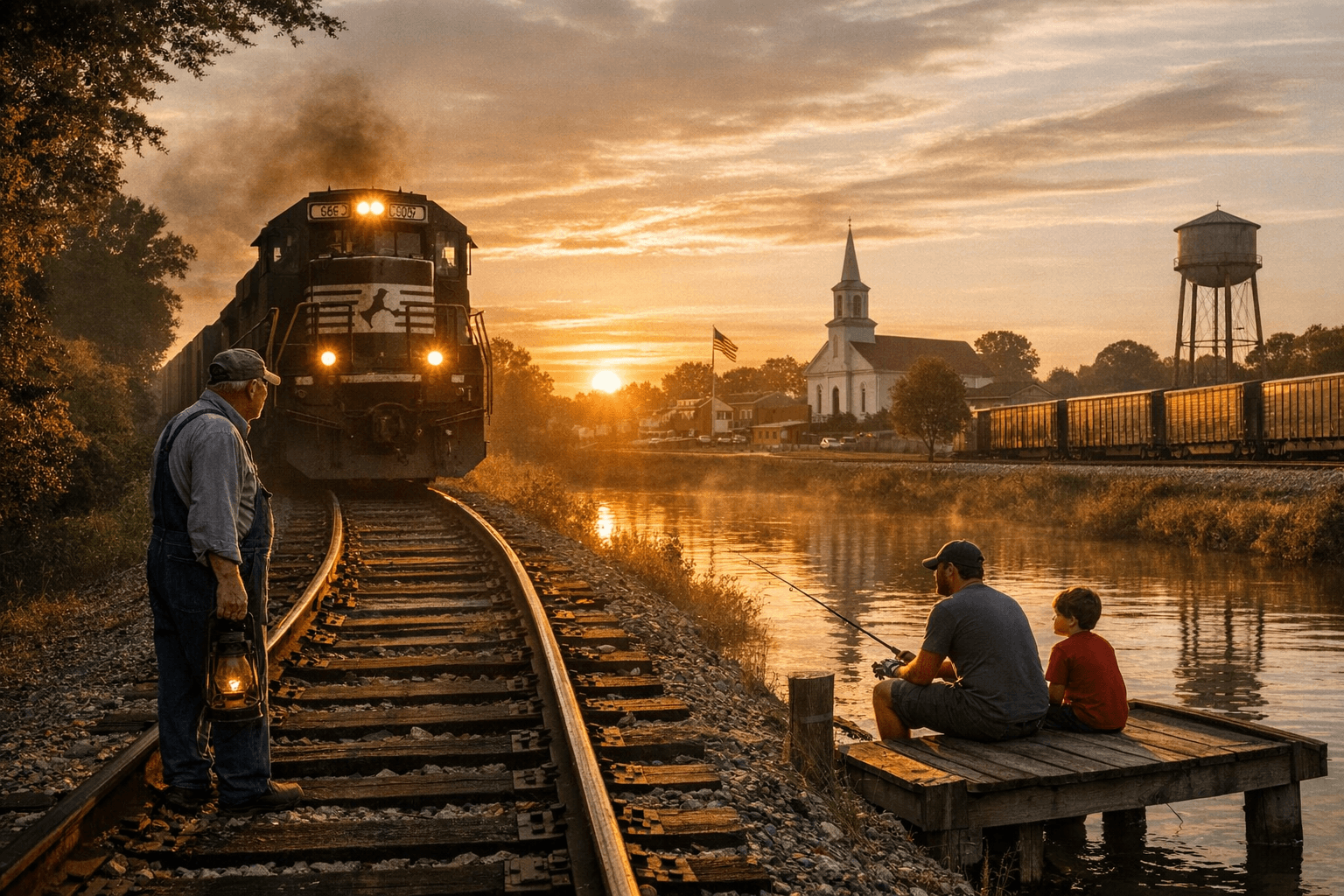
Parsons emerged as the county’s largest town after a pivotal land donation in 1889. Landowner Henry Myracle conveyed acreage to the Tennessee Midland Railroad Company, and the arrival of rail access prompted the subdivision of parcels into lots and a planned town layout. Rail connectivity accelerated Parsons’ commercial development and anchored it as a regional hub; that historical origin remains visible in the town’s street pattern and property boundaries.
In the county’s southern reaches, Bath Springs developed around natural sulphur springs discovered by Dr. William Hancock. The springs supported a small health resort in the late 19th and early 20th centuries and served as a local commercial node with a post office. Smaller communities such as Beacon, historically recorded as Moray, and Bear Creek grew as agricultural and transport nodes, with churches like Bear Creek Baptist and New Hope Baptist often established on donated land and serving dual religious and civic roles. Those congregations, many with 19th-century origins, functioned as centers for social gatherings, education, and local governance before more formal public institutions developed.
Public institutions consolidated around Decaturville, where courthouse-centered governance shaped county administration and civic life. Historical references show a pattern of school property transfers and building additions in the early 20th century, reflecting population shifts and evolving education priorities. These changes illustrate how infrastructure, from rail lines to schoolhouses, redistributed political influence and civic participation across the county.
For residents and policymakers, these histories are more than antiquarian detail. They affect contemporary decisions about historic preservation, tourism development, zoning, and economic strategy. Maintaining accurate records of cemetery locations, church congregations, and historic structures supports family-history research and can inform grant applications and heritage tourism plans. County government and planners should consider how past patterns of access and land use continue to influence service delivery and voter geography.
Local researchers and residents seeking deeper documentation can consult transcriptions and primary materials, and contact the Decatur County Historical Society or local libraries for archival records. Reviewing county-era secondary sources and WPA-era materials will also help community groups, schools, and officials develop preservation priorities and civic-engagement initiatives informed by the county’s settlement history.
Sources:
Know something we missed? Have a correction or additional information?
Submit a Tip