How to Lube Mechanical Switches, Make Your Board Sound Deeper
This practical tutorial shows how to choose lubricants, set up a lubing station, open and lube MX style switches, and reassemble them to improve feel and sound. Followed correctly this process reduces scratch, prevents over lubing, and moves your keyboard toward a deeper, less pingy thock that many builders seek.
Mechanical keyboard tuning starts with choosing the right lubricant and a steady routine. For stems and housings, Krytox GPL 205g0 is a common choice for linears because its thicker texture smooths travel and helps create a fuller sound. Tribosys variants are useful when you want to preserve tactile character while reducing scratch. Use thin oils specifically for springs, and reserve heavier greases for parts that benefit from more damping.
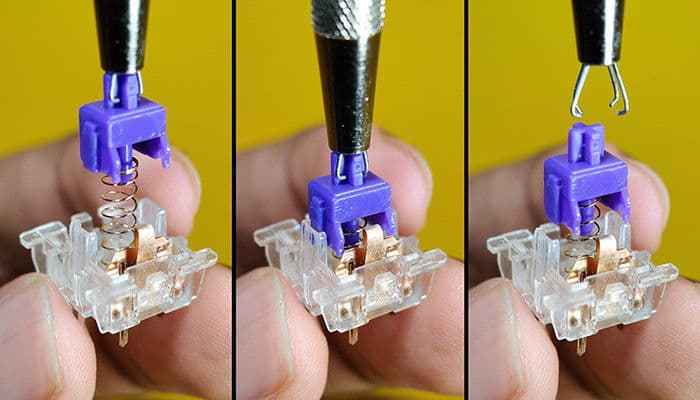
Prepare a clean lubing station with good lighting, trays or silicone mats to catch small parts, switch openers if you have them, tweezers, a fine brush, and small containers for lube. Work over a towel or tray and keep a parts bin labeled with tops, bottoms, stems, springs, and plates. Use a switch opener to speed the process, or carefully pry switches open by hand if you need to conserve tools.
Open a single switch first and test your method. Apply lube sparingly to stems and housing rails with a fine brush, using consistent strokes rather than blobs. For linears, a light coat of Krytox GPL 205g0 along the stem rails and the housing contact points smooths travel and deepens the tone. For tactiles, focus lighter Tribosys applications on the rails while avoiding the tactile leaf that forms the bump. Springs are best bag lubed; add a few drops of thin oil to a small plastic bag with the springs and shake until coated. This prevents over lubing and keeps springs consistent.
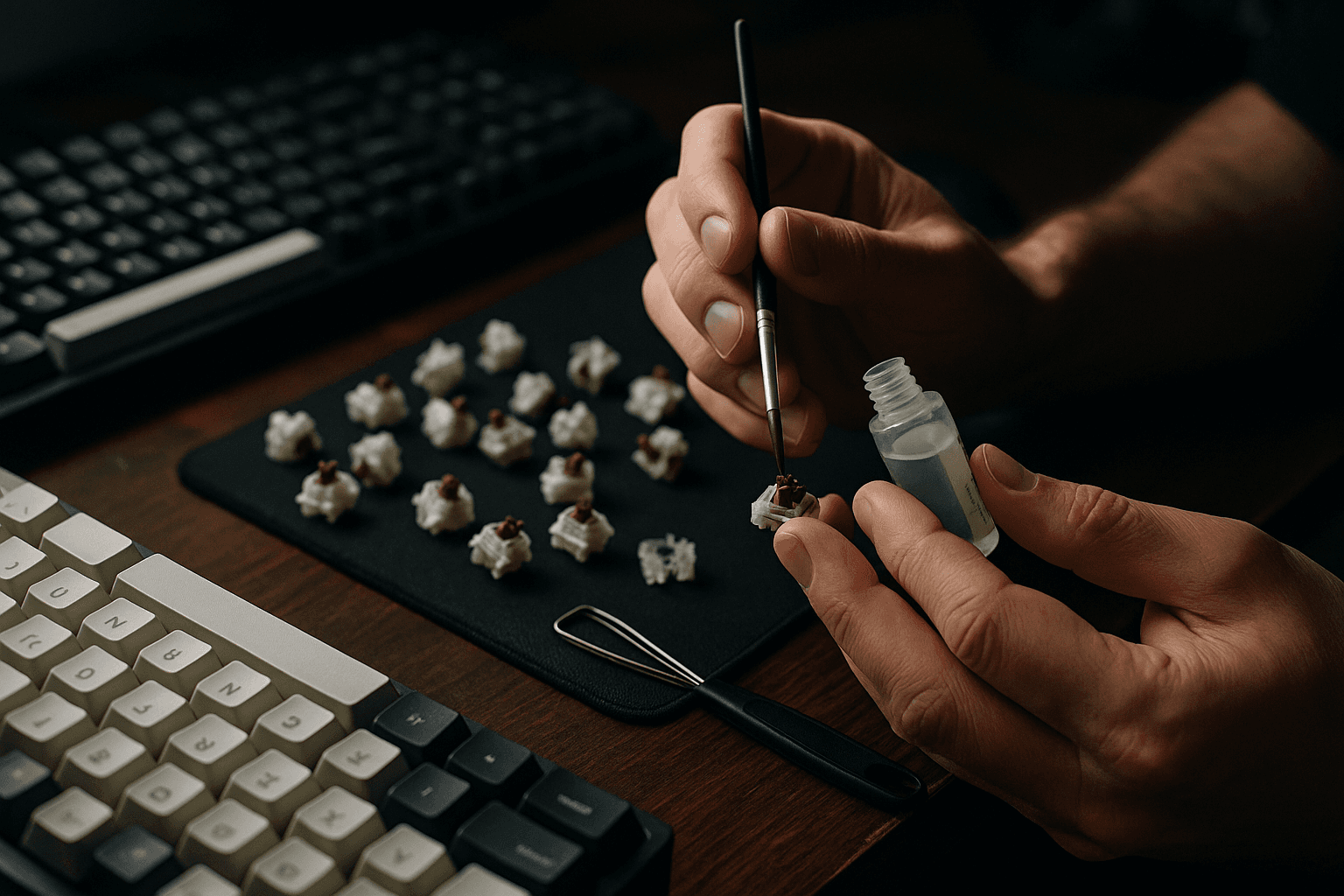
Reassemble and test the single switch on your board to evaluate feel and sound before committing to a full set. Avoid over lubing, which muffles tactility and creates sluggish response. Consistent strokes and measured amounts produce predictable results. Consider filming housings to reduce side to side wobble, and use housing mods and stabilizer lubing to reduce ping and rattle. Those mods, paired with careful lube choices and technique, help shape a deeper, less pingy thock that many builders prefer.
Practice on a small batch, keep notes on products and quantities, and adjust by ear. The process rewards patience, and a methodical approach delivers smoother travel, crisper acoustics, and a more refined typing experience.
Sources:
Know something we missed? Have a correction or additional information?
Submit a Tip