Hurricane‑force Winter Storms Cut Power to Hundreds of Thousands in Northern Europe
A series of fierce winter storms, led by Storm Goretti, struck northern Europe on January 8–9, 2026, knocking out electricity to hundreds of thousands of households, disrupting transport and forcing school closures. The scale of outages and extreme conditions has renewed scrutiny of grid resilience, emergency planning and the economic costs of increasingly volatile weather.

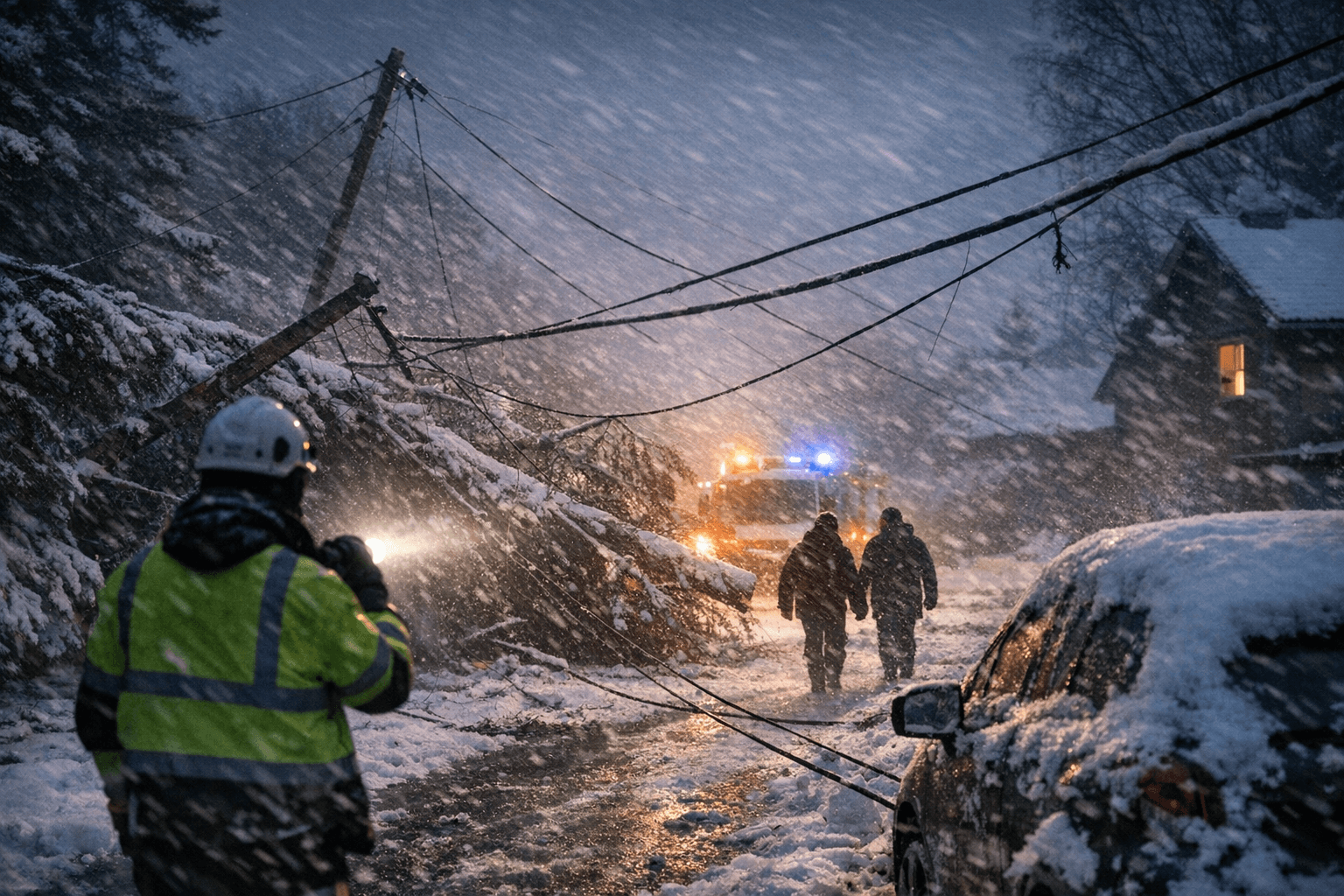
Storm Goretti and companion low‑pressure systems barreled across northern Europe on January 8 and 9, bringing hurricane‑force winds, heavy snow and coastal surges that left roughly 445,000 households without power at the peak of the crisis and caused multiple fatalities. France’s grid operator Enedis said about 380,000 households lost electricity at the storm’s height, while British utilities reported roughly 65,000 customers without power across the United Kingdom. Officials said at least eight deaths across the region had been linked to the extreme weather as of January 8.
Winds and waves battered western French coasts, with very large waves reported at harbors and authorities in Manche urging residents to shelter, avoid driving and prepare emergency lighting and drinking water. French and British transport networks experienced widespread disruption, with roads, ferries and some rail services suspended and schools closed in affected areas. In Germany the national weather service warned of up to 15 centimetres of snow in the north and icy risks in the south, forecasting impacts on hospitals, schools and transport links.
The Balkans saw heavy snow and torrential rain that produced localized flooding. Police in the Albanian port city of Durrës recovered a man’s body from floodwater after days of severe conditions, underscoring the human toll beyond the immediate infrastructure failures. Emergency services across the region mounted responses to fallen trees, flooded roads and downed power lines while urging residents to limit travel until conditions eased.
The immediate economic impacts were concentrated in disrupted commerce and emergency costs, but the event also highlighted vulnerabilities in energy systems. Short, sharp outages can push spot power prices higher, strain backup generation and lead to costly emergency repairs. Insurers and utilities will monitor claims and outage patterns closely; similar past episodes, including large US winter outages, have prompted regulatory and investment responses in grid hardening and demand management. Policymakers will face pressure to accelerate investment in insulation, distributed generation and network automation to reduce future storm exposure.
Climate context complicates planning. Weather experts noted that a warming climate raises average temperatures even as powerful winter storms remain possible. As one commentator, Mr. Walter, observed: “It’s still possible to have a cold month with snow, even as temperatures rise due to climate change, but such events will become rarer in the future.” That framing matters for long‑term infrastructure choices: systems must be resilient to extremes that may become less frequent but still severe when they occur.
The episode also recalls historical precedents where winter weather stressed power systems at scale. In the United States, a 2021 winter crisis left millions without power and produced a heavy human and economic toll, illustrating how failures in preparedness and grid flexibility can amplify impacts.
As temperatures moderate and crews restore service, attention will turn to damage assessments and the policy choices needed to reduce exposure to future storms. For households, the immediate message from authorities remained practical: heed local warnings, preserve emergency supplies and expect intermittent service restoration as operators prioritize the most critical networks.
Know something we missed? Have a correction or additional information?
Submit a Tip