Indiana Senate Prepares Final Vote On Contested Redistricting Plan
The Indiana Senate is scheduled to cast a decisive vote today on a Republican drawn mid decade congressional map that would reshape the state's nine U.S. House districts and could eliminate Democratic representation. The outcome will reverberate beyond state lines, shaping the 2026 midterm battleground and testing national pressure on local lawmakers.
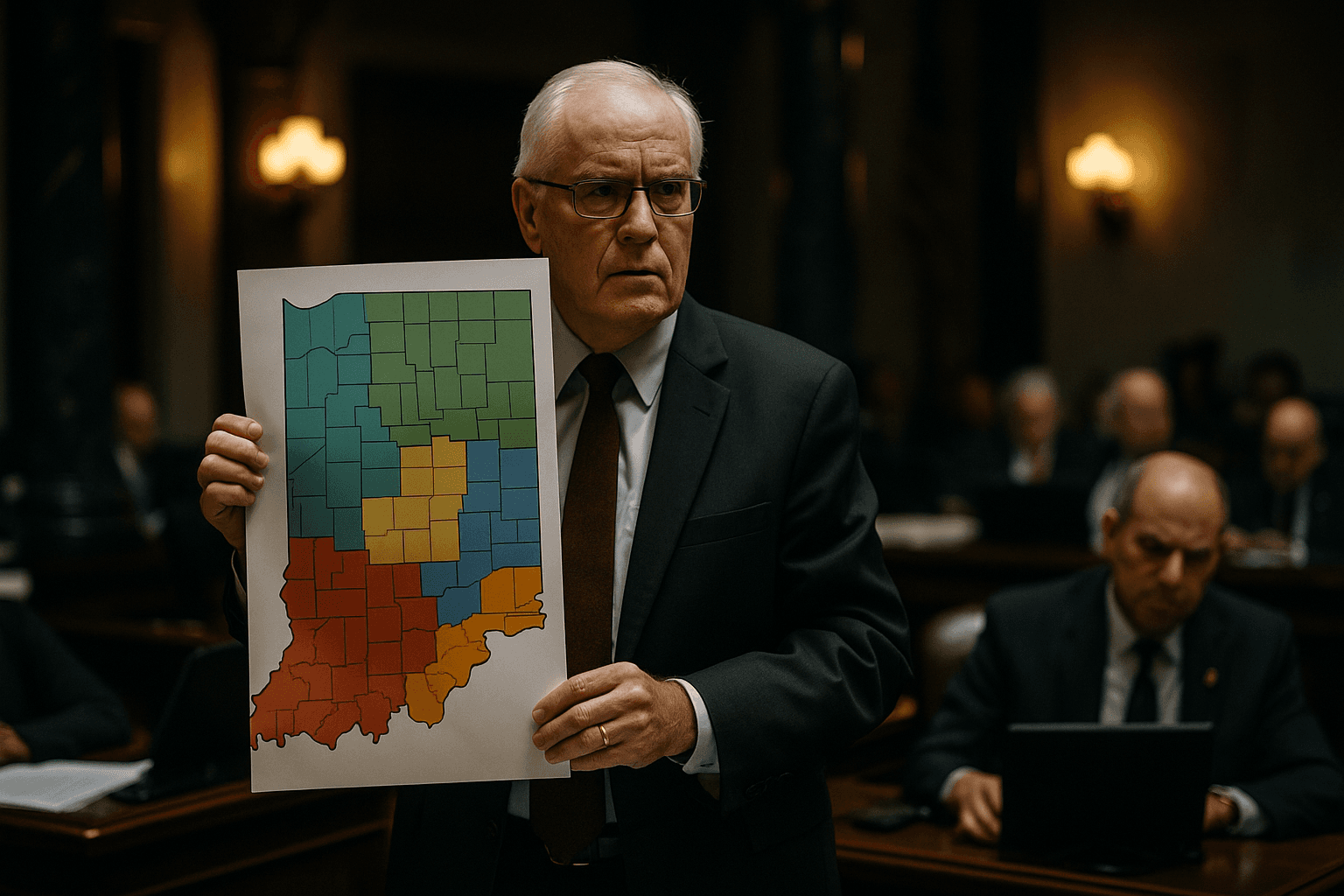
The Indiana Senate is scheduled to take a decisive vote today on House Bill 1032, a Republican drawn mid decade congressional redistricting plan that would redraw all nine U.S. House districts to favor Republicans. Backers say the plan would convert the state's current seven to two Republican advantage into a nine to zero Republican delegation, a change supporters say could net Republicans two seats in the 2026 midterm elections.
The bill reached the Senate after the House approved it on a 57 to 41 vote, a tally that included 12 Republicans joining all Democrats present in opposition. A Senate committee advanced the plan to the floor on a 6 to 3 vote after more than six hours of public testimony. One Republican senator, Greg Walker, joined two Democrats in voting against that committee pass along and later said he had received threats in the course of the debate.
Senate leaders reversed an earlier decision not to meet, reconvening to begin formal consideration of HB 1032. If the bill moves from first reading on the floor, senators will have the opportunity to offer amendments, the measure will be engrossed and then face final passage. Legislative officials and reporters described the final vote as expected this afternoon, but several Republican senators who supported moving the bill in committee signaled they may change their votes after floor debate, with some saying "whatever happens, happens."
The stakes are clear. Republicans now hold seven of Indiana's nine seats in the U.S. House while Democrats hold two. The Republican plan would redraw Indianapolis and other population centers in ways that backers argue will produce partisan parity at the state level while critics say the map dismantles Democratic incumbency and dilutes urban voting blocs. Representative André Carson's Indianapolis based district was identified by critics as being drastically broken apart under the proposed configuration.
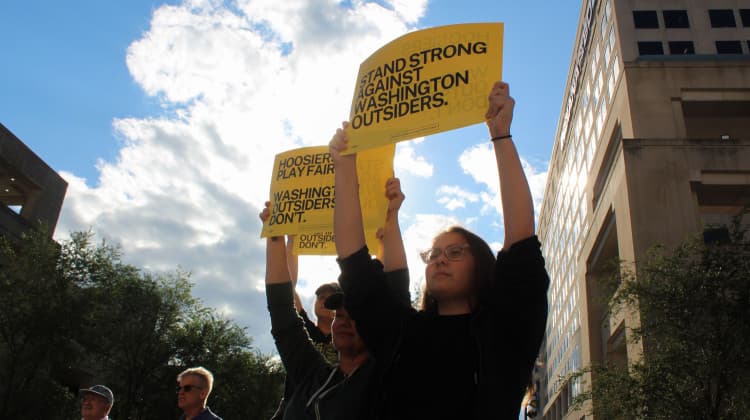
The redistricting push has unfolded amid visible public confrontation and sustained national pressure. Protesters have gathered at the Statehouse for months, including a demonstration photographed on September 18 and a pro redistricting rally on December 5. President Donald Trump publicly and privately urged Indiana lawmakers to back the GOP friendly mid decade redraw, part of a wave of high profile interventions in state map making this year. Observers have linked Indiana's effort to a broader national pattern of partisan mid decade adjustments in several states.
Lawmakers voiced mixed reactions within the Republican caucus. Some expressed unease over overturning a map adopted just four years earlier and noted institutional concerns about the precedent of mid decade redistricting. Reporters noted that roughly one quarter of Republican state senators had not declared their positions as the session moved toward a final vote, creating significant uncertainty about the bill's fate.
If the Senate approves HB 1032, the legislation would return to the House for any concurrence and then to the governor's desk. Legal challenges are likely if the map becomes law, ensuring the dispute will extend beyond the chamber and into courts and the next campaign cycle. The vote today will be an immediate test of party cohesion in Indiana and a bellwether for the influence of national actors on state level map making.
Know something we missed? Have a correction or additional information?
Submit a Tip