Trump Orders Federal Push to Block State AI Regulations
President Trump signed an executive order establishing a national AI policy framework that directs federal agencies and the Justice Department to challenge state AI rules the administration deems obstructive. The move elevates litigation as the primary tool for asserting federal control over technology regulation and sets up a likely legal and political confrontation with states and civil society.

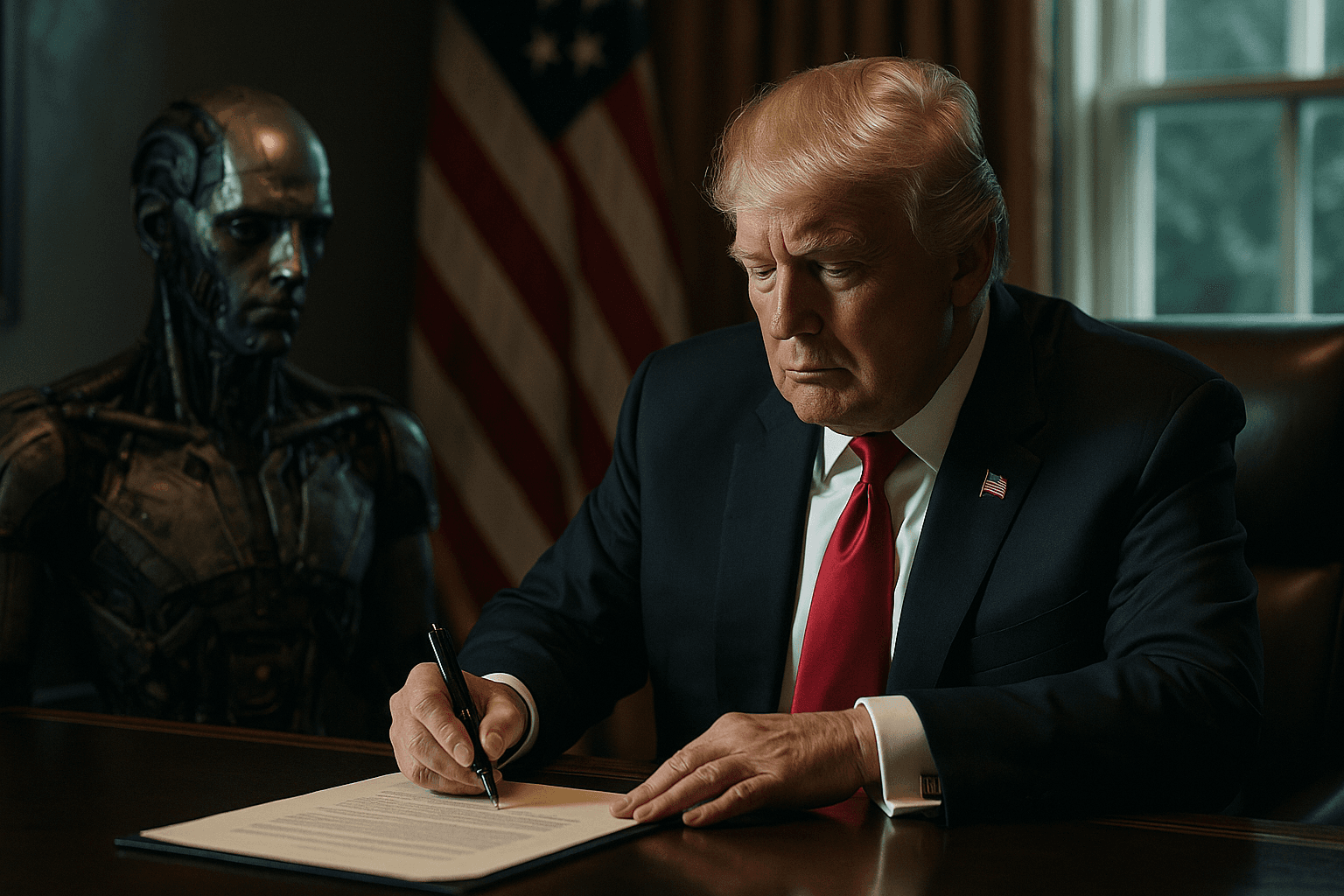
President Trump on Dec. 11 signed an executive order that establishes a national policy framework for artificial intelligence and directs federal officials to preempt state regulations they consider obstructive. The measure creates a Justice Department AI Litigation Task Force charged with identifying state laws the administration labels “onerous” and initiating legal challenges, administration officials told reporters in the Oval Office, according to contemporaneous reporting.
The order frames its purpose around economic arguments favored by industry, using language cited in commentary that the policy should ensure American AI companies are “free to innovate without cumbersome regulation” and should “remove barriers to American AI leadership.” The White House has described the move as a response to a growing patchwork of state measures that it says could undercut U.S. competitiveness in a global contest with China.
Practically, the order tasks federal agencies with a new, aggressive role in policing state regulatory activity and directs the newly formed Justice Department unit to pursue litigation against targeted state laws. The litigation focused strategy represents a departure from efforts to resolve disputes through federal legislation or cooperative federalism, and places courts at the center of an intergovernmental dispute over who sets the rules for a fast moving technology sector.
The initiative won immediate praise from major technology firms and trade groups that have lobbied for a single national framework rather than a collection of state rules. Multiple outlets reported that companies view a unified federal approach as preferable to a diverse regulatory landscape. At the same time the order sparked sharp pushback from state officials and civil society groups. Several states have already enacted AI related statutes, including California, Colorado and New York. California’s governor responded forcefully, and the BBC reported that some critics characterized the White House action as a continuation of what they called “ongoing grift.”
Legal scholars and state officials have signaled that the policy will quickly be tested in court. Coverage from GovTech and other outlets quoted experts who predicted that the executive order could face significant legal challenges on separation of powers and federalism grounds, arguing it may exceed executive authority to unilaterally displace state regulatory power. The administration’s choice of litigation as its main instrument ensures that the constitutional boundaries between state and federal authority will be litigated in the lower courts and possibly reach appellate panels and the Supreme Court.
The political consequences are uncertain but consequential. Lawmakers from both parties have urged stronger federal oversight of AI, while civil liberties and consumer groups have pressed for more regulation not less. State attorneys general and legislatures that have moved to regulate AI now face a decision point about whether to defend those laws in court and mobilize voters and advocacy networks around state sovereignty and consumer protection.
In the coming weeks the task force is expected to identify initial targets and file suits. That litigation timeline will determine whether the order reshapes the regulatory landscape through court rulings, prompts congressional action to clarify federal authority, or simply ignites protracted disputes that leave regulatory uncertainty in place as the industry continues to evolve.
Sources:
Know something we missed? Have a correction or additional information?
Submit a Tip