Investors Price Fed Cut, Global Stocks Rise and Dollar Strengthens
Global equities climbed and the U.S. dollar firmed on Dec. 5 as markets increasingly priced an approaching Federal Reserve interest rate cut, a shift that could alter returns across stocks, bonds and commodities. Investors were encouraged by resilient U.S. labor market signals, including initial jobless claims falling to a multi year low, though incoming inflation metrics will be decisive for Fed timing and the wider market trajectory.
LONDON NEW YORK — Global equity markets moved higher on Dec. 5 as investors continued to reposition for what they expect will be an easing cycle from the U.S. Federal Reserve, while the dollar strengthened alongside the rally. The move reflected a complex mix of confidence that monetary easing could support growth and caution that inflation readings could still derail the outlook.
Market participants pointed to fresh U.S. labor market data as an important underpinning for risk appetite. Initial jobless claims fell to a multi year low, underscoring continued labor market resilience even as traders bet on policy easing. That combination has left markets in a suspenseful place, with risk assets rising on the prospect of lower rates but remaining highly sensitive to upcoming inflation releases that could change the Fed calculus.
Treasury yields displayed a split reaction as the front end priced in nearer term rate cuts while longer dated yields traded on growth and geopolitical news. The mixed yield picture signaled that investors were balancing expectations for policy accommodation with concerns about growth momentum and external risks. The result was active reshuffling in fixed income portfolios as managers sought to lock in yield while hedging duration exposure against a possible inflation surprise.
Commodities were similarly volatile. Oil prices reacted to a combination of geopolitical headlines and evolving growth expectations, leaving markets attentive to supply risk even as demand forecasts were adjusted for a lower rate environment. Precious metals also moved in response to changes in the dollar and real rate expectations, reflecting their traditional roles as both risk diversifiers and inflation hedges.

Portfolio strategists said the path and pace of Fed easing remained the dominant theme for asset allocation decisions heading into December’s key economic releases. With futures markets implying a significant chance of easing in the months ahead, investors are recalibrating exposures to higher growth and lower yield scenarios. That reallocation is evident in cross asset flows and sector rotations that favor cyclically sensitive areas should a cut materialize.
Policy makers face a persistent trade off. The labor market continues to show strength, yet inflation readings remain the crucial variable that will determine whether the Fed can move promptly. Analysts noted that softer inflation prints would likely accelerate rate cuts, supporting equities and lowering real yields, while stronger inflation data could delay easing and reintroduce volatility into risk assets.
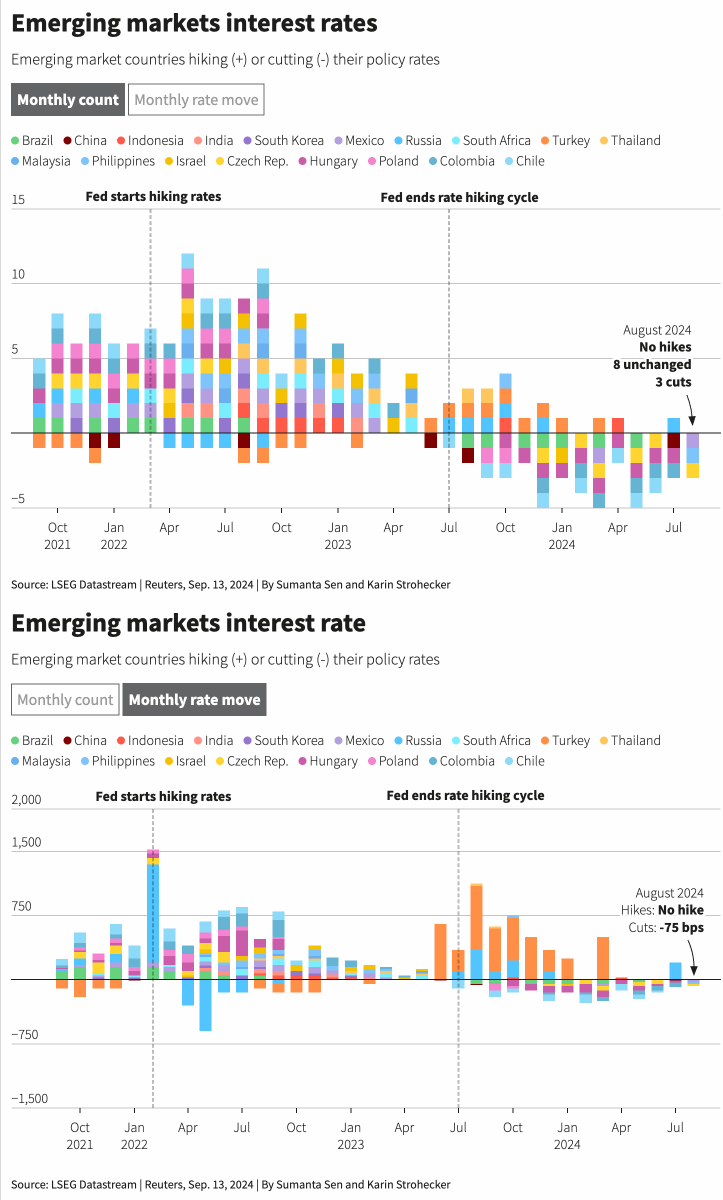
For markets, the immediate implication is heightened sensitivity to U.S. macro releases. Over the medium term, sustained expectations of lower rates would reshape asset valuations, bolster borrowing conditions globally and influence currency dynamics, particularly for emerging market assets that are sensitive to U.S. interest rate differentials. Investors said they would watch the incoming inflation metrics closely for any signal that could reset the policy timeline and global market positioning.