Jack Smith to testify publicly on Trump investigations next week
Former special counsel Jack Smith will appear before the House Judiciary Committee on Jan. 22 to discuss two high-profile probes into Donald Trump. The hearing heightens partisan oversight battles.
House Judiciary Committee Chairman Rep. Jim Jordan announced on Jan. 14 that former Justice Department special counsel Jack Smith will testify in public on Jan. 22 at 10 a.m. ET about the two criminal investigations he led into President Donald Trump. The appearance follows an eight-hour closed-door deposition on Dec. 17, 2025, whose transcript and video the committee subsequently released.
Smith’s testimony was initially taken behind closed doors after Republicans on the committee declined repeated requests from the special counsel to speak in public. Committee Democrats, led by Rep. Jamie Raskin, criticized that decision and welcomed Jordan’s reversal. Lanny Breuer, an attorney representing Smith, said Smith “has been clear for months he is ready and willing to answer questions in a public hearing” and welcomed the opportunity to testify openly.
The two investigations at the center of the hearing examined Trump’s alleged efforts to overturn the 2020 election and his handling of classified documents at his Mar-a-Lago estate in Palm Beach, Florida. Those probes resulted in two separate indictments that together contained 44 criminal charges, but the prosecutions were dismissed or abandoned in 2024 after Trump’s November 2024 election victory. Smith and other Justice Department officials have pointed to internal legal opinions that they say barred indicting a sitting president as the reason prosecutions were not pursued while Trump remained in office.
In closed-door testimony, Smith told lawmakers that his election-interference investigation “developed proof beyond a reasonable doubt that President Trump engaged in a criminal scheme to overturn the results of the 2020 presidential election,” a point that is expected to figure prominently in public questioning. Democrats view the hearing as an overdue public airing of both investigative findings and prosecutorial rationale; Republicans have long framed Smith’s work as politically motivated and President Trump has repeatedly called for Smith to be prosecuted since returning to office.
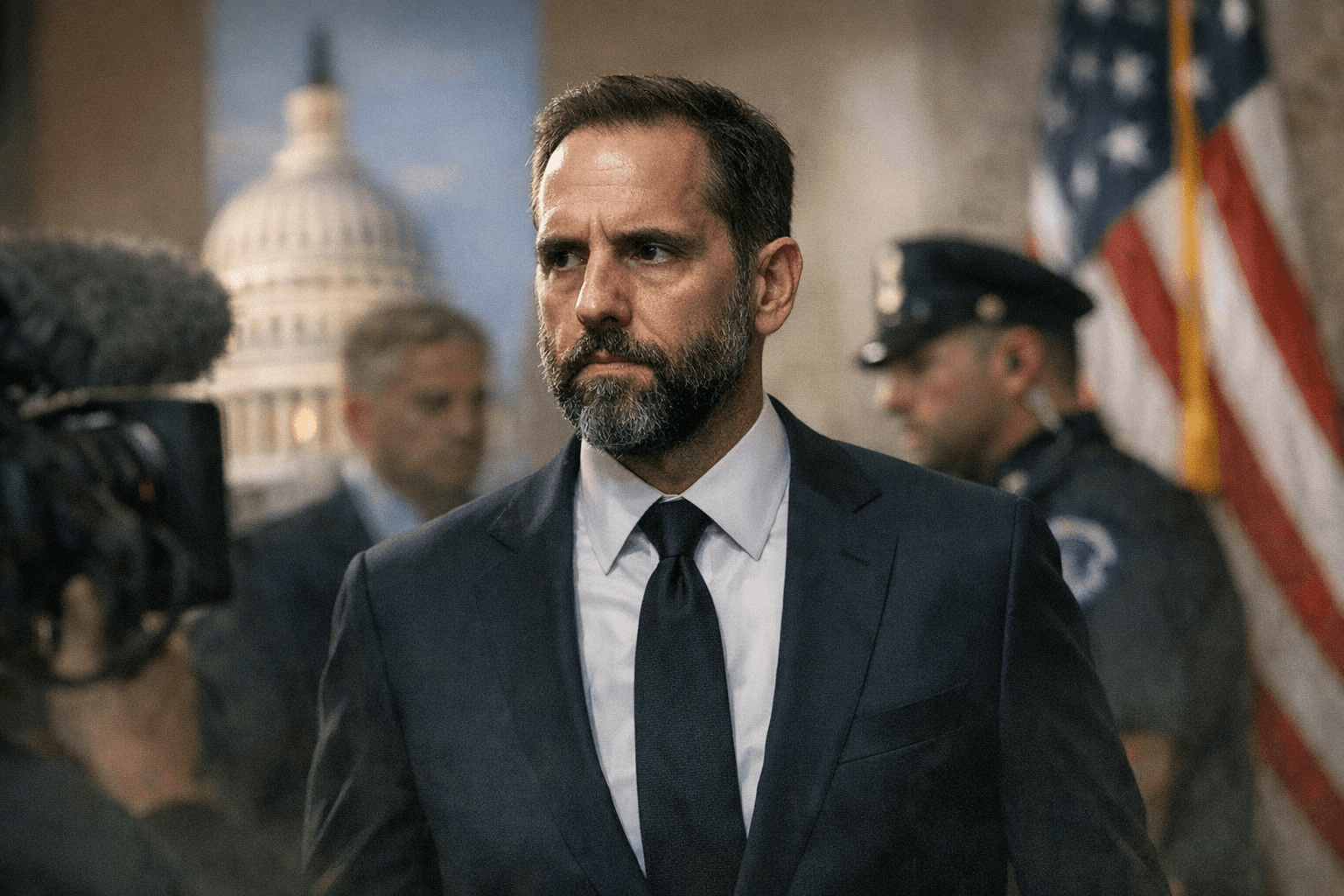
Legal limits on what Smith can disclose are likely to constrain the session. During the December deposition Smith said the Justice Department restricted parts of his testimony, citing legal constraints and court orders that kept some evidence under seal. Committee Republicans released the deposition materials, but those transcripts already suggested lines of inquiry that both parties will press publicly next week.
The staged confrontation will test the capacity of congressional oversight to illuminate or obscure federal prosecutorial decision making in a hyperpartisan environment. For Republicans, public questioning offers a platform to challenge prosecutorial choices and press the narrative of bias; for Democrats it provides space to detail the evidence that led to the indictments and to defend the independence of investigators.
The Jan. 22 hearing will likely draw intense media attention and serve as a flashpoint in broader debates about the Justice Department, presidential accountability, and the role of Congress in supervising criminal prosecutions. With the transcript of the December session already available and legal constraints shaping what can be revealed, the public hearing will measure how much new detail can be introduced into a fraught national conversation about law and politics.
Know something we missed? Have a correction or additional information?
Submit a Tip