James Hoffmann's One-Cup V60 Technique Clarifies Home Brewing Science
James Hoffmann, World Barista Champion, author, and educator, offers a data-driven, step-by-step one-cup V60 method that home baristas widely use to dial in consistent brews. His tutorials break the brew down into measurable elements—dose, bloom weight and time, pulse pours, and pouring speed—so readers can reproduce results and understand the reasons behind each choice.
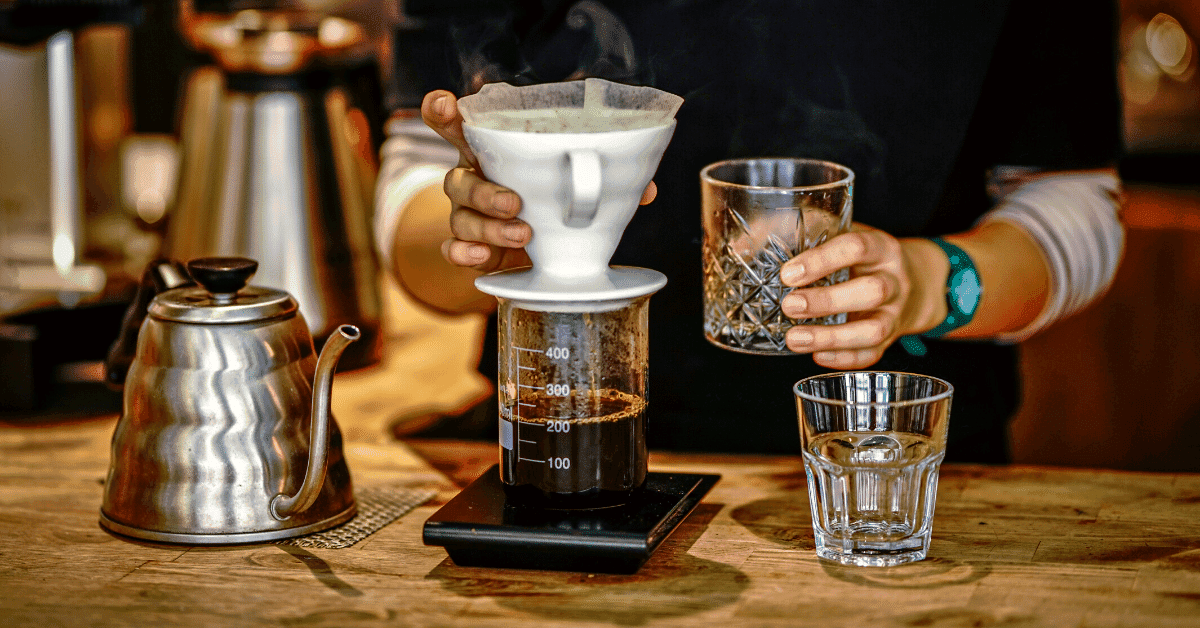
James Hoffmann’s approach to the one-cup V60 focuses on reproducibility and explanation, turning what can feel like guesswork into a methodical routine. The technique centers on measurable variables: how much coffee you dose by weight, how much water you use to bloom and for how long, the structure of pulse pours, and the speed at which you pour. Together these elements give home brewers control over extraction and flavor.
Start with a scale and a burr grinder. Weigh the coffee dose, set a consistent grind that matches your equipment, and use the scale to measure water throughout the brew. The bloom is a deliberate initial pour that wets the grounds to release trapped gases; Hoffmann’s workflow specifies a bloom weight and a short bloom time so you can reproduce the same starting conditions every time. After the bloom, the technique prescribes pulse pours rather than one continuous pour. Pulse pours let you manage agitation and flow rate, helping keep the bed of coffee even and the contact time predictable. Pouring speed is treated as another variable: faster pours reduce contact time and can mute sweetness, while slower pours increase extraction and can emphasize body and clarity.
The practical value is immediate. If your cup tastes underdeveloped, adjust grind finer or lengthen total contact time. If it tastes over-extracted or bitter, coarsen the grind, quicken pours, or shorten the overall brew. Because Hoffmann ties each step to the underlying physics and chemistry of extraction, adjustments are not guesses but informed experiments. Home baristas can document dose, bloom weight and time, pour cadence, and pouring speed to compare runs and converge on a preferred profile.

For community relevance, the technique functions as a shared vocabulary. When home brewers exchange recipes they can reference the same measurable points, making troubleshooting and collaboration more efficient. The method also scales: while targeted at a one-cup V60, the principles apply to other pour-over sizes and devices if you maintain ratios and timing.
Hoffmann presents these ideas in accessible tutorials and in his books, where demonstrations and explanations show the reasoning behind each decision. For anyone seeking a repeatable, science-informed route to better single-cup V60s, adopting a weigh-centered, timed, pulse-pour routine provides clear next steps and faster progress toward consistently excellent coffee.
Sources:
Know something we missed? Have a correction or additional information?
Submit a Tip
%3Astrip_icc()%2Fstarbuckspistachio-66e7ade562264fffb048b8975ea766c7.png&w=1920&q=75)