January Aircraft Operations Announced for Volcanoes Park Invasive Control
On January 7 Hawaiʻi Volcanoes National Park posted a schedule of aircraft operations planned for January to support invasive species control, aerial mapping, native plant surveys, petrel monitoring, and fence-line inspections. The notice was intended to alert nearby residents and park users to potential aircraft noise and to emphasize that dates and times may change due to aircraft availability and weather.
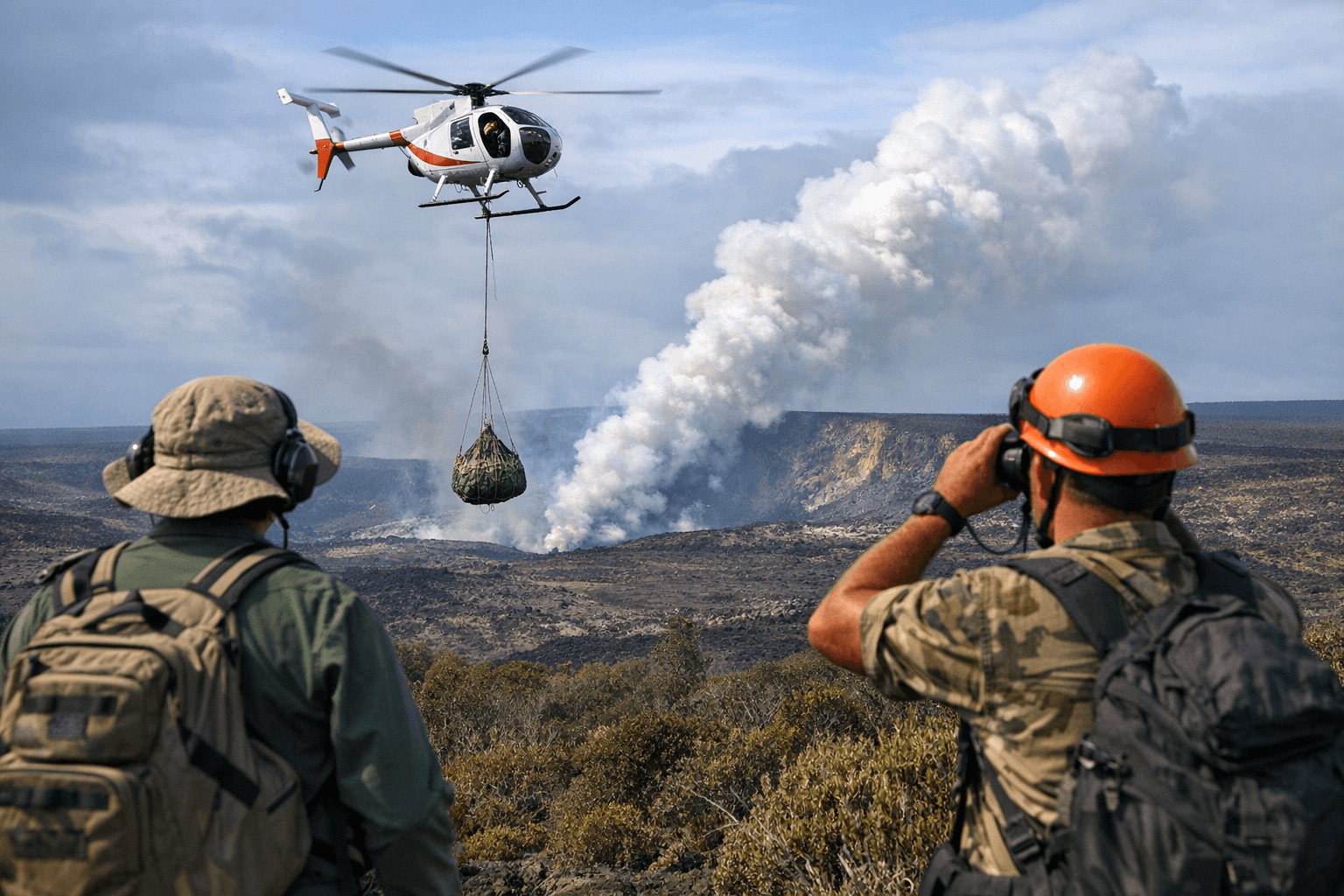
Hawaiʻi Volcanoes National Park notified the public on January 7 that aircraft will be active over portions of the park during January as part of a range of conservation and infrastructure tasks. Park managers scheduled flights to address invasive species, carry out aerial mapping, monitor seabirds, conduct native plant surveys and seed collection, and inspect fence lines on Mauna Loa and surrounding areas.
Planned operations specified several targeted efforts. Aircraft-supported work will include guinea grass control and fountain grass mapping, activities aimed at limiting the spread of invasive grasses that alter native ecosystems and increase fire risk. Crews will also conduct native plant surveys and seed collection in the East Rift Zone, supporting restoration work that bolsters culturally and ecologically important species. Petrel monitoring was scheduled to aid ongoing efforts to track seabird populations and nesting behavior, while fence-line surveys on Mauna Loa will assess infrastructure that protects vulnerable habitats and livestock areas. Additional flights were planned for invasive-tree control near Pepeiao.
The park warned that aircraft noise may be noticeable to residents and visitors, and that specific dates and times could change based on aircraft availability and weather conditions. The advisory was issued to give advance notice to nearby communities, residents who live downwind of flight paths, and park users who may be hiking, camping, or conducting fieldwork in affected areas.
Local impact will be practical and ecological. Short-term effects include intermittent low-flying aircraft and increased noise, which can disrupt outdoor activities and daily routines for residents in windward and mauka areas. Longer-term benefits are intended to reduce invasive species that fuel wildfires, protect native plants and birds, and maintain fence lines that help manage grazing and land access. For communities that value cultural stewardship of native forests and coastal ecosystems, the operations support restoration priorities that intersect with traditional practices and local livelihoods.
The park emphasized that operations are part of routine and targeted conservation work during the wet season, when aerial access can be crucial for reaching remote or hazardous terrain. Residents and park users were reminded to anticipate possible changes to the schedule and to plan outdoor activities with the potential for aircraft presence in mind.
Sources:
Know something we missed? Have a correction or additional information?
Submit a Tip