Japan ends megaquake advisory for northeastern coast, one week after quake
Japan’s authorities lifted a rare special advisory for the northeastern Pacific coast on Dec. 16, ending a weeklong period of heightened alert after a magnitude 7.5 quake struck off Aomori on Dec. 8. The move reduces immediate evacuation pressure, but officials urged continued preparedness as recovery and economic assessments begin.
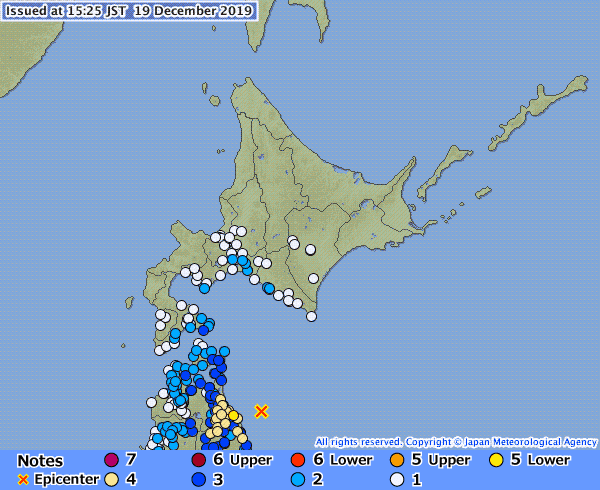
Japan’s Meteorological Agency and the Cabinet Office announced on Dec. 16 that they had lifted a special “megaquake” advisory for the country’s northeastern Pacific coast, roughly one week after a magnitude 7.5 earthquake struck off the coast of Aomori Prefecture on the night of Dec. 8. JMA data reported by Xinhua placed the quake’s hypocenter at a depth of about 54 kilometers, and the event prompted tsunami warnings for parts of Hokkaido, Aomori and Iwate prefectures.
The advisory, formally named the Off the Coast of Hokkaido and Sanriku Subsequent Earthquake Advisory, was introduced in December 2022 as part of a layered warning system developed in the wake of the March 11, 2011 Tōhoku disaster. Officials said the special alert, which does not require mandatory evacuations but places residents on standby for immediate action if conditions worsen, was terminated at midnight on Monday. Authorities nevertheless emphasized continued vigilance and urged households to keep emergency kits and review evacuation routes and plans.
In the days after the magnitude 7.5 event, JMA recorded another notable earthquake, a magnitude 6.7 shock off the northern Pacific coast, reported by NHK and international broadcasters. That quake, cited by JMA and NHK as occurring at about 11:44 a.m. local time on the Friday following the Dec. 8 event, occurred at an estimated depth of about 20 kilometers and briefly prompted a tsunami advisory that was later lifted.
Human impacts reported in the immediate aftermath varied by source. Xinhua said more than 40 people were injured in northeastern and northern Japan, while BBC and Al Jazeera reported at least 50 injured. BBC also reported that more than 6,000 people were evacuated from several coastal areas in Aomori Prefecture. Local authorities have been lifting tsunami notices as the threat subsided, while clearing and damage assessments continue along affected stretches of coast.
Policy makers framed the advisory’s deployment and its lifting within a larger preparedness strategy. The special system was created based on lessons from 2011 and was previously used in 2024 for the southern Pacific coast relating to the Nankai Trough. Government risk estimates cited by Al Jazeera underline the stakes for Japan’s emergency planning, noting that a major Nankai Trough quake and tsunami scenario could cause catastrophic losses with government figures estimating as many as 298,000 deaths and economic damage up to 2 trillion dollars.
Economically the immediate episode is likely to concentrate effects at the local level, disrupting coastal fishing, port operations and small business activity while prompting extra costs for emergency services and temporary shelter. Longer term implications depend on damage tallies and whether reconstruction demands trigger larger fiscal responses. Insurers and regional authorities will reassess exposure, and national preparedness measures may influence budgetary planning ahead of the new year.
Officials said the advisory’s removal reflects a reduction in near term seismic risk in the specified area, but they urged residents to remain prepared. The episode tested the newer alert framework and underscored the persistent challenge Japan faces managing seismic risk in a densely populated and economically vital coastal region.
Know something we missed? Have a correction or additional information?
Submit a Tip