Kiefer Sutherland arrested after alleged assault on ride-hail driver
Actor Kiefer Sutherland is arrested after police say he assaulted a ride-hail driver and made criminal threats; he was booked and released on $50,000 bond. This case raises questions about celebrity accountability and worker safety.

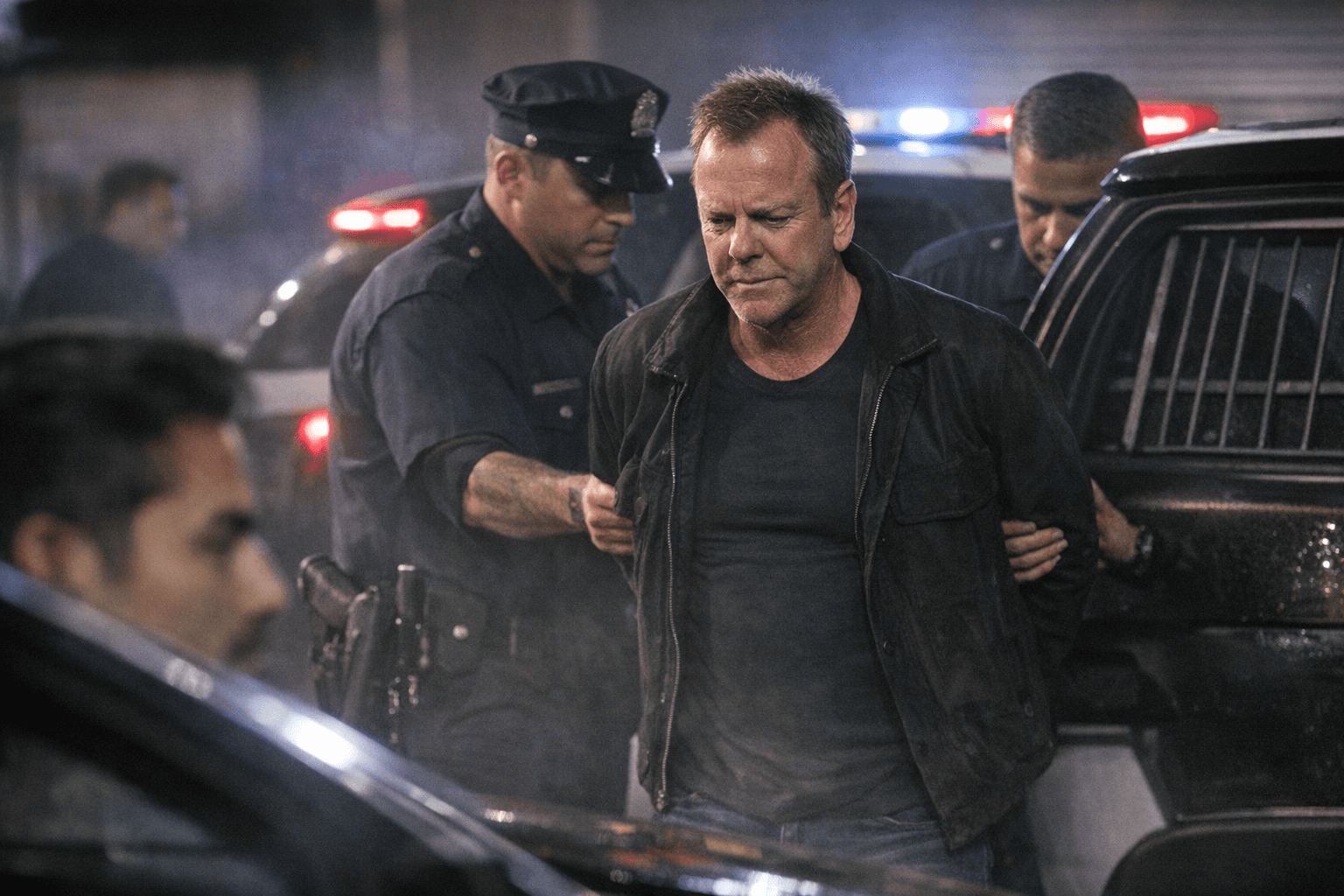
Kiefer Sutherland is arrested in Los Angeles after police say he entered a ride-hail vehicle, physically assaulted the driver and made criminal threats near the intersection of Sunset Boulevard and Fairfax Avenue in Hollywood. The Los Angeles Police Department says officers responded to a radio call about an assault just after midnight and that the driver did not require medical treatment.
The LAPD identified the formal charge as suspicion of criminal threats, and jail booking records show Sutherland was taken into custody, booked and released a few hours later after posting $50,000 bond. His initial court appearance is scheduled for Feb. 2, 2026, at the Los Angeles County Superior Court. Requests for comment to Sutherland’s representatives were not answered.
The arrest is significant both because of Sutherland’s profile and because it adds to a long history of legal encounters tied to alcohol-related incidents. Sutherland, a British-born Canadian actor and son of Donald Sutherland, rose to prominence as Jack Bauer on the television series 24 and is an Emmy winner with a decades-long film and television résumé. Public records and past reporting document prior convictions for drunk driving, including a 2007 sentence that included 48 days in jail, a 2004 conviction and other arrests stretching back to the 1990s; an assault charge in 2009 was later dropped and he was arrested on suspicion of DUI in 2020.
Beyond the immediate criminal procedure, the incident spotlights several broader industry and cultural dynamics. For talent with established careers, an arrest, even without serious physical injury to a victim, can trigger swift reputational and commercial consequences. Studios, networks and streaming platforms increasingly weigh legal troubles and public perception when deciding whether to promote, shelve or sever relationships with talent. Even when criminal charges are not ultimately prosecuted or proven, the reputational ripple effects can depress promotional activity, pause projects and complicate insurance and financing arrangements for film and television work.
Culturally, the case feeds into enduring conversations about celebrity accountability and the ways public figures are held to account for alleged misconduct. It also underscores power imbalances between gig-economy workers and well-known passengers: ride-hail drivers frequently operate without the protections or visibility of traditional employees, and incidents like this raise questions about training, incident reporting, and company policies that govern safety and dispute resolution.
There are social policy implications as well. Law enforcement responses, court scheduling and potential civil remedies will determine immediate outcomes, but the episode will likely prompt renewed scrutiny of how cities and platforms protect drivers and what recourse victims have. For the industry, the calculus will involve legal timelines, public sentiment and contractual clauses that allow partners to distance themselves while rights and processes play out in court.
As the case moves toward a February hearing, it will test how accountability, celebrity and the modern gig economy intersect in the public eye. The legal process will determine criminal outcomes; the longer-term professional and cultural consequences for Sutherland and for discussions about worker safety and celebrity conduct remain to be seen.
Know something we missed? Have a correction or additional information?
Submit a Tip