Kīlauea Eruption Paused; New Fountaining Likely January 8-14
Kīlauea’s Halemaʻumaʻu eruption is paused but summit inflation and low-level tremor indicate another lava fountaining episode is likely within the January 8-14 window. The Hawaiian Volcano Observatory has set the Volcano Alert Level to WATCH and Aviation Color Code to ORANGE, underscoring ongoing hazards to air quality, water catchments, park access, and local businesses.
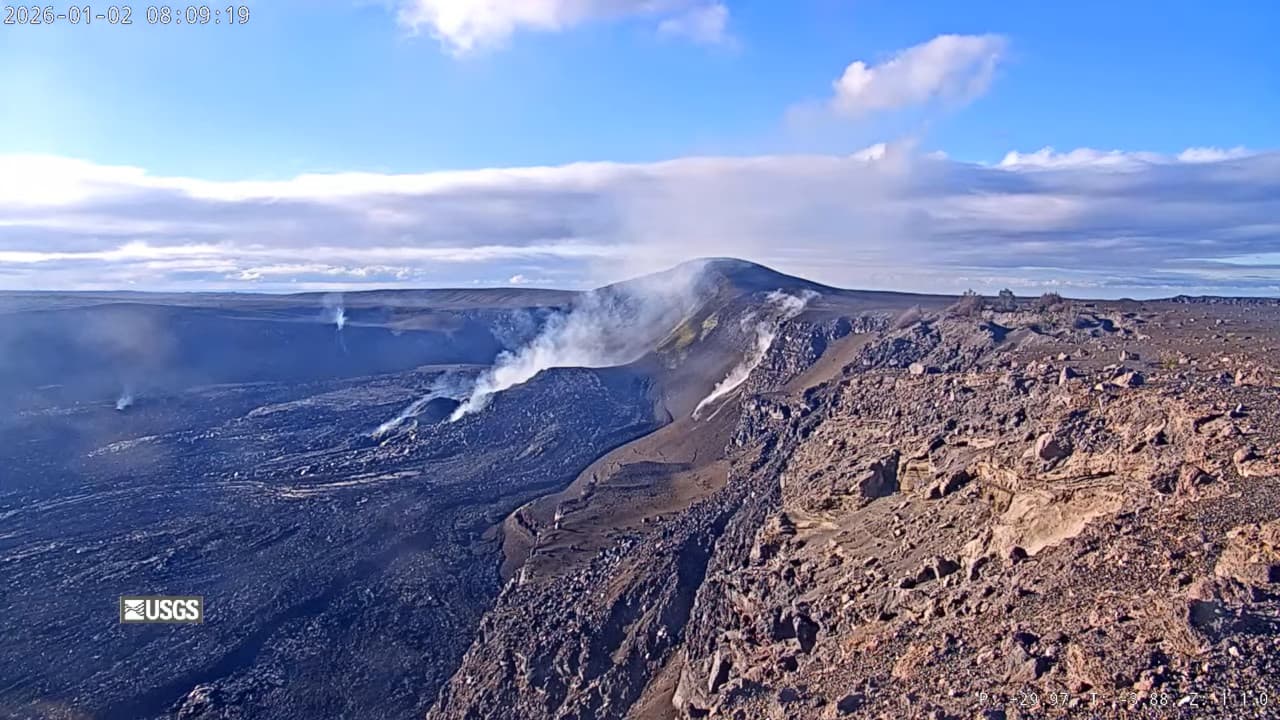
The Halemaʻumaʻu eruption at Kīlauea remains paused this morning, but monitoring data show enough unrest that scientists expect another lava-fountaining episode within the January 8-14 forecast window. The Hawaiian Volcano Observatory reports persistent glow at the crater’s south vent and intermittent glow at the north vent in overnight webcam views, while summit seismic and infrasound sensors continue to record low-frequency tremor at rates of one to three events every five to ten minutes.
Since the end of episode 39, the Uēkahuna tiltmeter has recorded 17.5 microradians of re-inflation beneath the summit. Volcanic gas emissions have declined from peak levels during the last episode but remain in the range of about 1,000 to 5,000 tonnes of sulfur dioxide per day. Forecasting models note that current inflation rates are significantly slower than those that preceded episode 39, and the forecast window may shift as further data are incorporated.
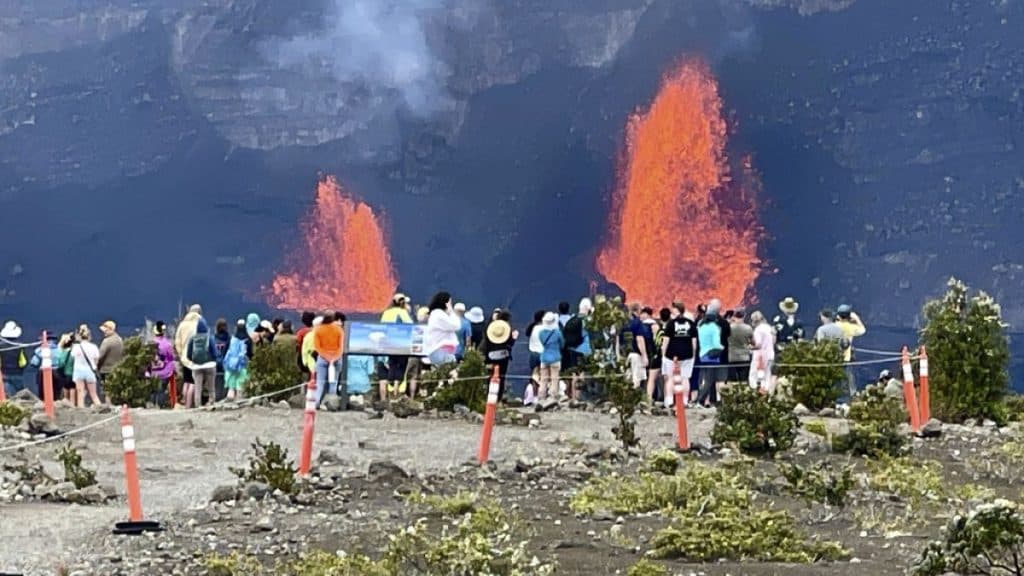
Episode 39 produced fountain heights estimated at roughly 1,400 feet from the south vent and about 900 feet from the north vent, with an estimated 12 million cubic yards of lava that covered approximately 50-60% of the floor of Halemaʻumaʻu crater. The eruption episodes occur inside a closed area of Hawaiʻi Volcanoes National Park, and HVO continues close coordination with park officials and Hawaiʻi County Civil Defense.

Local impacts center on air quality and fallout. Episodic SO2 emissions and vog can degrade respiratory health and reduce visibility; Pele’s hair and fine tephra are capable of traveling many miles and can contaminate household and agricultural water catchments. Residents who rely on rain-fed systems should take steps to protect collection surfaces and stored water. Crater rim instability, ground cracking and rockfalls present hazards near the summit and along access routes, reinforcing park closures and restricting fieldwork.
Economic implications are concentrated in tourism, agriculture and public health costs. Short-term park closures and air quality concerns can depress visitor numbers and strain small businesses that depend on steady tourist demand. Agricultural producers may face crop stress or cleanup costs after ash or vog episodes. Continued monitoring by HVO, and advance warnings tied to inflation and seismic trends, narrow uncertainty and help local agencies time community advisories to limit disruption. For now, residents should heed park closures, limit exposure during vog episodes, and safeguard catchment water supplies as Kīlauea’s summit remains restless.
Sources:
Know something we missed? Have a correction or additional information?
Submit a Tip