Kremlin Welcomes U.S. Security Strategy, Signals Cautious Diplomatic Hope
The Kremlin says the newly released U.S. National Security Strategy broadly aligns with some Russian perceptions, a shift in tone that Moscow publicly welcomes even as it warns about follow through inside Washington. The move matters because it could open limited diplomatic space on strategic stability and the war in Ukraine, while raising concern among European allies about U.S. emphasis and the durability of any rapprochement.
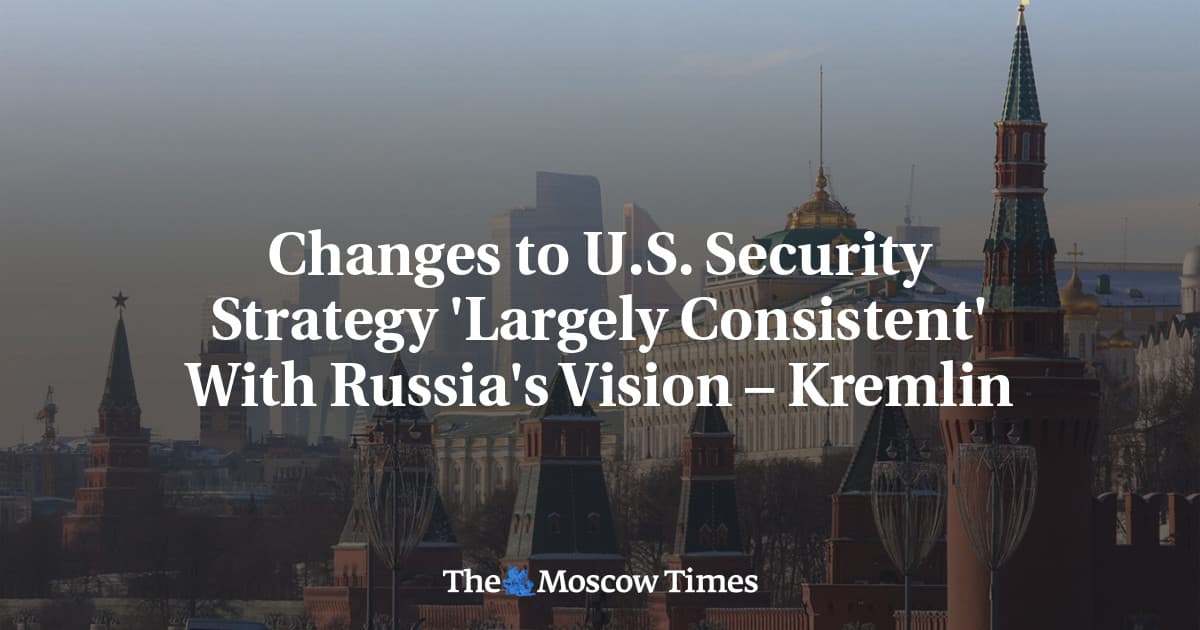
The Kremlin is signalling cautious optimism after Washington published a revised National Security Strategy earlier this week that stresses a desire to re establish strategic stability with Russia and suggests a negotiated end to the war in Ukraine. Kremlin spokesman Dmitry Peskov told Reuters that Moscow views the American document as largely consistent with some Russian perceptions, while also warning that much will depend on whether U.S. institutions and policy makers carry the approach through into practice.
The language in the U.S. strategy marks a tonal shift from recent years, when American policy texts and speeches emphasized competition and deterrence. By foregrounding strategic stability and a negotiated settlement as objectives, the administration is effectively acknowledging that differences with Moscow cannot be resolved purely through isolation or military means. For Moscow, the acknowledgement creates an opening for talks on arms control, risk reduction and potentially terms regarding the conduct or cessation of fighting in Ukraine.
European capitals have responded with ambivalence. Western European leaders have expressed concern about the U.S. document’s change of emphasis, worried that a renewed bilateral focus on Washington Moscow relations could leave European security priorities neglected or encourage concessions that undermine collective deterrence. That unease underscores the diplomatic tightrope the Biden administration faces in reconciling transatlantic unity with any effort to temper confrontation with Moscow.
Analysts say the Kremlin’s public welcome is both an effort to exploit the rhetorical shift and a signalling device to Western audiences. By praising the language while publicly cautioning about U.S. implementation, Moscow aims to keep options open. If the strategy is followed by concrete steps such as resumed arms control talks or a negotiated framework for ending hostilities, Russia could claim diplomatic gains without having to make immediate reciprocal concessions. If the approach falters, the Kremlin retains room to intensify pressure.
Legal and normative questions loom large. Any negotiation that seeks to alter the status quo in Ukraine must contend with international law, including principles of sovereignty and the prohibition on acquisition of territory by force. European states, and Ukraine itself, have insisted that any talks respect these norms. How Washington intends to balance strategic engagement with legal commitments to Ukraine remains a central, unresolved issue.
The U.S. document’s effect will depend on domestic political dynamics in both capitals and on allied reactions in Europe and beyond. For now, the Kremlin’s response signals that Moscow welcomes rhetorical change, but is wary of commitments that are not yet concrete. Diplomats in Brussels and Kyiv are preparing for a period of intense consultations as governments test whether the new language can be turned into verifiable steps that reduce the risk of escalation while preserving legal and strategic red lines.