Lake Montebello Sinkhole Repairs Cost Baltimore Nearly $30.4 Million
City officials disclosed that repairs to the Lake Montebello sinkhole totaled $30,387,683.93, nearly triple the originally authorized $11 million and consuming roughly 42% of Baltimore’s capital budget for stormwater improvements. The Department of Public Works failed to notify the Board of Estimates about emergency amendments for more than two years, raising concerns about transparency and oversight.
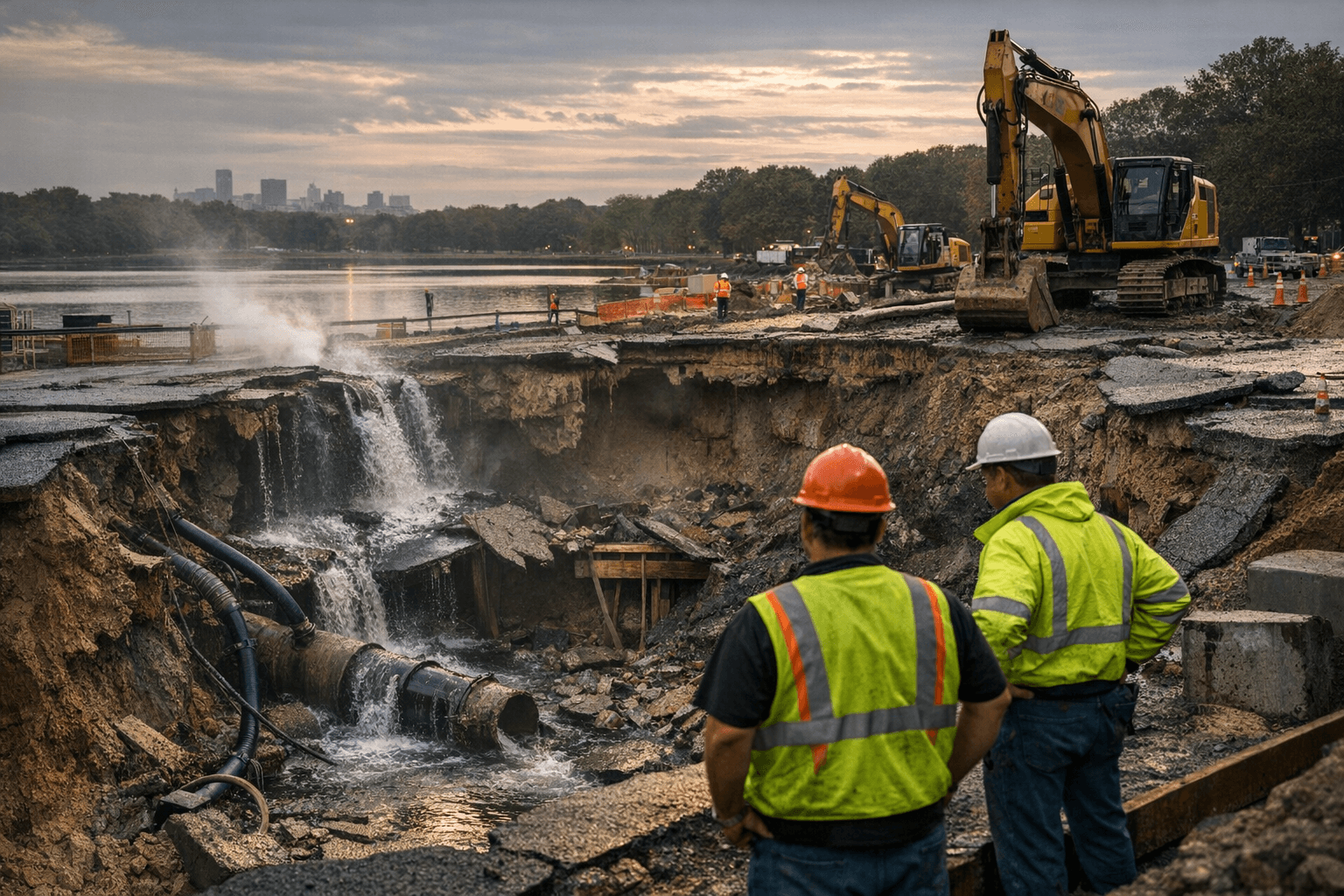
City officials revealed on January 7 that the Lake Montebello sinkhole repair project cost taxpayers $30,387,683.93, far above the original contract of $10,988,587.65. The work, authorized as an emergency procurement in February 2023 to protect a seven-foot water main serving about 300,000 customers, grew through five undisclosed amendments between 2023 and July 2025 that added nearly $20 million to the tab.
Public Works Director Matthew Garbark described the escalation bluntly: “It got worse and worse and worse,” and “and we kept . . . adding more money to it.” Garbark also said the expense amounted to 42% of the city’s capital budget for stormwater improvements, a significant drawdown on funds meant for broader infrastructure needs across Baltimore.
The emergency contract was awarded non-bid to Garney Construction of Fairfax, Va., after a sinkhole opened November 10, 2022, exposing a six-story-deep trench along a long-buried stormwater tunnel that carries Tiffany Run. That tunnel, part of a network of 1,146 miles of stormwater conduits mostly built before 1950, lies under much of the city. Soils shifted during construction in mid-2023, causing a second collapse and forcing crews to remove the equivalent of 7,500 truckloads of soil to stabilize the hillside. Workers ultimately installed a fiberglass polymer mortar pipe inside the brick masonry tunnel and rerouted the water main from the Montebello Water Filtration Plant.
City rules require the Department of Public Works to notify the Board of Estimates within 45 days whenever emergency procurements exceed preauthorized spending. Comptroller Bill Henry asked at the meeting, “Is this the first time this has come to the board for notation?” Deputy DPW Director Alan Robinson answered, “I would say, unfortunately, yes,” and called the omission “a procedural issue that we have identified internally.”
Robinson attributed the lapse to staff turnover and vacancies in procurement following the Covid pandemic, and said reforms are underway. “Once we established some stability in our procurement office, there have been some checks and balance put into play insofar as SOPs and other policy documents to make sure that we do not let this slide again and any future emergency authorizations are noted timely with the board,” he said. Robinson also noted a clerical error in the Board of Estimates agenda that listed the total twice as $3,038,763.93 when “it should have read $30,387,683.93.”
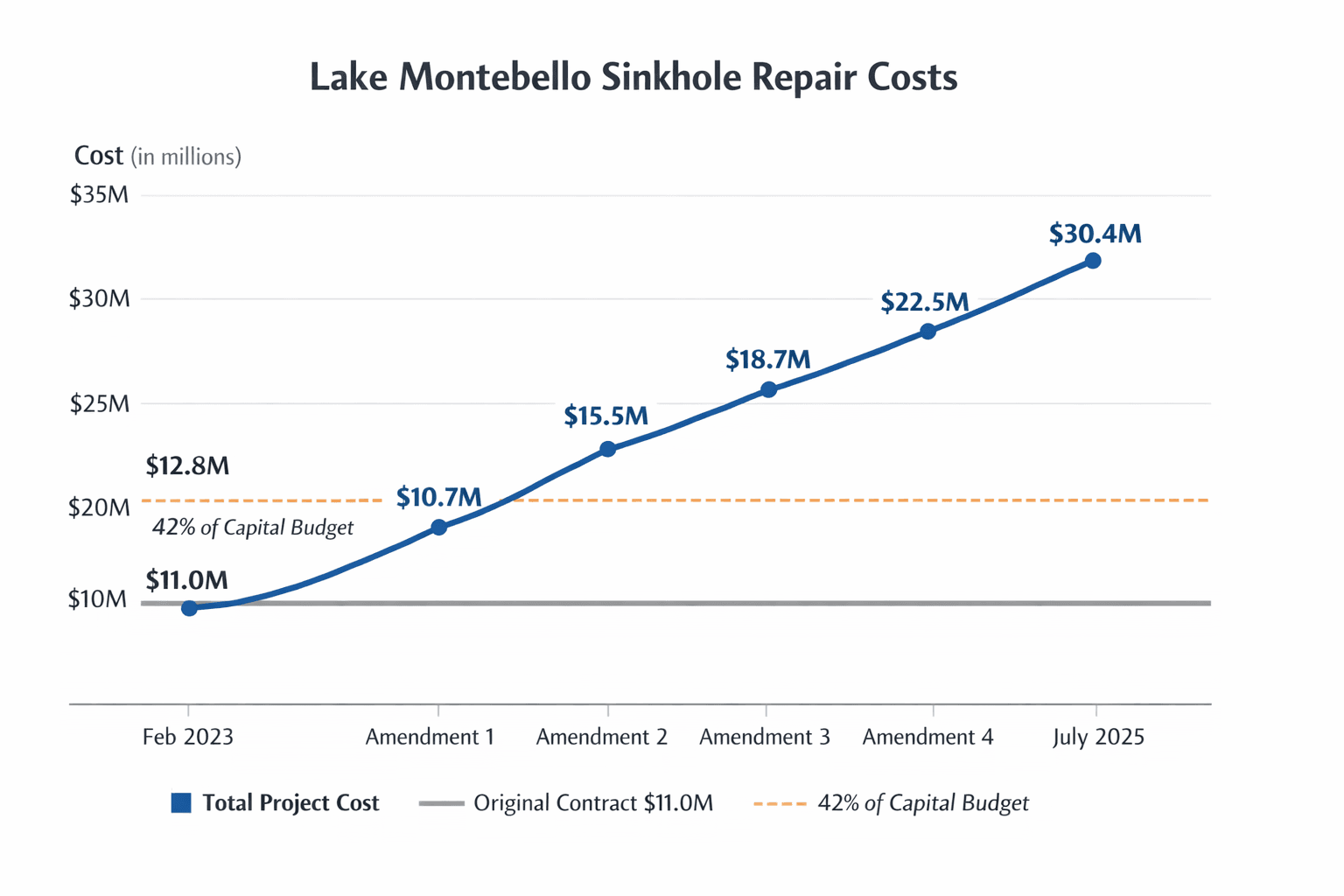
For Baltimore residents the fallout is practical and fiscal. The scale of the overrun reduces funds available for other stormwater and neighborhood projects at a moment when the city must address aging buried infrastructure, flooding, and maintenance of water systems that serve both city and county customers. The episode underscores the risks of emergency contracting on legacy stormwater networks and highlights the need for clearer procurement safeguards and sustained investment to prevent future, costly crises.
Sources:
Know something we missed? Have a correction or additional information?
Submit a Tip