Lawmaker Demands Classified Briefing on Nvidia H200 Sales to China
Representative John Moolenaar sought a classified briefing and the evidence supporting President Trump’s decision to allow Nvidia to sell H200 artificial intelligence chips to approved customers in China, asking for materials by mid January. The request raises fresh scrutiny of export control policy after reporting that Huawei may have gained illicit performance advantages through illegally procured chips, a circumstance congressional critics say could imperil U.S. national security.

Representative John Moolenaar on December 12 and 13 formally asked Commerce Secretary Howard Lutnick for a classified briefing and copies of the underlying analysis that led the administration to permit U.S. chipmaker Nvidia to sell its advanced H200 AI accelerator chips to approved customers in China. In the letter, Moolenaar, chair of the bipartisan House select committee on China, set a mid January deadline for the briefing and for the production of documents that he said were necessary to evaluate the national security rationale for the decision.
The Trump administration publicly disclosed in early December that it would allow restricted exports of the H200, a high performance accelerator that Nvidia markets to customers building large scale AI models. The administration described the approval as limited to vetted buyers rather than an unrestricted market opening. Moolenaar’s letter asked the Commerce Department to explain the factual basis for that determination and to provide the analyses that supported the policy shift.
Moolenaar cited media reporting that, he said, informed the administration’s assessment. The letter referenced assertions that Huawei Technologies achieved notable AI chip performance gains using a chip allegedly procured through shell companies from suppliers in Taiwan and South Korea. It also noted reporting that Huawei’s next in house offering could suffer a step backward in performance if the company had to rely solely on domestic Chinese foundries, and presented those points as reasons Congress should scrutinize the decision to ease export controls.
Those assertions folded into a broader set of law enforcement developments that have surfaced in recent weeks. Shortly before the administration’s announcement, the Department of Justice publicized what it described as a crackdown on a major China linked AI technology smuggling network, an action that congressional critics have cited as evidence that illicit pathways for advanced components remain a serious concern.
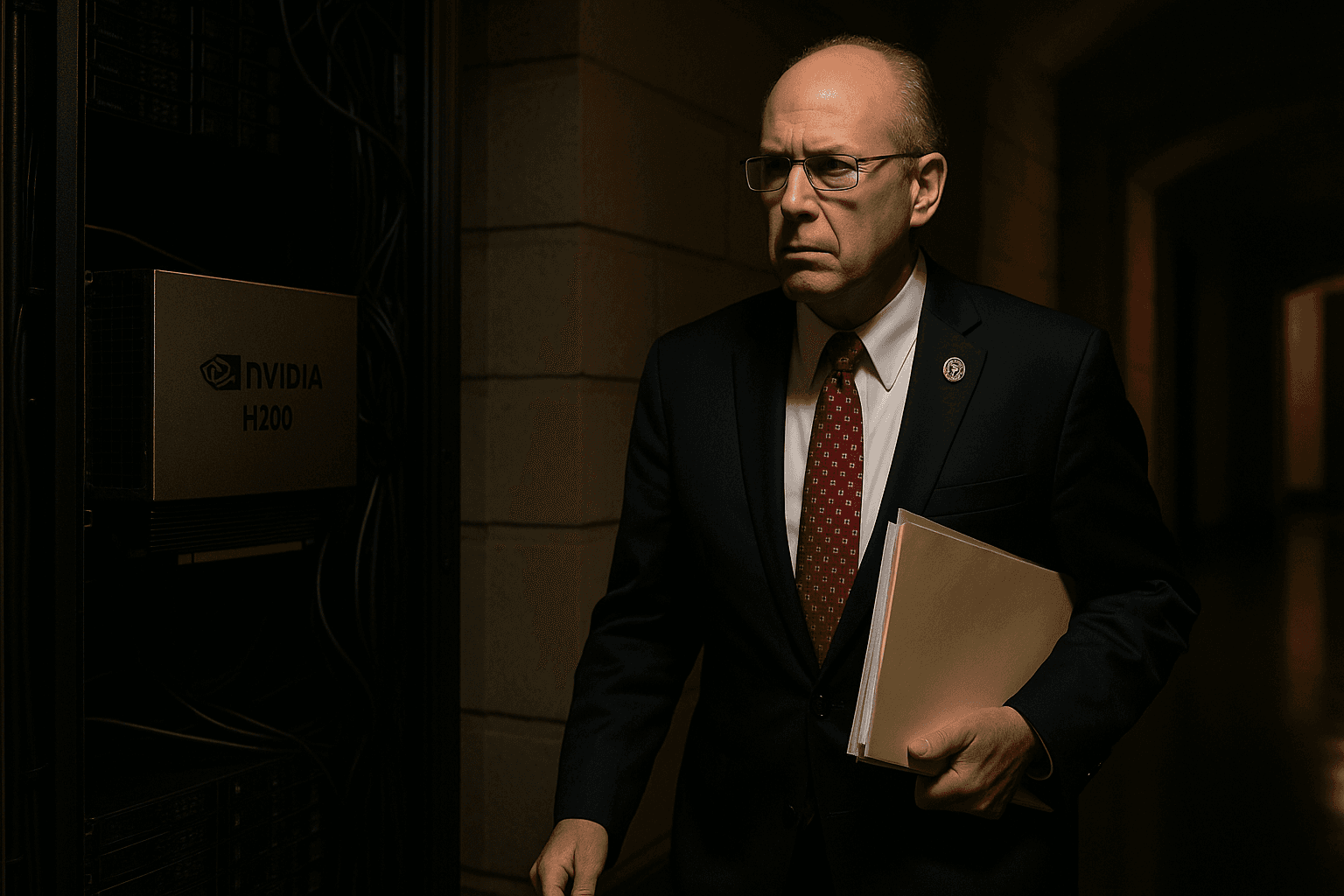
The request from Moolenaar lands amid sharp political debate. Senator Elizabeth Warren of Massachusetts said the administration “sells out American national security” and urged that Nvidia Chief Executive Jensen Huang and Secretary Lutnick appear before Congress to explain the agreement permitting H200 sales to China. Moolenaar’s letter asks for classified materials that could determine whether the administration’s judgment about vetted customers adequately mitigates the risk that sophisticated chips could accelerate adversary capabilities.
The White House and the Commerce Department did not immediately respond to requests for comment. Nvidia, which trades under the symbol NVDA.O, has previously said its commercial agreements and export compliance practices are conducted within existing legal frameworks.
The exchange underscores growing congressional focus on the fine line between supporting U.S. technology firms and safeguarding sensitive capabilities that underpin modern AI systems. Lawmakers will now watch whether the Commerce Department meets Moolenaar’s mid January deadline and whether additional classified briefings or public hearings follow as Congress presses for more transparency about the analytic basis for a policy that carries economic and strategic consequences.
Know something we missed? Have a correction or additional information?
Submit a Tip