NASA Orders Early Return of Crew-11 After Serious Medical Condition Aboard ISS
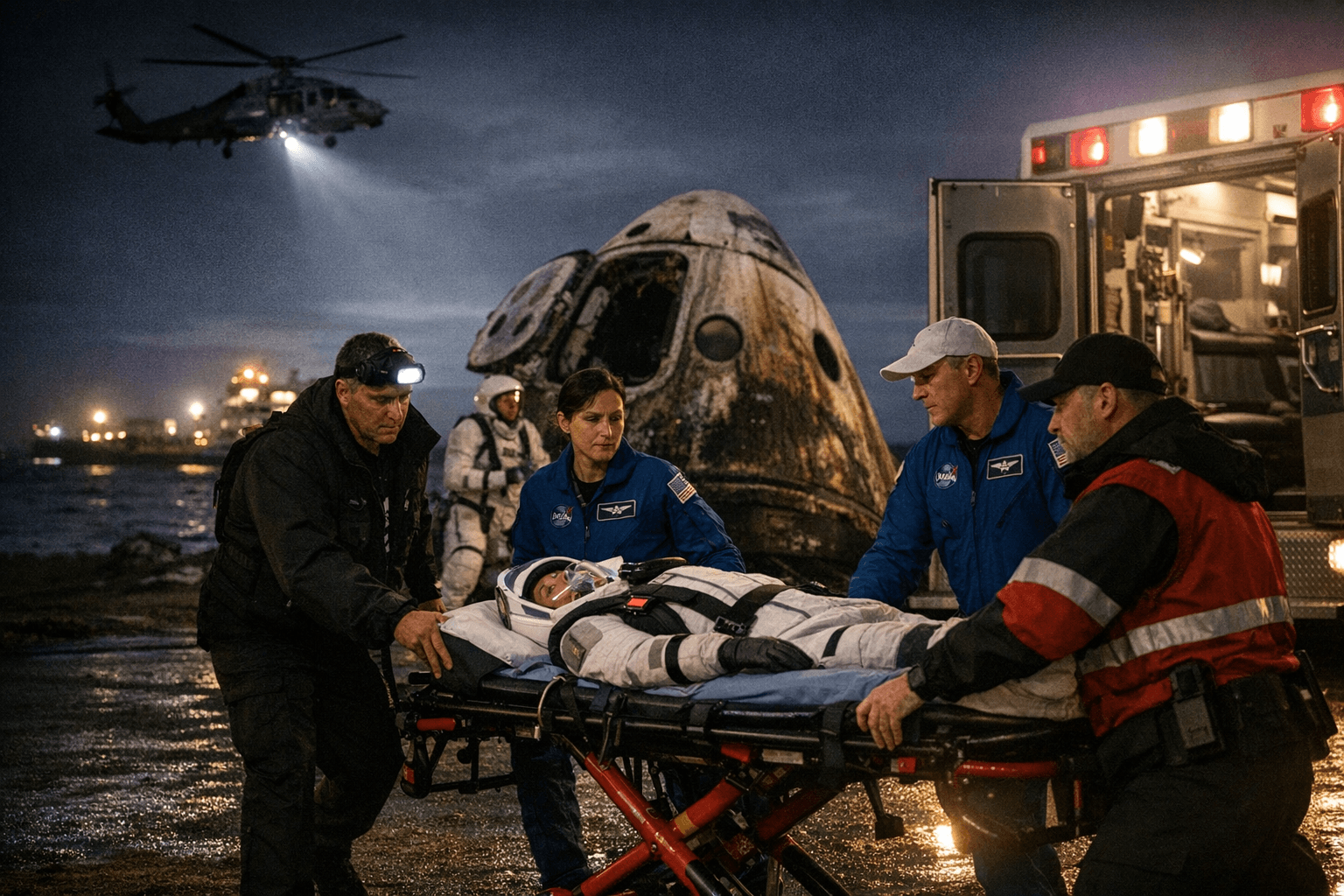
NASA announced an unprecedented early end to the Crew-11 mission after a single crew member aboard the International Space Station experienced a "serious medical condition" that ground teams could not fully diagnose or treat in orbit. The agency said the affected astronaut is stable and emphasized that the decision reflects a prioritization of crew health, but many operational details remain unsettled.

On Jan. 7, a member of the four-person Crew-11 team aboard the International Space Station experienced what NASA described as a "serious medical condition," prompting agency leaders and flight surgeons to call for an early return. The event was disclosed at agency briefings the following days, with NASA Administrator Jared Isaacman saying the crew would be brought home "in the coming days."
Agency officials stressed that the situation did not require an emergency evacuation. Dr. James Polk, NASA’s chief health and medical officer, briefed reporters and underlined the agency’s focus on the wellbeing of astronauts. In public comments, officials said the decision was made after medical consultations between the crew’s flight surgeons and ground teams who determined the condition could not be fully diagnosed or treated on orbit, and that they were "erring on the side of the astronaut’s health."
Crew-11, which launched to the station on Aug. 1, 2025, aboard a SpaceX Crew Dragon from Kennedy Space Center, includes mission commander Zena Cardman, veteran astronaut Mike Fincke, Japan Aerospace Exploration Agency astronaut Kimiya Yui, and Roscosmos cosmonaut Oleg Platonov. Before the medical event, the quartet had been scheduled for roughly six months aboard the station, with a planned return in mid-to-late February 2026 following a handover with a replacement crew.
The early departure will alter that plan. NASA canceled a planned extravehicular activity scheduled for the week after the incident, a spacewalk that would have involved Fincke and Cardman to support the installation of a truss intended for a future roll-out solar array. Because Crew-11 will leave before its replacements arrive, the station handover will be indirect and mission planners are re-evaluating upcoming launches and manifests. NASA said it expected to provide an update on exact return timing within 48 hours of the announcement.
Names associated with the next rotation include NASA astronauts Jessica Mir and Jack Hathaway, European Space Agency astronaut Sophie Adel, and Roscosmos cosmonaut Andre Feday. Agency officials also indicated that after Crew-11 departs, the ISS will be staffed by one American astronaut and two Russian cosmonauts for a period, pending the adjusted manifest and launch timing for incoming crews.
NASA declined to identify the affected crewmember or disclose the nature of the medical condition, citing patient privacy. The agency said the event was not related to spacecraft operations and was not an injury. Officials noted that while the station carries basic medical equipment and enables private consultations with ground-based physicians, those resources were insufficient to resolve the case entirely in orbit.
Spaceflight historians and agency officials characterized the early return as unprecedented in NASA’s history of human spaceflight, and as the first such early termination for medical reasons during the ISS era. Operational decisions on the return vehicle, landing site and exact timeline were being finalized at the time of the briefings, and NASA promised further updates as they become available.
Know something we missed? Have a correction or additional information?
Submit a Tip