November North Slope Oil Production Edges Up but Remains Below 2024
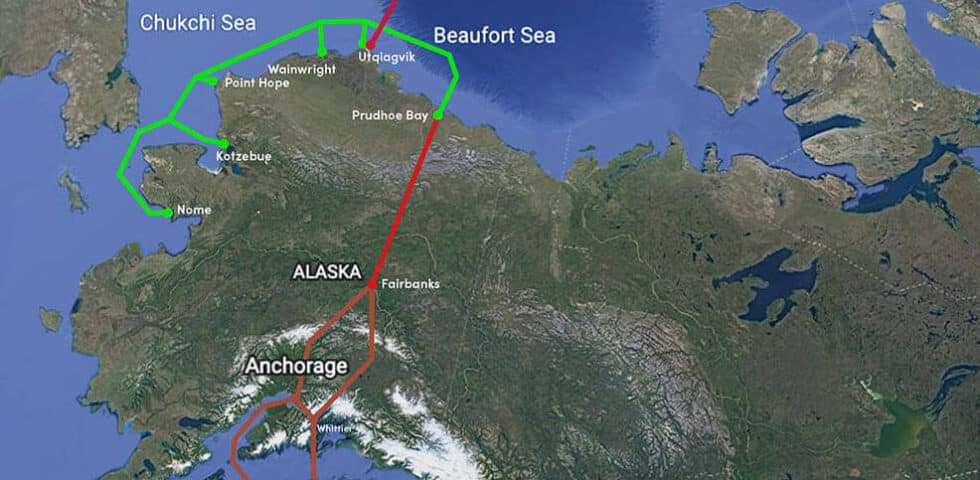
Alaska North Slope production rose modestly in November, gaining 0.43 percent month-over-month to 471,651 barrels per day, driven by higher output at Prudhoe Bay and Milne Point. The increase still leaves overall output down 3.09 percent from November 2024, a trend with implications for local revenues, jobs, and long-term investment on the North Slope.
Alaska North Slope oil and liquid hydrocarbon production in November averaged 471,651 barrels per day, a 0.43 percent increase from October but 3.09 percent below November 2024 levels. Crude made up 89.25 percent of the mix, averaging 420,955 barrels per day, a small month-over-month gain of 601 bpd but a 2.34 percent decline from a year earlier. Natural gas liquids accounted for the remaining 10.75 percent, averaging 50,696 bpd, up 2.89 percent from October but down 8.89 percent from November 2024.
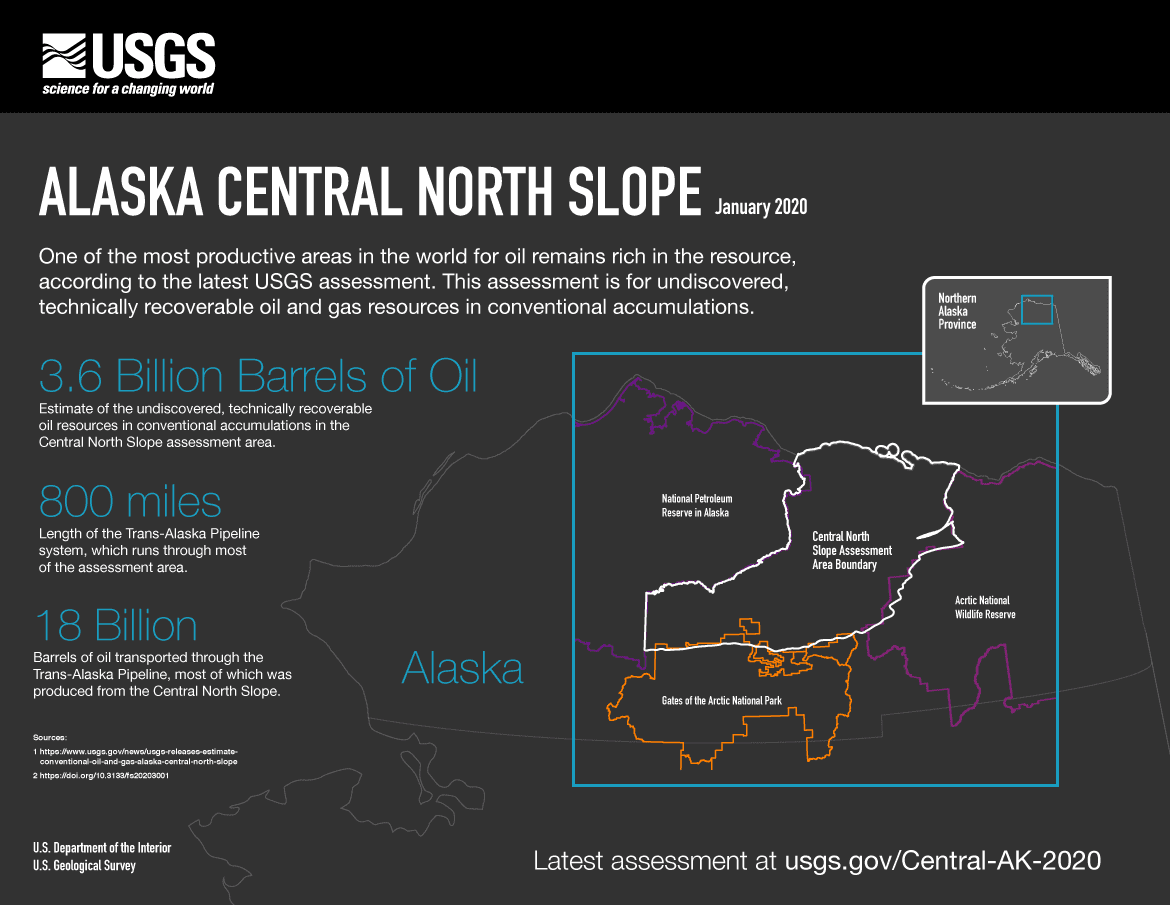
The largest single-field contributor to the November increase was the Prudhoe Bay unit, operated by Hilcorp Alaska, which averaged 255,999 bpd. Prudhoe rose by 7,785 bpd, or 3.14 percent, from October but remained 3.75 percent below its November 2024 level of 265,966 bpd. Hilcorp's Milne Point also registered a notable month-over-month gain. By contrast, the ConocoPhillips-operated Kuparuk River unit recorded the largest monthly decline, falling 1,966 bpd, or 2.13 percent, to 90,255 bpd in November, although Kuparuk remained above its November 2024 output. Several other fields, including Colville, Nikaitchuq, and Greater Mooses Tooth, showed month-to-month declines, underscoring uneven performance across the North Slope basin.

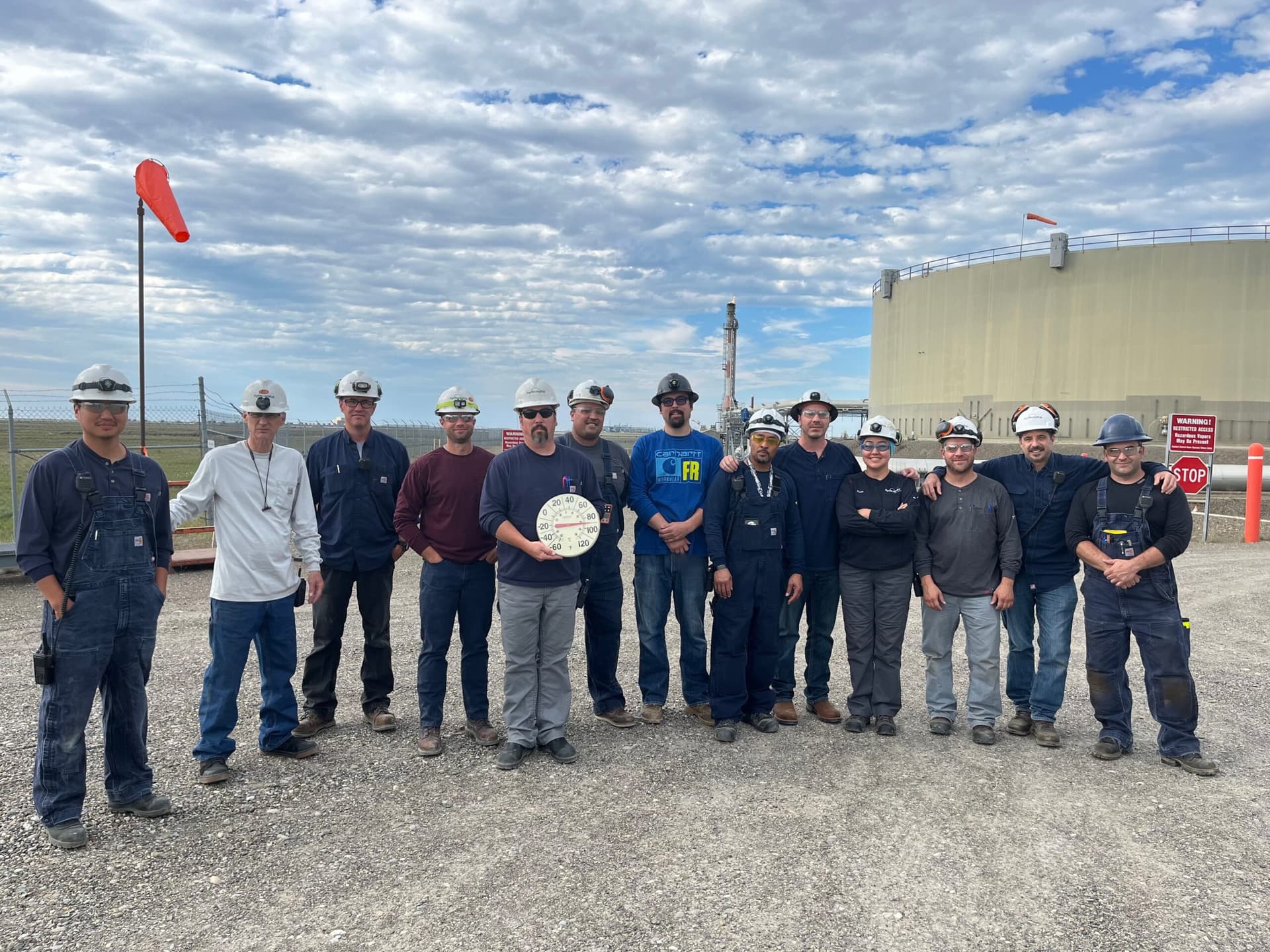
Seasonal and weather factors may have influenced results. The National Oceanic and Atmospheric Administration county time series shows North Slope Borough averaged 9.3 degrees Fahrenheit in November, 2.2 degrees colder than the 1925-24 long-term mean of 11.5 degrees. Colder-than-average conditions can complicate logistics and maintenance and increase operating costs for drilling and transportation during winter months.
For North Slope Borough residents, the modest month-over-month uptick offers limited near-term relief. Royalty and tax revenues, which fund local services and municipal budgets, remain sensitive to both production volumes and oil prices. The 3.09 percent year-over-year decline in total production suggests continued pressure on revenue streams unless offset by higher prices or new development. Employment and contractor work tied to field operations could also face variability as individual fields rise and fall.
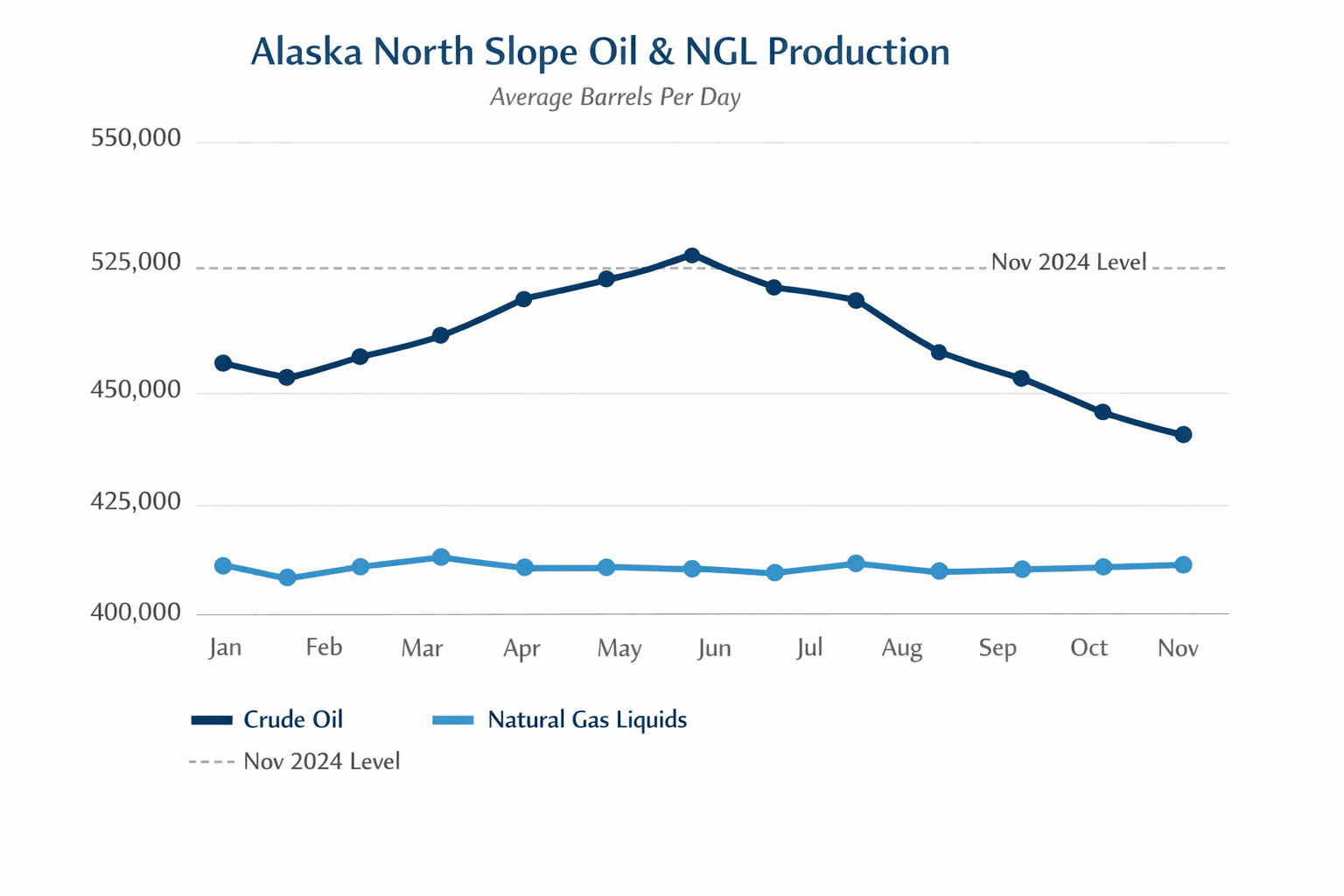
The November snapshot highlights a familiar pattern: field-level volatility atop a gradual regional decline in producible volumes. That pattern matters for market participants and policymakers weighing investment in aging infrastructure, potential development of new projects, and strategies to stabilize regional revenue. As operators move through winter maintenance and prepare for spring work, month-to-month swings will continue to shape fiscal planning for the borough and the state.
Sources:
Know something we missed? Have a correction or additional information?
Submit a Tip