Oak Harbor Council Approves Stay Out Ordinance, Targets Drug Activity
Oak Harbor City Council on December 5 approved a new ordinance allowing judges to bar some people charged or convicted of drug related offenses from a defined zone on the south side of the city, aiming to reduce illegal drug activity in a busy commercial corridor. The measure shapes enforcement and access to services for residents and businesses, and raises questions about prosecutorial discretion and preservation of service access.
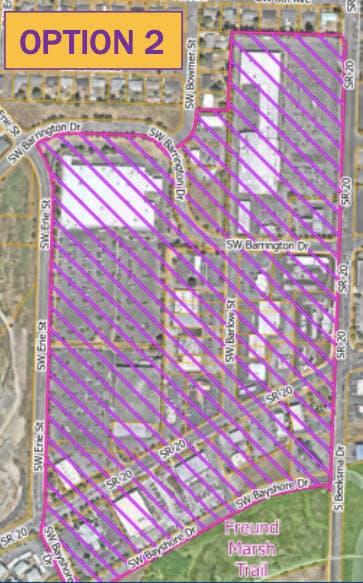
Oak Harbor officials approved an ordinance on December 5 that allows judges to impose stay out orders barring some people charged or convicted of drug related offenses from entering a defined area on the city south side. Violations of an exclusion can result in arrest and additional criminal charges. The city council voted unanimously to adopt the measure.
The boundary approved by council runs north to Southwest Eighth Avenue, south to Southwest Bayshore Drive, west to Southwest Erie Street and east to Highway 20. The zone covers a business dense strip that includes SPiN Cafe, Walmart, Safeway and numerous other retailers. City law enforcement and staff described the action as a response to documented increases in illegal drug activity in that business district, citing 151 incidents associated with drug activity within a quarter mile of Southwest Barlow Street.
Under the ordinance the city prosecutor may ask a judge to impose a stay out order. The court retains discretion to modify the area for individual needs or to preserve access to services. Some councilmembers raised concerns that the boundary could exclude access to SPiN Cafe, which serves as a day center, and staff pointed out that other day centers including the library and The Center remain outside the zone.

The ordinance carries several policy implications for Island County residents. It formalizes prosecutorial influence over geographic exclusions, which may increase demand on municipal courts and shape how discretion is exercised. It also creates potential displacement effects where excluded individuals alter patterns of movement and service use, which could shift drug activity rather than eliminate it. Business owners in the corridor may experience increased perceived safety, while advocates for people experiencing homelessness and substance use disorder may press for careful use of court modifications to preserve access to essential services.
Implementation will determine local impact. Enforcement patterns, court decisions about modifications, and reporting on outcomes will be central to assessing whether the measure improves public safety without unduly restricting access to services. City leaders and residents alike will need transparent updates on arrests related to exclusions, prosecutorial requests for stay out orders, and any adjustments to the boundary to monitor effects on community wellbeing.