Portugal Presidential Race Opens With Record Eleven Candidates
Portugal’s presidential campaign opens in Lisbon with an unprecedented field of 11 contenders, making an outright victory unlikely and a Feb. 8 runoff the probable outcome. The crowded ballot underscores deep political fragmentation and elevates domestic concerns such as health and the housing crisis to the centre of a tightly scheduled campaign.
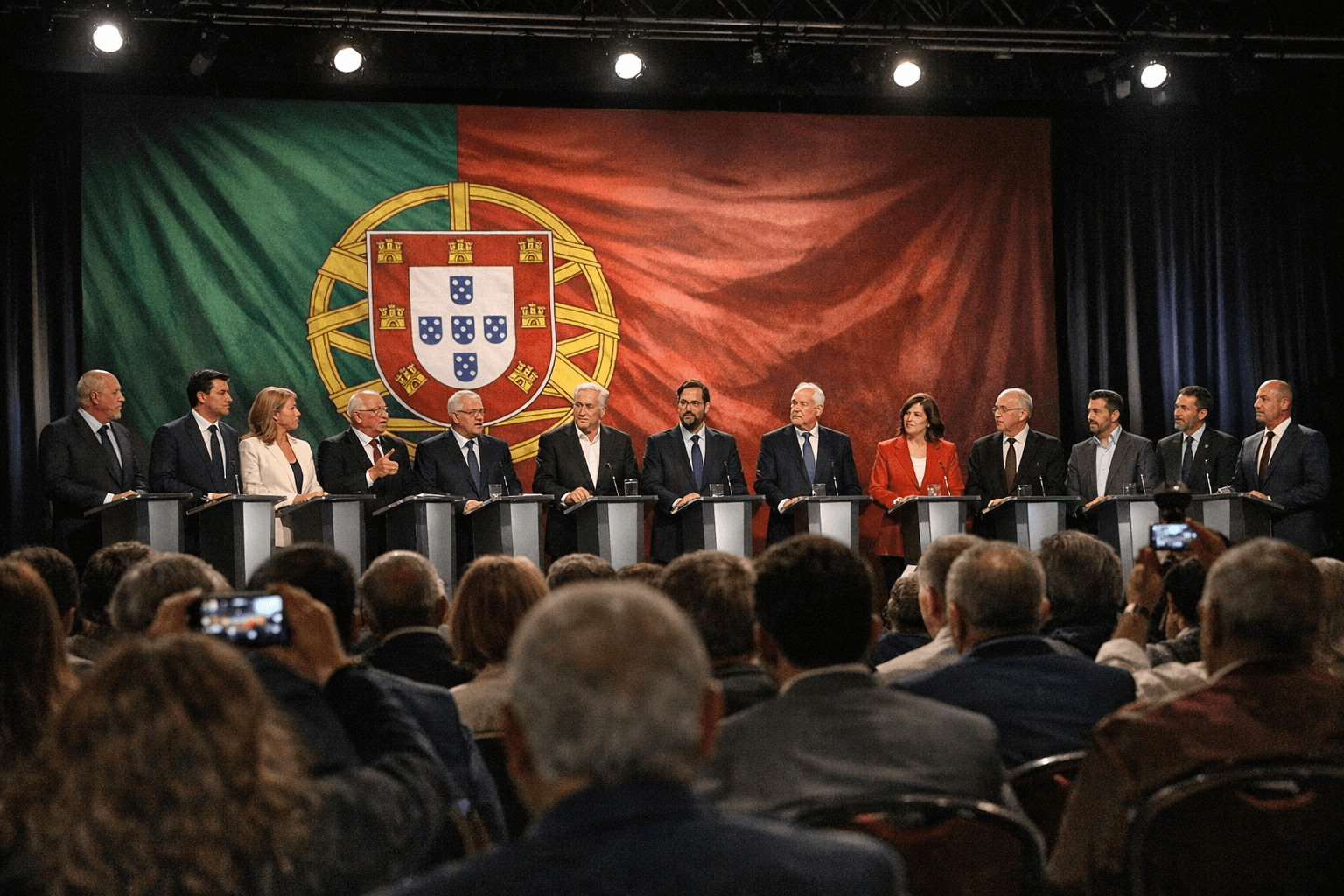
Portugal’s official presidential campaign opens in Lisbon on Sunday, Jan. 4, 2026, marking the start of an unusually crowded contest for the country’s largely ceremonial head of state. Eleven candidates have registered for the Jan. 18 first-round vote, the largest field in the republic’s post-1976 democratic era, and the breadth of competitors makes it highly unlikely any one contender will pass the 50% threshold required to win outright.
Seven of the 11 candidates enter the race with formal backing from political parties, reflecting familiar and emerging fault lines in Portuguese politics. Luís Marques Mendes is supported by the center-right Social Democratic Party and the CDS, while António José Seguro carries the endorsement of the Socialist Party. The Communist Party is backing António Filipe; Catarina Martins is running for the Left Bloc; André Ventura represents Chega; Jorge Pinto is the candidate of Livre; and Cotrim Figueiredo is backed by Iniciativa Liberal. Four candidates are standing without formal party endorsements: Henrique Gouveia e Melo, Humberto Correia — identified as a painter from the Algarve — André Pestana, a trade unionist, and Manuel João Vieira, a musician.
Recent opinion polling points to a split field, with the candidates backed by Portugal’s two main parties — Luís Marques Mendes and António José Seguro — emerging as frontrunners. Given the fragmentation, electoral authorities and campaign teams are preparing for the statutory runoff, which is scheduled for Feb. 8 if no candidate secures a majority on Jan. 18. The official campaign period runs from Jan. 4 through Jan. 16, the legally mandated day of reflection that precedes voting.
Policy debates during the compressed, two-week campaign are expected to centre on pressing domestic issues, particularly health and the deepening housing crisis that has affected many Portuguese cities. These concerns are likely to frame appeals not only to traditional party bases but also to voters attracted to candidacies outside the party mainstream, including artists, union leaders, and public figures whose presence signals a desire for alternatives to parliamentary politics.
The election will decide the successor to President Marcelo Rebelo de Sousa; his second term, he was elected in 2016, ends in March 2026. While the presidency in Portugal is not a day-to-day governing office, the winner will play a role in representing the nation, convening political actors, and, in moments of institutional stress, exercising constitutional powers that can shape the political environment. The prospect of a runoff promises to prolong political uncertainty for three weeks beyond the first round as parties and independent campaigns reassess alliances and strategies.
The contest’s record participation illustrates both the vibrancy and the volatility of Portugal’s political scene. A wide array of voices is now on the ballot, from established party nominees to independent personalities, and the likely two-stage resolution will test candidates’ abilities to broaden their appeal between rounds while addressing the immediate policy anxieties that many Portuguese voters cite as their primary concerns.
Sources:
Know something we missed? Have a correction or additional information?
Submit a Tip