Practical Home Espresso Checklist for Consistent Daily Coffee
A compact, step-by-step checklist lays out concrete actions home baristas can use to make espresso more consistent shot to shot. It covers bean selection and storage, grinder care and calibration, dosing and tamping, brew ratios and temperatures, milk steaming, routine maintenance, and a simple logging practice to speed dialing in.
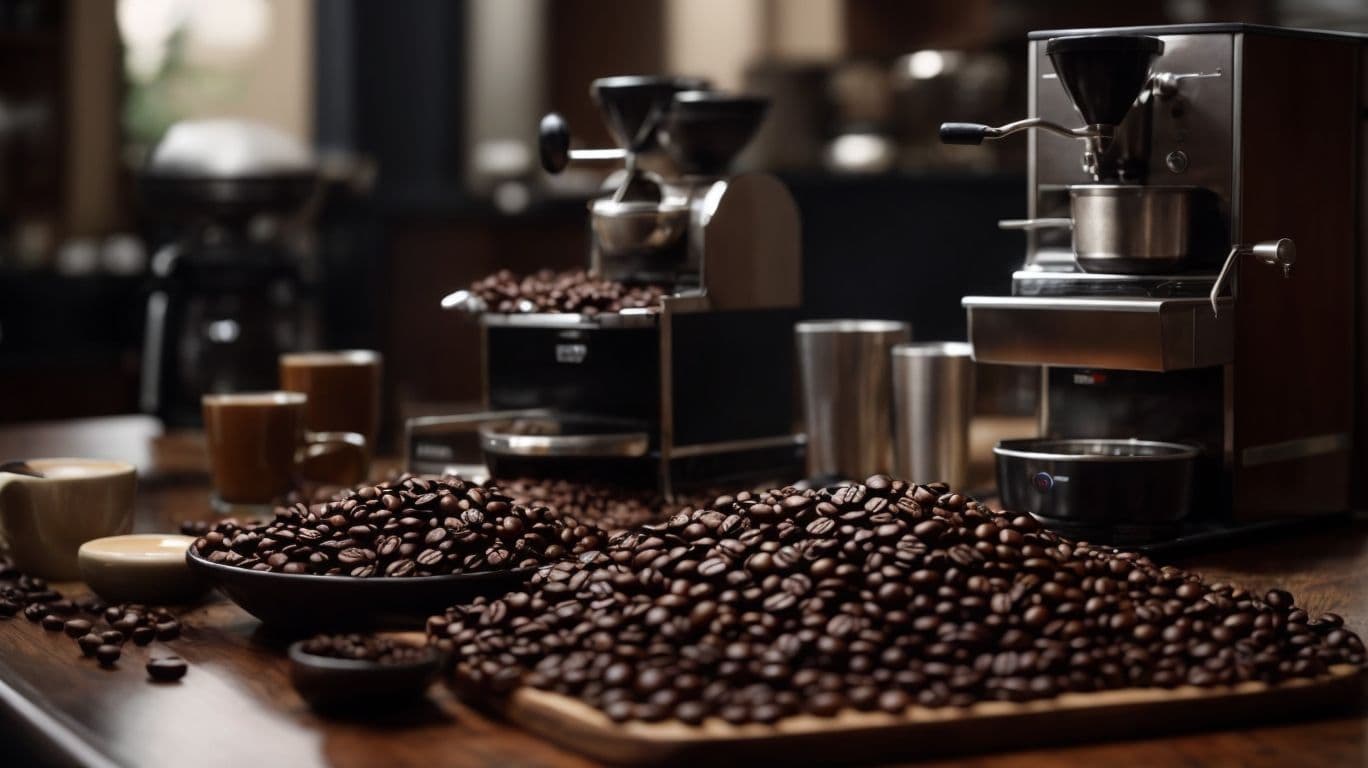
Home espresso consistency comes down to control and repetition, and a focused checklist reduces guesswork. Start with beans: buy whole-bean coffee roasted within the last 2–4 weeks, store it in a cool, dark spot in an opaque, airtight container, and buy in small batches so you use beans while they are fresh. Freshness is the foundation of repeatable flavor.
A quality burr grinder is the next priority. Use a reliable conical or flat burr grinder and clean it weekly to prevent old grounds from skewing taste. Calibrate grind size by changing one step at a time: move finer if extractions are slow and move coarser if extractions are fast. Consistent results depend on small, deliberate adjustments.
Weighing dose and managing distribution are essential. Typical home doses range 16–20 g for single baskets and 18–20 g for doubles, depending on the basket. Aim for +/- 0.1–0.2 g repeatability when tamping and dosing. Use a distribution tool or a careful Weiss distribution technique (WDT) to reduce channeling before tamping.
Tamping technique affects extraction uniformity. Level the puck, apply 15–30 lbs of pressure with a straight, consistent tamp, and polish with a slight clockwise twist only if it helps your consistency. Keep the tamp base and basket clean to avoid uneven seals.
Dial in brew ratio and timing to taste. Target a brew ratio such as 1:2 to 1:2.5 coffee to brew weight and an extraction time commonly around 25–35 seconds for many espresso recipes. Tweak based on flavor: sourness generally indicates under-extraction (coarsen the grind) while bitterness or astringency suggests over-extraction (try a finer grind or a slightly lower dose).
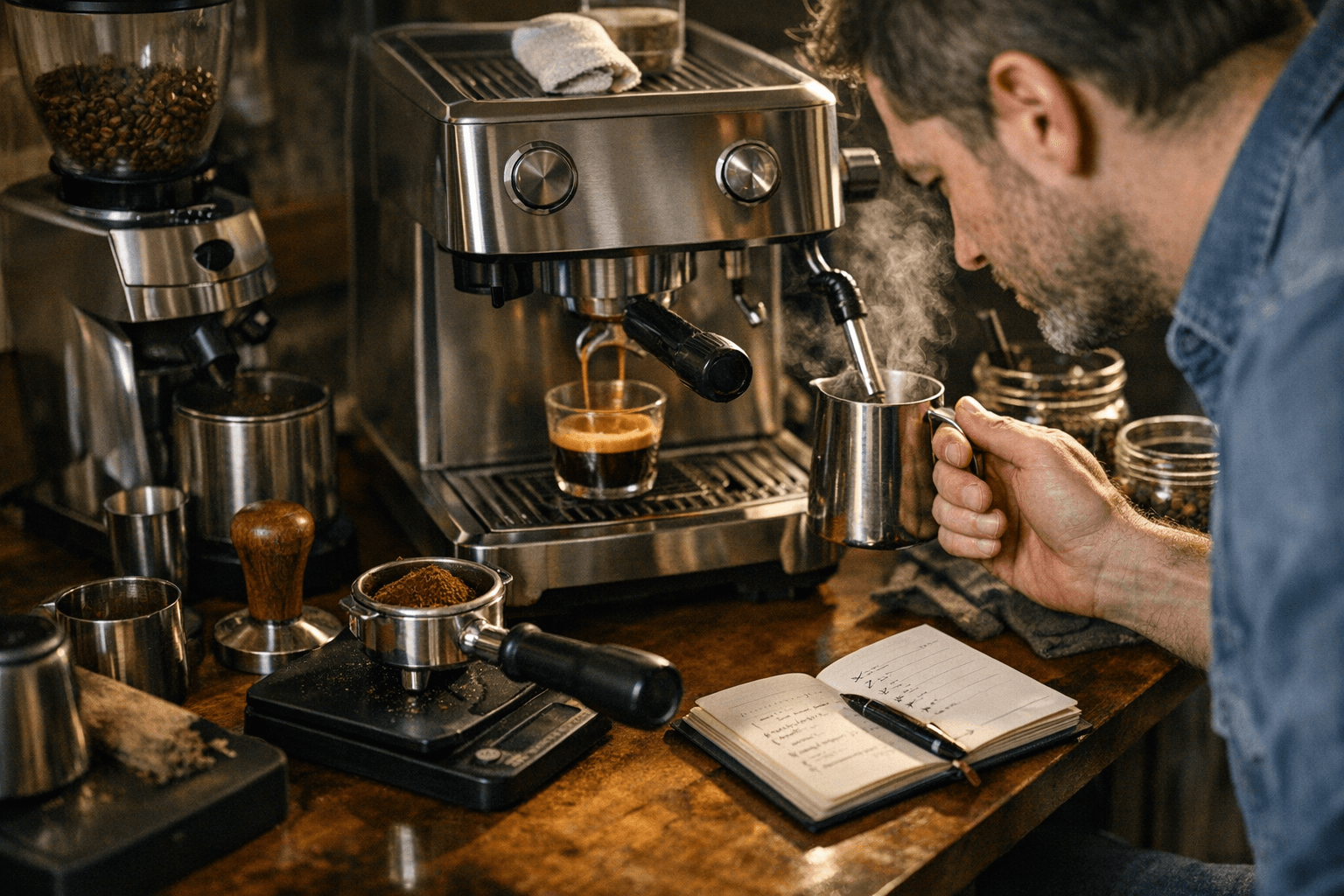
Temperature and water quality matter. Use filtered water and aim for 90–96°C brew temperature depending on roast and taste preferences. Monitor machine thermal stability and experiment with pre-infusion settings if your machine allows them.
If you steam milk, purge the steam wand before use, position the tip just below the surface to create microfoam, then submerge to heat milk to roughly 55–65°C (130–150°F). Practice texturing to improve mouthfeel and latte art, and always wipe and flush the wand after each use.
Routine maintenance preserves equipment performance: backflush daily or per manufacturer recommendations when applicable, clean the group head and shower screen weekly, descale according to your machine’s guidance, and maintain grinder burrs. Finally, keep a simple log — note bean, roast date, dose, grind setting, yield, time, and tasting notes. Small, controlled changes and recorded results will get you to consistent, better-tasting espresso faster. Adapt the numbers here to fit your equipment and personal taste.
Know something we missed? Have a correction or additional information?
Submit a Tip