Putin and Modi pledge expanded trade, target $100 billion by 2030
Vladimir Putin and Narendra Modi on Friday agreed to widen and diversify India Russia commerce and deepen strategic ties during Putin's state visit to New Delhi, his first since 2022. The pact signals a bid to rebalance trade away from a narrow energy and defence focus, with potential ripple effects for global supply chains and Western efforts to isolate Moscow.

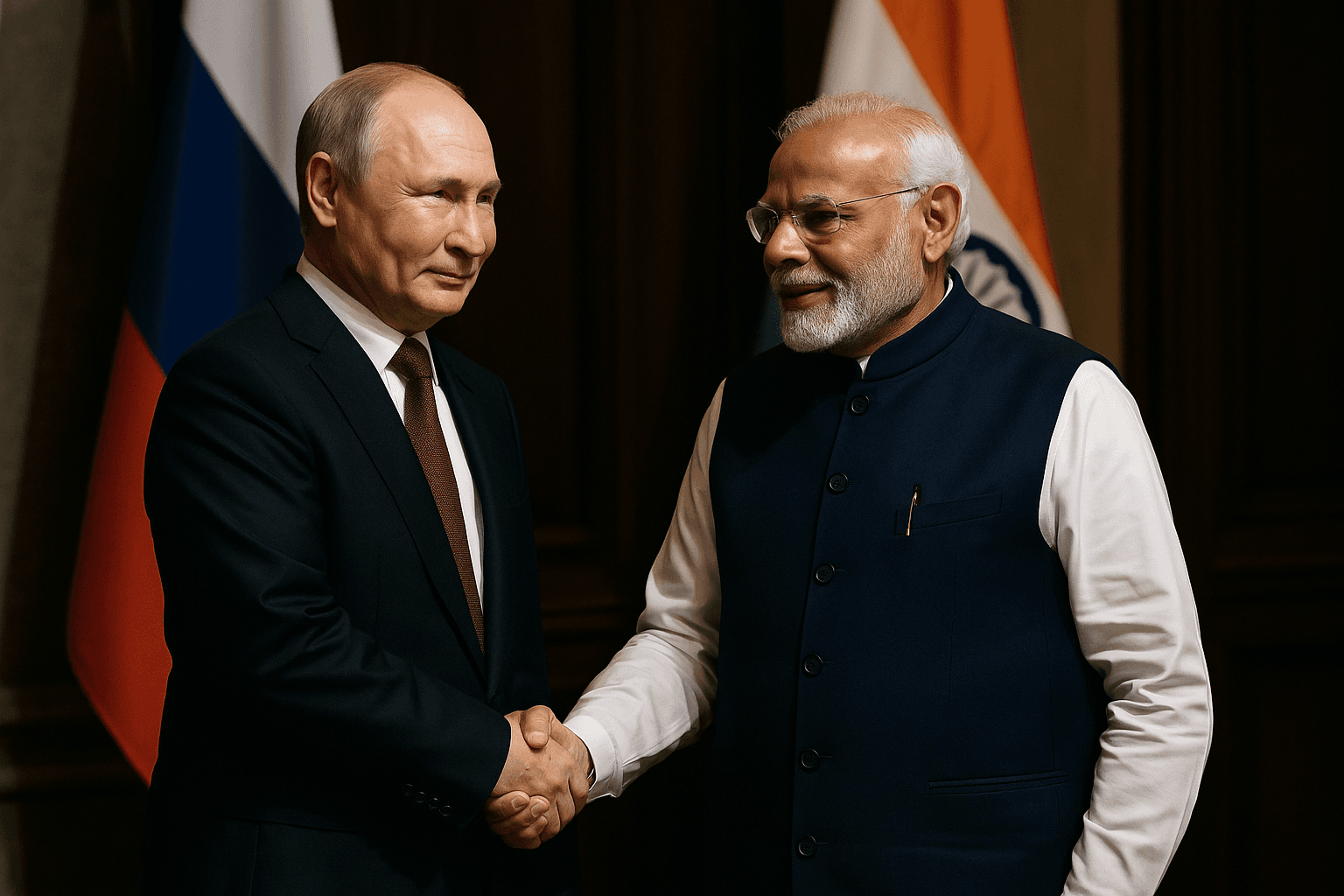
Russian President Vladimir Putin and Indian Prime Minister Narendra Modi unveiled an ambitious economic cooperation agenda on Friday intended to broaden bilateral commerce through 2030 and strengthen long standing strategic ties. The leaders set a goal of boosting bilateral trade toward $100 billion by 2030, and agreed to push beyond the traditional pillars of energy and defence into areas such as agriculture, healthcare, shipping and labour mobility.
At the summit Putin reaffirmed Russia's commitment to "uninterrupted fuel supplies" to India, and both sides highlighted plans for cooperation on major energy projects, including an expansion at the Kudankulam nuclear power site. The two governments also signalled a shift in defence collaboration toward joint research and development and co production that aligns with India's self reliance goals, reflecting New Delhi's sustained emphasis on indigenous capabilities even as it deepens ties with Moscow.
The visit produced a package of concrete agreements. Officials announced measures to ease movement of Indian workers to Russia, a joint fertiliser plant venture, and expanded cooperation across agricultural trade, healthcare services and shipping links. The ceremonial aspects of the state visit underlined the diplomatic warmth between the capitals, with Putin receiving a 21 gun salute and formal receptions in New Delhi.
The timing and tenor of the visit carry wider geopolitical significance. Western capitals have pressed India in recent years to temper its relationship with Moscow as part of efforts to sanction and isolate Russia after its 2022 military action in Ukraine. New Delhi has repeatedly invoked strategic autonomy, and Modi emphasized the enduring and resilient nature of ties with Russia. The summit came as India pursues its own parallel talks with the United States on trade and economic issues, reflecting its effort to balance multiple partnerships in a shifting global order.
Analysts said the economic agenda serves mutual needs. India seeks secure energy supplies and advanced technology for its expanding industrial base while pursuing market access for exporters. Russia is looking to increase imports of Indian goods and to find reliable commercial partners amid lingering Western restrictions. Projects such as the fertiliser plant and expanded nuclear cooperation aim to translate political goodwill into supply chain links and long term investment flows.
The leaders framed the program through 2030 as a blueprint for more balanced and sustainable ties, but implementation will require navigating complex commercial realities and diplomatic sensitivities. Questions remain about financing, regulatory alignment and the effects of existing sanctions regimes on large scale cooperation. How New Delhi manages concurrent deepening with Moscow while maintaining expanding ties with Western partners will be watched closely in capitals from Washington to Brussels.
For now, the summit underscored a strategic partnership that continues to evolve, reflecting a multipolar world in which countries calibrate relationships according to national interests rather than singular alignments. The coming years will test whether the ambitious trade goal and the new projects can be turned into durable economic integration.