Queen Kaʻahumanu will become no passing zone near Waikoloa and Keāhole
The state will remove passing lanes on Queen Kaʻahumanu Highway between Waikoloa Beach Drive and Keāhole Airport Road starting Jan. 26; the change aims to improve safety for local drivers.
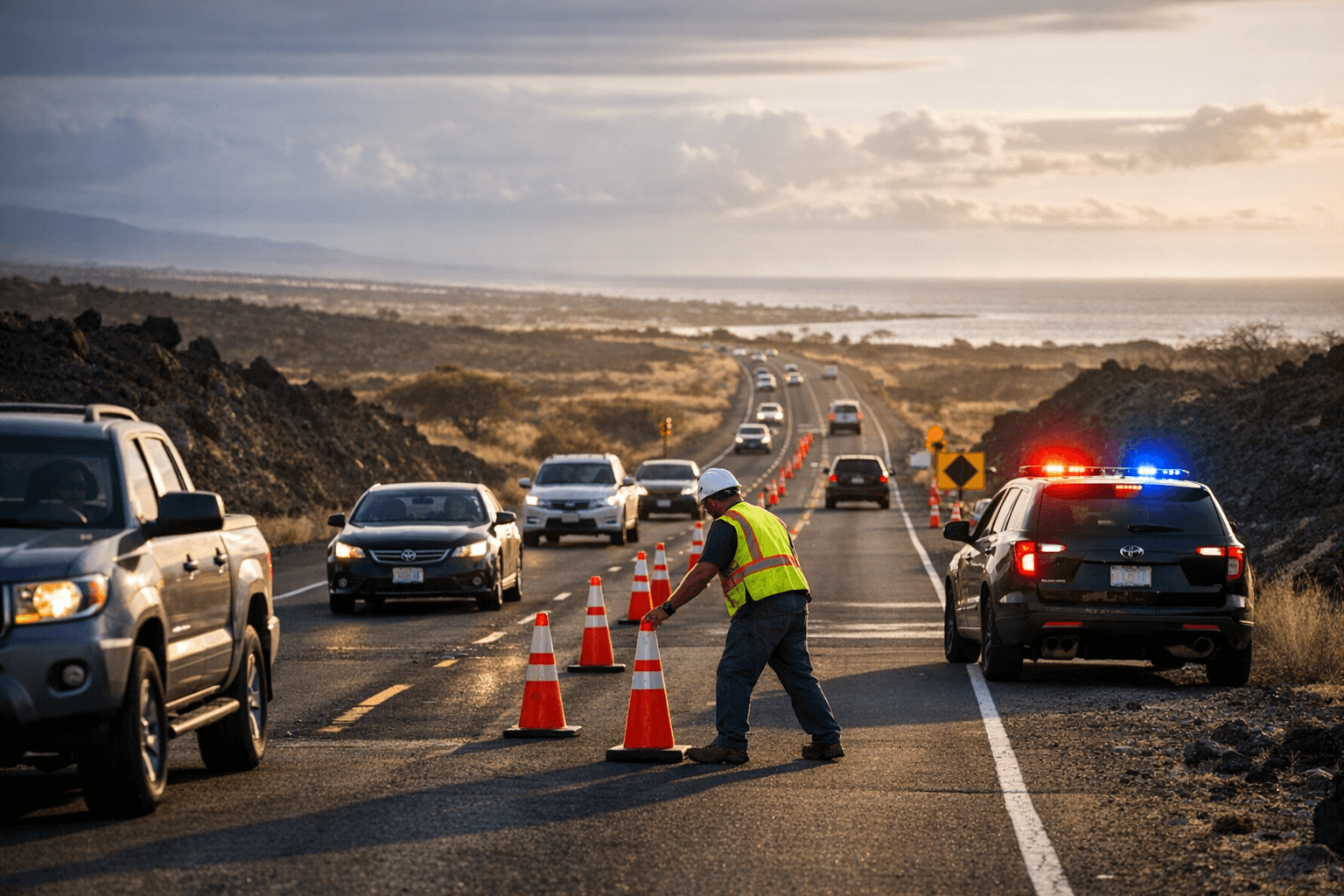
A stretch of Queen Kaʻahumanu Highway will soon become a no passing zone between Waikoloa Beach Drive and Keāhole Airport Road." The Hawaiʻi Department of Transportation announced plans to remove the center passing lanes on Route 19 in the corridor that serves Waikoloa, Kona-bound commuters, and access to Keāhole Airport.
Work to eliminate the passing lanes and restripe the centerline with double 4-inch yellow thermoplastic stripes is scheduled to begin Monday, January 26, 2026, and is expected to take about five days. Do Not Pass signs have already been installed and will be uncovered when the lanes are removed, signaling the new traffic pattern to motorists. HDOT provided a map graphic showing the exact segment that will be affected.
The change follows multiple reported near-misses and crashes tied to passing maneuvers in the corridor, according to HDOT. Officials noted at least two fatalities related to passing vehicles on that stretch in the past five years, and described the restriping and signage as an immediate countermeasure to reduce head-on and unsafe passing incidents. The department framed the project as a targeted safety intervention rather than a long-term redesign of the roadway.
For daily drivers, the removal of passing zones will alter how traffic flows on a busy west-side arterial that links resort areas, residential neighborhoods, and Kona’s airport. Commuters and visitor traffic should expect fewer opportunities to overtake slower vehicles, which can change travel times during peak periods. During the resurfacing and restriping work the week of Jan. 26, motorists may encounter intermittent lane restrictions and crews on the shoulder; HDOT’s schedule allows roughly five days for the striping work to be completed.
Policy implications extend beyond the immediate corridor. A rapid change in lane operations highlights the state's ability to deploy low-cost engineering fixes to address crash patterns, but it also raises questions about longer-term solutions such as roadway widening, median barriers, or multimodal investments. For residents who rely on Route 19 for work, school runs, and airport trips, the effectiveness of this measure will be measured in reduced crashes and improved perceptions of safety over the coming months.
The takeaway? Expect to see the new double yellow centerline and obey the uncovered Do Not Pass signs when the work begins. Our two cents? Give yourself extra time, slow down through the affected segment, and report persistent safety concerns to HDOT so the community’s experience can shape any follow-up changes.
Sources:
Know something we missed? Have a correction or additional information?
Submit a Tip