Russian Bombers Join Chinese Patrol, Japan Scrambles Fighters Near Okinawa
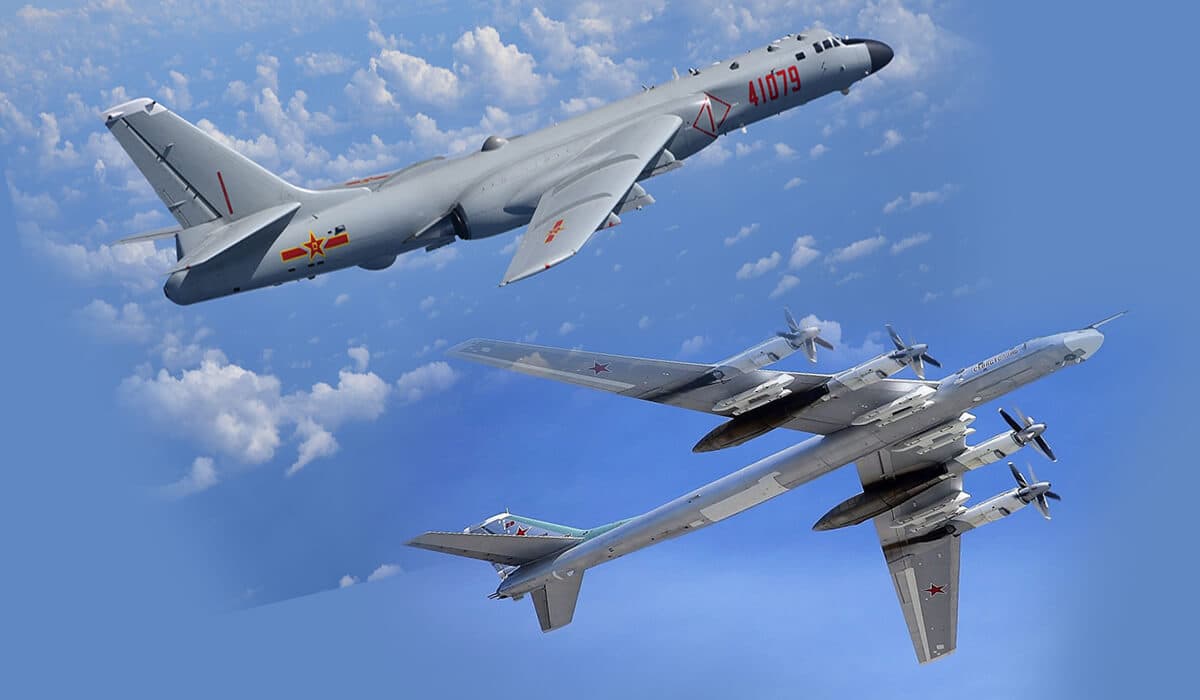
Japan scrambled fighter jets on December 9 after Russian Tu 95 strategic bombers rendezvoused with Chinese H 6 bombers and fighter escorts on a long range flight past Okinawa and the Miyako islands, a move Tokyo described as provocative. The encounter underscores rising China Russia military cooperation and is accelerating Japan's defense planning, with implications for regional security and alliance dynamics.

Japanese air defense forces scrambled jets on December 9 after Russian Tu 95 strategic bombers rendezvoused with Chinese H 6 bombers and fighter escorts for a long range joint sortie that passed east of Okinawa and through the air approaches near the Miyako islands, the Japanese defense ministry said. The ministry said the combined flight included Chinese J 16 fighters and that other Russian air activity was detected over the Sea of Japan the same day.
Tokyo said it closely tracked the aircraft and called the operation provocative, noting that while the Miyako Strait is international waters the pattern and frequency of such flights have heightened concern. Japanese officials have interpreted the sortie as part of a broader increase in Sino Russian military cooperation that is reshaping the security environment around Japan and Taiwan.
The encounter came as Tokyo has accelerated defense planning and force posture reviews in response to perceived threats in the region. Japan has been beefing up surveillance and interceptor readiness over the past year amid repeated long range flights by Chinese air assets near its southwestern island chains and a steady increase in Russian patrols in nearby waters. Officials and analysts say the rendezvous of Russian and Chinese bombers in proximity to the Miyako islands represents an escalation in operational coordination rather than isolated activity.
Strategically the Miyako Strait is a narrow but internationally navigable passage between Okinawa and the Miyako islands, used routinely by commercial and military vessels. International law protects transit through such straits, but critics argue that repeated coordinated flights by two major powers impose psychological and operational pressure on neighboring states and complicate routine peacetime surveillance.
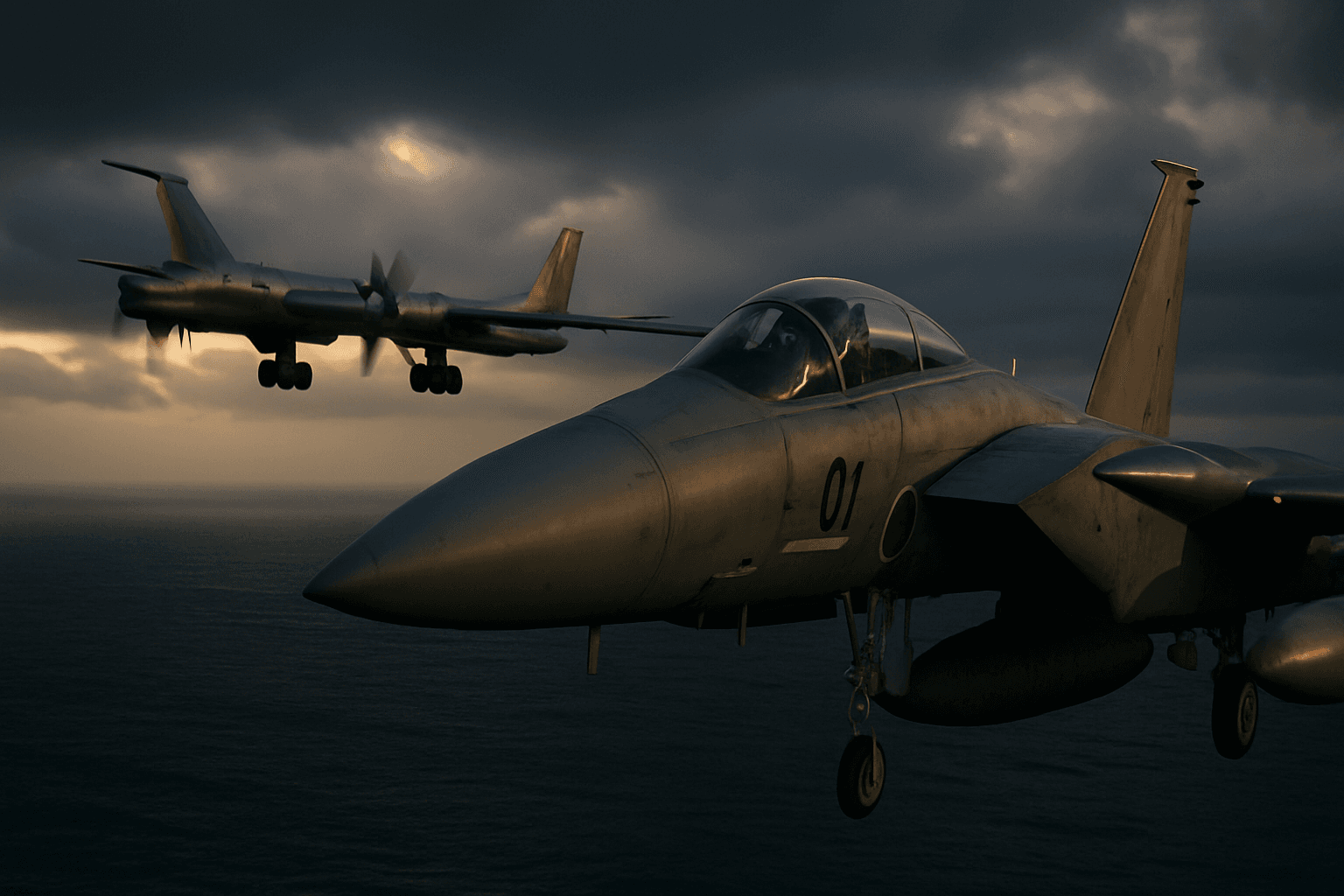
The joint flights also strain Tokyo Beijing relations at a time when bilateral ties were already under stress over historical disputes, economic friction, and differing approaches to regional security. For Tokyo the maneuver raises questions about how to deter or respond to operations that test air and maritime boundaries without crossing legal lines. For Seoul and Taipei the episode is likely to feed anxieties about a tighter Russia China security relationship and its implications for contingency planning.
The United States, which maintains a security treaty with Japan, has long warned of the risks posed by closer strategic collaboration between Moscow and Beijing. Analysts say such joint operations complicate alliance planning by introducing cross domain coordination that could be replicated in crisis scenarios, increasing the speed and complexity of decision making for allied forces.
Regional diplomats stressed the need for restraint and predictability to avoid inadvertent escalation. For now Tokyo is intensifying patrols and pushing for clearer norms of behavior in shared maritime spaces, while monitoring whether coordinated flights become a regular feature of the Sino Russian military relationship or an episodic demonstration of reach and resolve.
Sources:
Know something we missed? Have a correction or additional information?
Submit a Tip