Sheinbaum to Meet Trump, Canada’s Leader in Washington Over World Cup Draw
Mexican President Claudia Sheinbaum announced she would travel to Washington for the 2026 World Cup draw and hold brief meetings with U.S. President Donald Trump and Canada’s prime minister, a move that elevates a sporting event into a political stage. The encounters come as the three countries prepare for the 2026 joint review of the USMCA and amid rising U.S. pressure over tariffs and trade policy, making the meetings a potential moment for crucial signaling.

Mexican President Claudia Sheinbaum said on December 5 that she would travel to Washington for the 2026 World Cup draw and would hold brief meetings with U.S. President Donald Trump and Canada’s prime minister. Sheinbaum said the talks would be short and offered no further details. The announcement was first reported by Reuters and republished by multiple outlets.
The draw, a high profile public event in Washington this week, doubles as a diplomatic convening for the three North American leaders who will host the tournament jointly in 2026. For Mexico the visit presents an opportunity to manage bilateral tensions at a moment when trade policy occupies the top of the agenda across the region.
Officials from Mexico, the United States and Canada are preparing for a joint review of the USMCA trade agreement next year. That process carries both legal and political weight, because it can reshape the terms of cross border commerce and trigger dispute settlement mechanisms embedded in the treaty. Against that backdrop Washington has been applying growing pressure over tariffs and trade policy, issues that have strained relations at points since the original North American trade framework was negotiated.
Analysts said that the formal setting of the World Cup draw will likely limit the scope of any substantive bargaining, but it will be an important venue for signaling. Brief hallway meetings can be used to calibrate red lines, set negotiating timelines and test the political temperature before more formal negotiations begin. For leaders who face domestic constituencies that are sensitive to trade and national sovereignty, short encounters allow for face to face exchange without committing to detailed public positions.
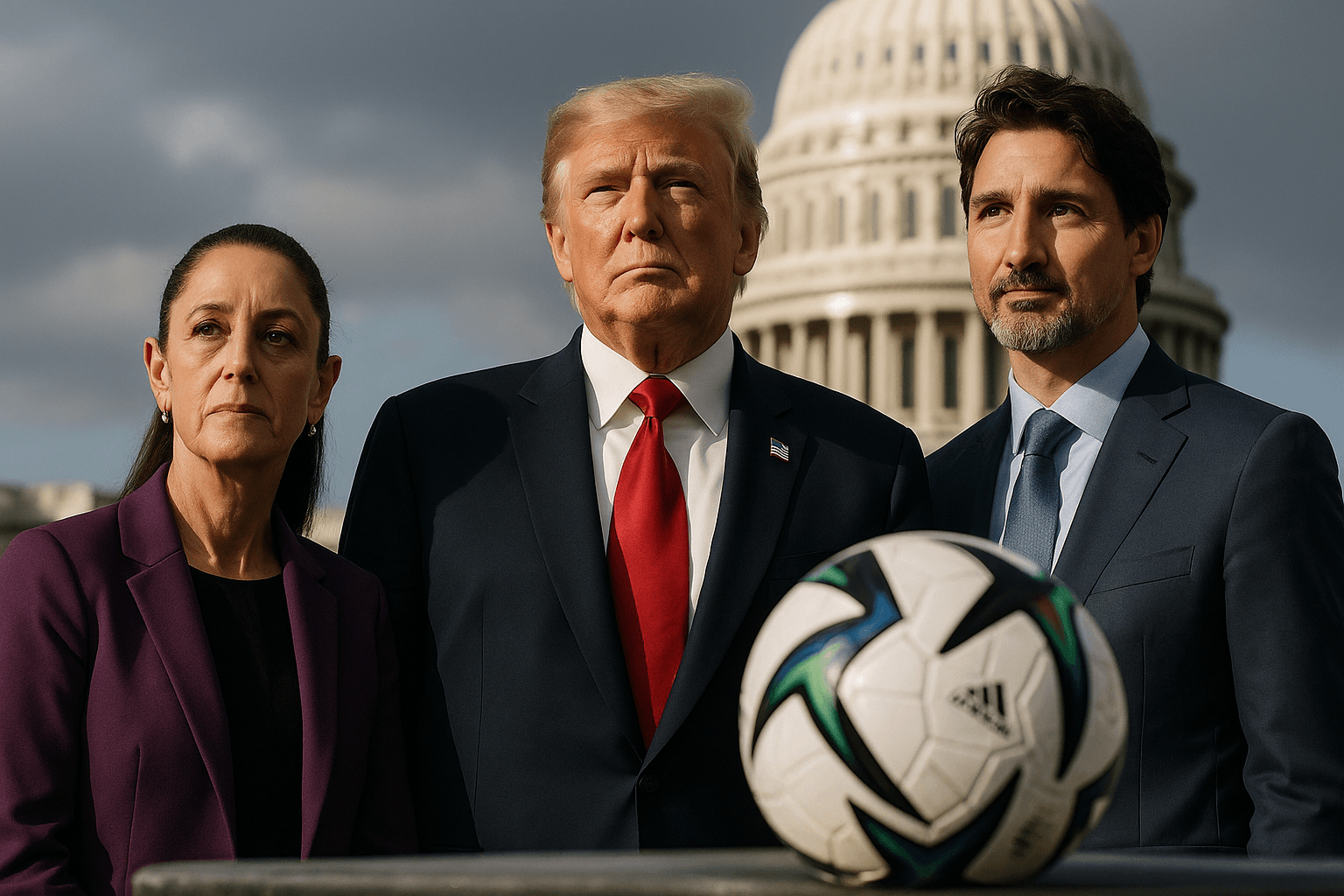
The timing also underscores a wider reality about contemporary diplomacy, where major public events provide cover for parallel bilateral and trilateral talks. Sporting occasions are uniquely suited to that role because they draw intense media attention and public goodwill, while offering leaders a neutral backdrop to address contentious policy areas. For Mexico, showcasing cooperation with its two largest trading partners on an emotionally resonant issue like soccer could help soften public perceptions even as technical talks on tariff regimes continue behind closed doors.
There are legal dimensions to the forthcoming discussions. The USMCA review mechanism allows the three parties to revisit chapters of the agreement and to consider amendments or reassert commitments. Any changes could affect supply chains, investor protections and regulatory alignment across the region. Given the complexity of those issues, short meetings in Washington will likely be preparatory rather than decisive.
Sheinbaum’s decision to travel to Washington also reflects the balancing act Mexico must perform between advancing national interests and maintaining regional stability. As the World Cup draw draws global attention, the encounter between the leaders will be watched closely by business communities, legal experts and foreign governments that have an interest in the future shape of North American economic governance.