Solar Blast Prompts NOAA Alert, Auroras Seen Across Many States
NOAA’s Space Weather Prediction Center warned that a full halo coronal mass ejection from an M8.1 solar flare struck Earth on December 8, producing periods of strong G3 geomagnetic storming. The disturbance brightened auroras as far south as parts of the upper Midwest and New England and briefly threatened high frequency radio and navigation signals.

A powerful burst of solar material hurled toward Earth on December 8 triggered a storm watch from the National Oceanic and Atmospheric Administration’s Space Weather Prediction Center, sparking vivid displays of the northern lights and raising short term concerns about communications and navigation reliability. The coronal mass ejection was linked to an M8.1 solar flare and was recorded as a full halo event, meaning the cloud of charged particles expanded outward in all directions from the Sun.
NOAA warned the CME could produce intervals of strong G3 geomagnetic storming as it interacted with Earth’s magnetic field. Officials framed the timing as uncertain because travel times for such eruptions vary with the speed and internal structure of the solar cloud. Space.com reported that the forecast expected impacts on December 8 and into December 9, and that the agency issued the watch after a period of elevated solar activity from a complex active region on the Sun.
The geomagnetic disturbance pushed the usual auroral zone farther south than normal for this stage of the solar cycle. Space.com summarized NOAA maps showing roughly 17 U.S. states at or above the agency’s auroral view line, with potential visibility stretching into parts of the upper Midwest and New England. Observers in darker locations away from city lights reported increased activity and brighter displays during the local night and early morning hours as the storm arrived.
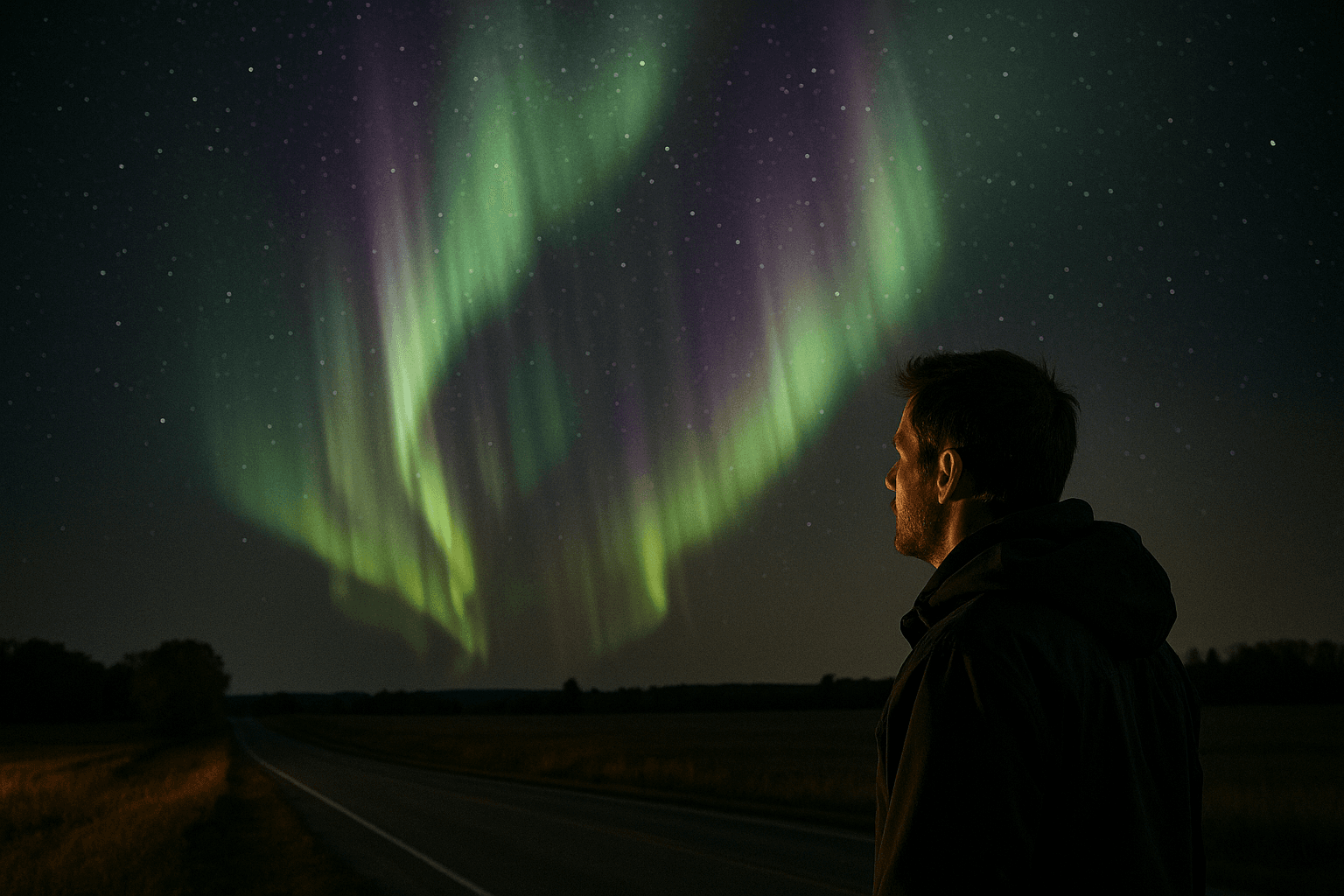
Beyond spectacular skies, the event carried practical implications. NOAA noted that strong geomagnetic storms can cause brief disruptions to high frequency radio communications and degrade some satellite navigation signals. Space weather analysts emphasize that these effects are typically intermittent and localized, but can be important for aviation that relies on HF communication, for mariners, and for operators of sensitive surveying and timing equipment.
For viewers hoping to catch the aurora, basic guidance from forecasters and experienced observers remains straightforward. Visibility improves in the darkest skies after local sunset and before sunrise. Facing north in mid latitude locations increases the chance of seeing northern lights, and observers should monitor NOAA’s Space Weather Prediction Center pages for updates on storm strength and timing. Space.com’s coverage included links to those NOAA forecast maps and to real time alerts from the agency.
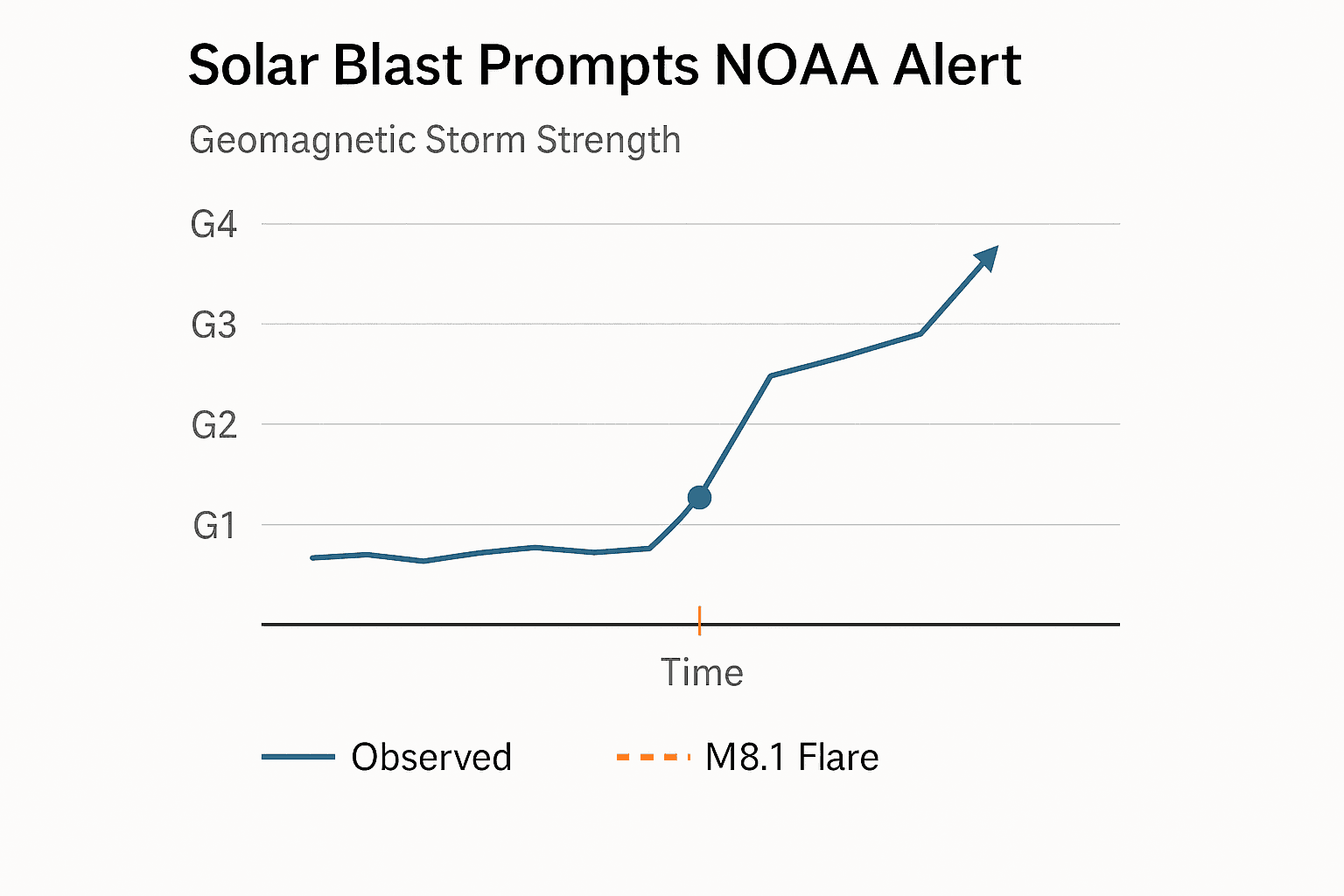
The December event underscores how active solar regions can influence conditions at Earth on short notice. Scientists continue to study the complex active region that produced the M8.1 flare to better understand what made its eruption particularly geo effective. For now the storm serves as a reminder that space weather can produce both striking natural spectacles and tangible disruptions, and that timely monitoring by agencies such as NOAA is essential for preparing affected industries and the public.