Supreme Court Considers Ending 90 Year Limit on Removals
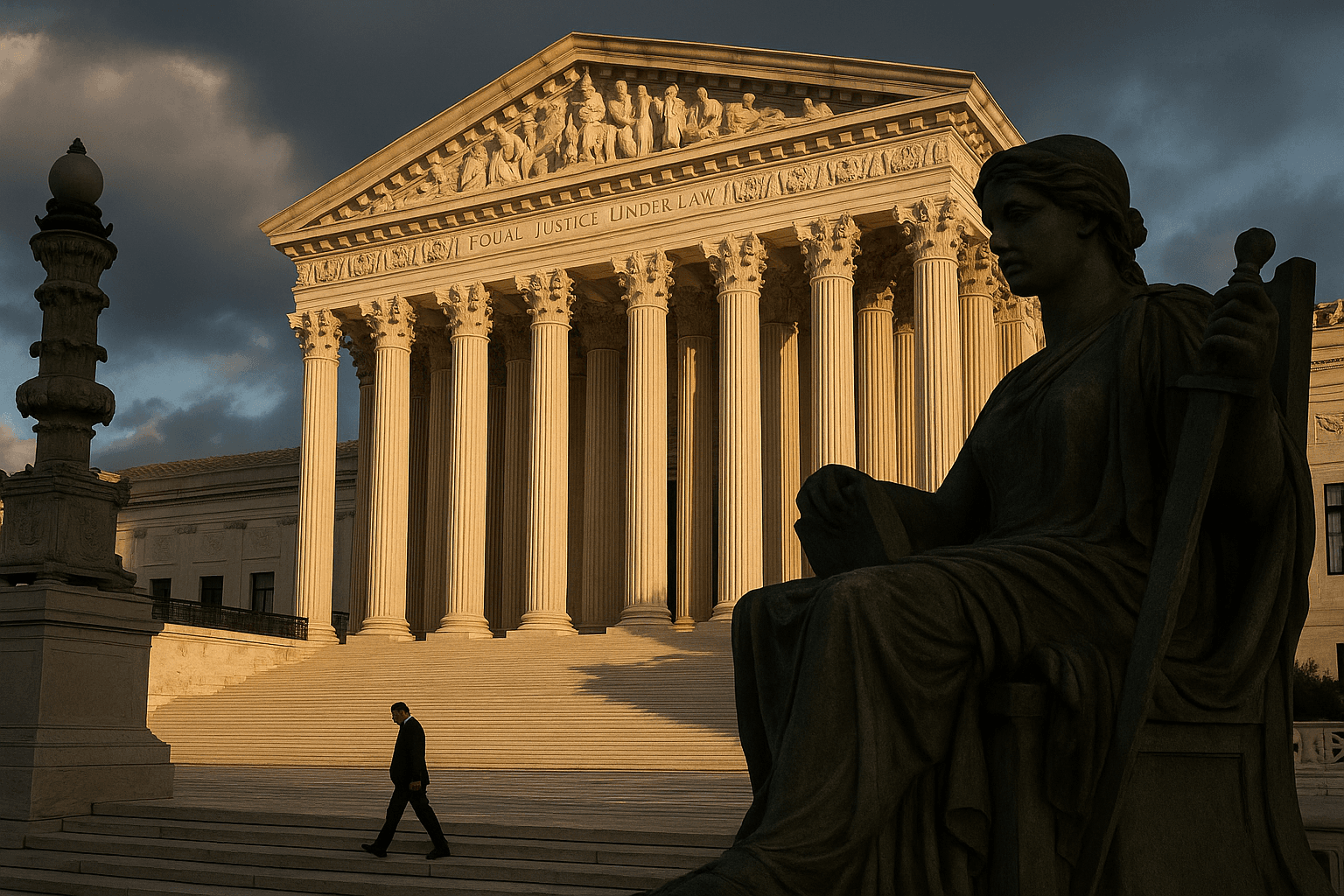
The Supreme Court on December 6 hears a case that challenges Humphrey’s Executor, the 1935 precedent that limits a president’s authority to remove leaders of independent federal agencies without cause. A ruling that narrows or overturns that decision would expand presidential control over regulatory bodies including the Federal Trade Commission and the National Labor Relations Board, with wide implications for the balance of power and regulatory consistency.
The Supreme Court is weighing a challenge that could dramatically alter the constitutional architecture governing federal regulators and the separation of powers between the presidency and Congress. The case arises from the firing of a Federal Trade Commission commissioner and asks whether the president may remove officials of independent regulatory bodies at will, abandoning the nearly 90 year precedent set in Humphrey’s Executor in 1935 that has long permitted for cause removal protections for certain agency leaders.
Conservative justices have privately and publicly signaled openness to scaling back precedents that constrain executive removal power, a development that has drawn attention from legal scholars and former officials who say a decision for the president could reshape how regulatory policy is developed and enforced. The question before the court does not concern the entire administrative state, but the ruling could be applied to an array of independent agencies including the FTC and the National Labor Relations Board and potentially extend to securities, communications, and consumer protection regulators.
The legal stakes are technical and institutional. Humphrey’s Executor allowed Congress to create independent agencies whose decision makers could be insulated from political direction through statutory for cause removal protections tied to inefficiency, neglect of duty, or malfeasance. That insulation has supported continuity in law enforcement, adjudication, and rulemaking across administrations. Critics of the doctrine argue it can stymie accountability for politically sensitive policymaking and conflict with unitary executive principles. Supporters warn that removing those protections would permit wholesale politicization of enforcement and rulewriting, as presidents could replace agency leaders with loyalists and align agency agendas with electoral priorities.
A precedent of contemporary relevance is the 2020 decision in Seila Law, where the Court curtailed for cause protections for the director of the Consumer Financial Protection Bureau, a decision that narrowed Humphrey’s practical reach and signaled judicial readiness to revisit removal doctrines. The current case tests how far the Court will go in applying or eroding that trajectory.
Policy consequences would be immediate and practical. Agencies tasked with regulating markets, labor relations, public health and communications could see turnover tied to presidential policy preferences rather than statutory goals or expertise. That dynamic could accelerate shifts in enforcement priorities, alter the pace and content of rulemaking, and weaken internal safeguards that protect adjudicatory independence. It could also change the incentives for Congress, which might respond by drafting new statutory protections, restructuring agencies, or relying more heavily on executive branch departments for governance.
The decision will also echo through electoral politics and civic engagement. Voters and lawmakers face clearer choices if agency leadership becomes a more direct locus of presidential power. The ruling could shift where political accountability resides, heightening the importance of confirmation fights in the Senate and the role of midterm elections in shaping regulatory agendas.
Whatever the outcome, the court’s ruling will force a reassessment of how American government balances independence, accountability, and democratic control in the institutions that regulate daily life and markets. Lawmakers, regulators, businesses and civic groups are preparing for a legal realignment that may demand new legislative strategies and renewed public attention to the composition and governance of federal agencies.