Trump Frames Military Strategy to Deter China Over Taiwan
The Trump administration released an updated National Security Strategy that prioritizes preventing conflict with China over Taiwan by strengthening U.S. and allied military capabilities. The shift underscores rising tensions in East Asian waters, the strategic importance of Taiwan's semiconductor industry, and the administration's push for greater burden sharing among partners.
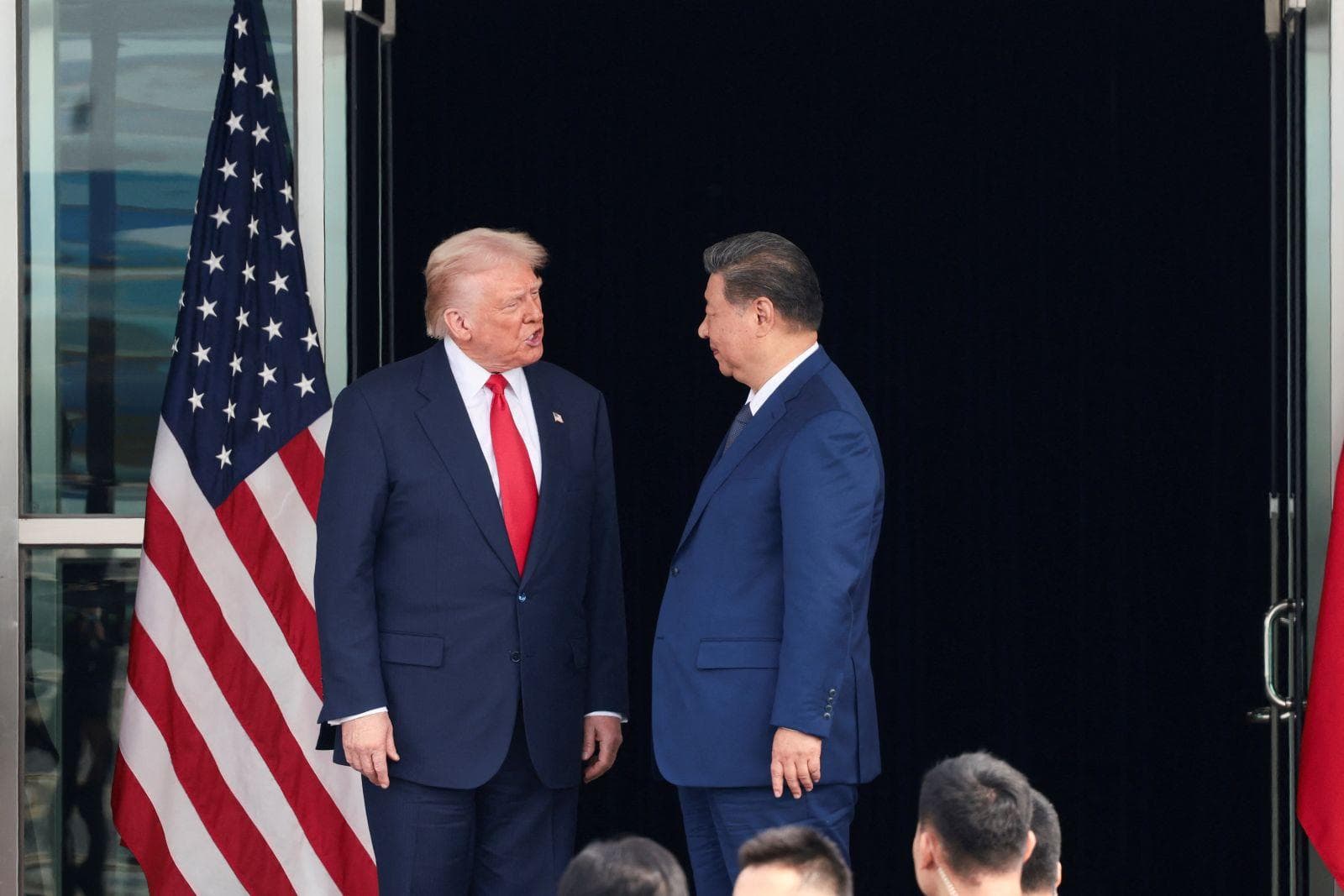
The White House on Friday set out a sharpened U.S. approach to the most perilous flashpoint in Asia, saying that preventing a conflict with China over Taiwan and asserting freedom of navigation in the South China Sea would require a broader and more capable military posture together with more active allied participation.
The National Security Strategy, the first issued since President Donald Trump took office in January, said "Deterring a conflict over Taiwan, ideally by preserving military overmatch, is a priority." The document gives more sustained attention to Taiwan than the 2017 strategy did, mentioning the island eight times across three paragraphs rather than once. It highlights Taiwan's strategic location on trade rich sea lanes and its dominant role in semiconductor manufacturing as reasons for heightened focus.
The paper set out a regional security concept keyed to the chain of islands stretching from Japan to Southeast Asia. "We will build a military capable of denying aggression anywhere," it said, and the strategy argues that the United States cannot bear the burden alone. It called for allies to shoulder more of the logistical, operational, and financial weight of collective defense while enhancing interoperability with U.S. forces. The document further states that the measures will reinforce "U.S. and allies' capacity to deny any attempt to seize Taiwan" or any other steps that would "make defending that island impossible," according to the release.
The publication comes as Beijing has stepped up its maritime and air activity near Taiwan and around Japan, deploying vessels in what Chinese state media and U.S. officials described as the largest show of maritime force in the region this week. China regards Taiwan as part of its territory and has never renounced the use of force to achieve unification, a stance that has alarmed Tokyo, Manila, Canberra and other U.S. partners.

Washington has long maintained a policy of strategic ambiguity while supplying Taiwan with defensive arms under the 1979 Taiwan Relations Act. The new strategy emphasizes preserving deterrence through capability rather than explicit commitments of how the United States would act in a crisis. That distinction reflects both domestic political considerations and diplomatic calculations as President Trump prepares to seek a further thaw in relations with Beijing. The administration plans a presidential visit to Beijing in April, where leaders are expected to discuss extending a trade truce.
The release also comes amid mixed signals from Washington. Mr. Trump has at times expressed a desire for closer ties with President Xi Jinping and is viewed by some regional governments as potentially more transactional than his predecessors. Yet the administration this year signed a law requiring periodic reviews of U.S. engagement with Taipei and approved a $330 million sale of fighter jet parts to the island, steps Taipei portrayed as tangible support.
Analysts said the strategy signals a hardening U.S. posture toward the Indo Pacific while testing the willingness of allies to match rhetoric with resources. For smaller regional states, the document offers reassurance on American resolve even as it presses them to contribute more to collective defense, a request that will carry domestic political and fiscal consequences for partners from Tokyo to Manila. International law and the norms of maritime freedom are implicit backstops in the paper, but implementation will depend on diplomacy, force posture, and the complex interplay of deterrence, economic ties and strategic calculation across the region.