Taiwan Becomes Super-Aged as Seniors Top 20 Percent
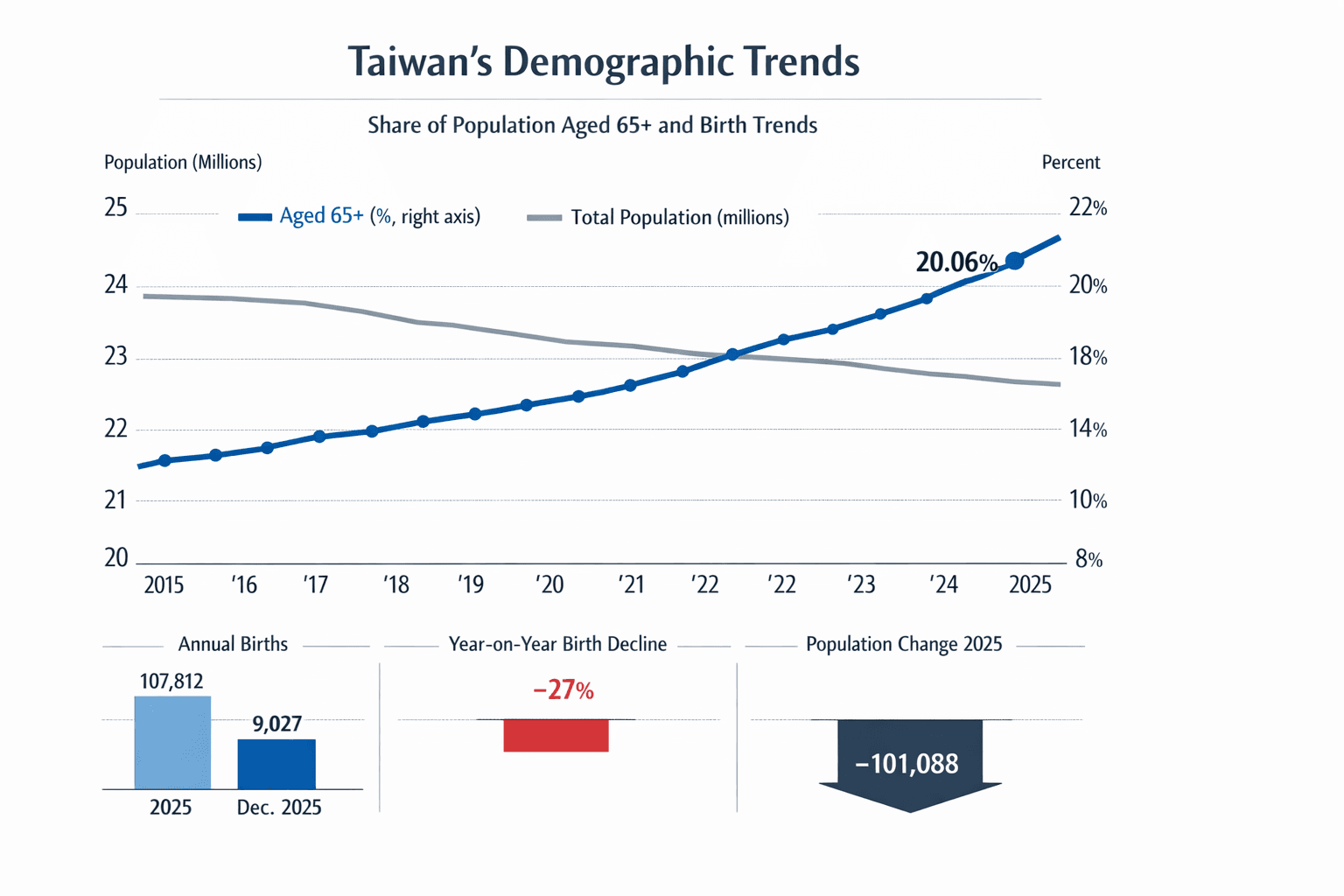
Taiwan crossed the international threshold for a "super-aged" society in 2025, with 20.06 percent of residents aged 65 or older, the Ministry of the Interior reported on Jan. 9, 2026. The shift—paired with a record low 107,812 births and a second consecutive year of population decline—tightens fiscal and labor constraints that will shape policy, markets, and long-term growth.

Taiwan officially crossed the international threshold for a super-aged society in 2025, the Ministry of the Interior reported on Jan. 9, 2026, when residents aged 65 and older reached 4,673,155 people, or 20.06 percent of a total population of 23,299,132 at the end of December. The milestone, defined by international practice as 20 percent of the population aged 65+, marks an acceleration of demographic change that has been decades in the making: Taiwan became an aging society in 1993 and an aged society in 2018.
The 2025 data also underscore a deepening fertility collapse. Total newborns in 2025 fell to a record low 107,812, continuing a downward trend in births that has persisted for the better part of a decade. December alone registered 9,027 births, a 27 percent decline year on year, and the crude birth rate for the month was 4.56 births per 1,000 people. The total population dropped by 101,088 from the end of 2024, marking the second consecutive annual decline since Taiwan first recorded a population fall in 2020.
Regional contrasts within Taiwan are stark. Among six special municipalities, Taipei recorded the highest share of residents 65 and older at 24.18 percent, while Kaohsiung and Tainan exceeded 20 percent at 20.79 and 20.48 percent respectively. New Taipei stood just below the threshold at 19.95 percent. On the county level, Chiayi County led at 24.11 percent, with Nantou, Keelung, Pingtung, Yunlin, Hualien and several others all above 20 percent. Hsinchu City and Hsinchu County were among localities with the youngest age structures at 16.16 and 15.08 percent respectively.

The demographic mix—20.06 percent aged 65+ versus just 11.51 percent aged 0–14—carries immediate economic implications. A shrinking base of working-age people will intensify labor shortages in manufacturing and services, increase the fiscal burden of pensions and health care, and constrain potential GDP growth unless offset by productivity gains or higher immigration. Real estate and consumer markets may also shift toward smaller households and age‑friendly services, while demand for long-term care and chronic disease management will rise.
Policy makers have begun to respond. In December 2025 the government proposed expanding access to assisted reproductive services to include single women and married same-sex female couples as part of measures intended to boost fertility. Demographers and analysts cited in reporting point to social and economic drivers for low fertility: later and less frequent marriage, rising living costs and housing pressures, and insufficient childcare support that raise the cost of childrearing for working parents.
Reversing a super-aged trajectory is unlikely in the near term. The combination of sustained low birth rates, an aging population already concentrated in major cities and rural counties, and continuing population decline presents a multi-decade challenge for Taiwan’s public finances, labor markets and social fabric. The MOI’s figures make clear that policy choices this year and next will determine how quickly the economy adapts to an older, smaller population.
Sources:
Know something we missed? Have a correction or additional information?
Submit a Tip