Ukrainian Commander Says Troops Hold Northern Pokrovsk, Withdraw Elsewhere
Ukraine’s top ground forces commander told journalists that Ukrainian troops continue to hold portions of the devastated city of Pokrovsk, while conducting tactical withdrawals from exposed forward positions. The update underscores fluid front line conditions in Donetsk region, and carries implications for logistics, civilian protection, and international support as both Kyiv and Moscow contest control.

Oleksandr Syrskyi, commander of Ukraine’s ground forces, told journalists on December 9 that Ukrainian troops continued to hold parts of Pokrovsk even as some units had been pulled back from untenable positions in recent days. He said Ukrainian forces had secured roughly 13 square kilometers in and around the city since mid November, and that Kyiv still controlled the northern sector up to the rail line. At the same time he acknowledged that units were withdrawn five to seven kilometers from exposed forward positions in order to shorten lines and reduce casualties.
Pokrovsk has become a focal point of sustained combat because of its role as a local logistics hub in Donetsk region. Control of its transport nodes and supply corridors affects the ability of both sides to move materiel and reinforce positions across multiple sectors of the eastern front. Syrskyi warned that Russian forces were massing nearby and accused Moscow of deliberate disinformation about battlefield gains. Kyiv has rejected Russian assertions that the city has been captured.
The public account by Ukraine’s top ground commander comes amid a broader pattern of highly contested urban fighting and competing narratives on the battlefield. Military control in the area is fluid, with ground units on both sides frequently repositioning to consolidate defensive lines or to avoid encirclement. The tactical withdrawals described by Syrskyi are consistent with a defensive approach that seeks to preserve combat power and civilian life while contesting key terrain.
Beyond the immediate military calculus, the fighting in and around Pokrovsk has humanitarian implications for civilians trapped in a devastated urban environment. Destruction of infrastructure and disruptions to supply routes have the potential to impede deliveries of food, medicine, and shelter. International humanitarian law obliges parties to a conflict to protect civilians and to allow unimpeded access for relief, obligations that are harder to meet when front lines shift and control over roads and rail is contested.
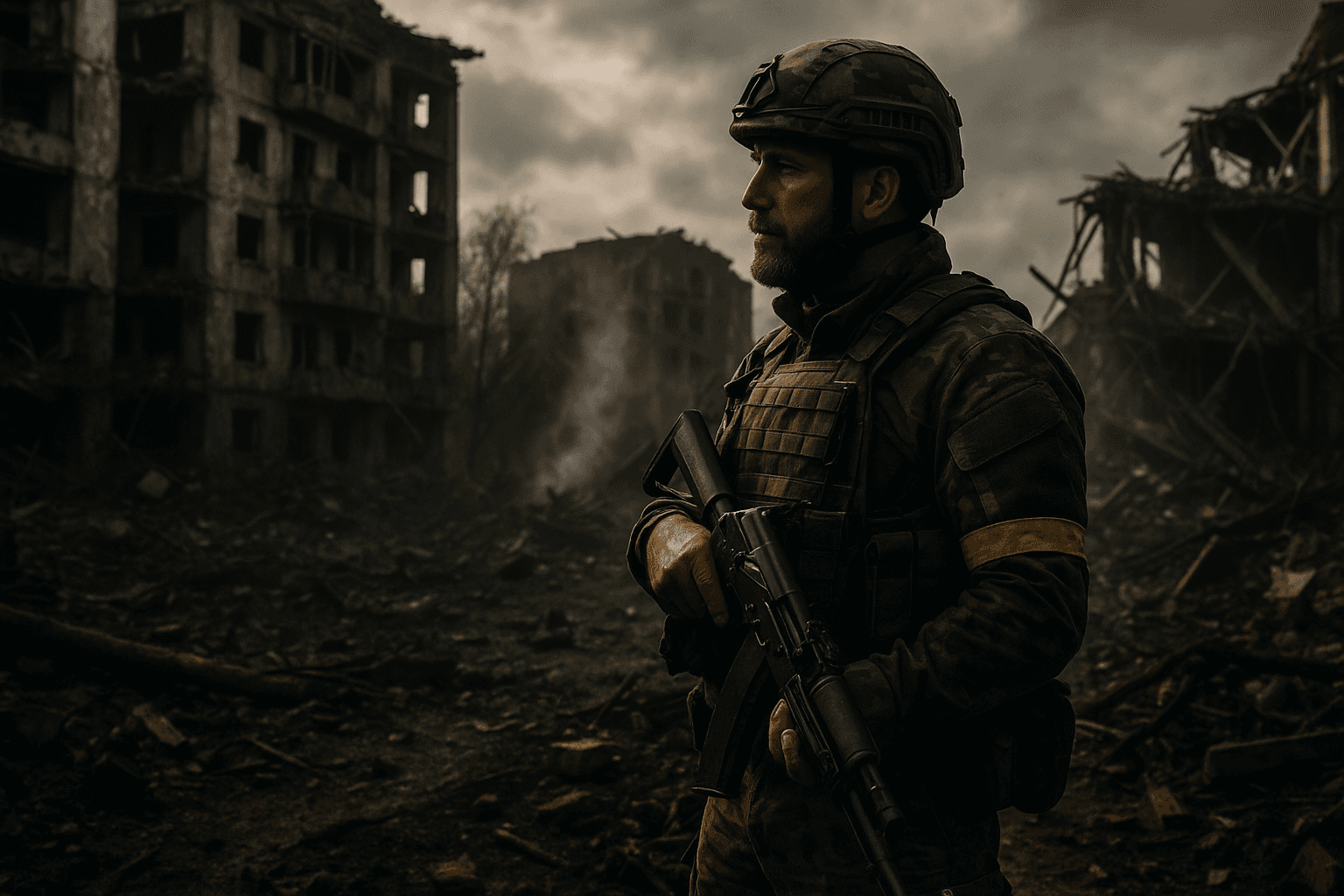
Strategically, the situation in Pokrovsk will be watched by Western capitals and regional actors as a barometer of the broader campaign in eastern Ukraine. If Russian forces were to establish uncontested control of the city and its transport nodes, analysts say that would complicate Ukrainian logistics and could compel Kyiv to redeploy forces or request increased matériel. Conversely, Ukrainian consolidation of defensive positions north of the rail line could blunt further advances and shape the posture of future operations.
Syrskyi’s briefing added a layer of clarity to a week of competing claims, but it also highlighted the unpredictable character of the fighting. For residents and displaced families, the immediate concern is safety and access to aid. For military planners and diplomats, Pokrovsk represents one of many contested spaces whose outcome may influence the balance along the front and the diplomatic calculations of governments trying to avoid a wider escalation.
Sources:
Know something we missed? Have a correction or additional information?
Submit a Tip