U.S. Seizes Aframax Tanker Olina in Caribbean Amid Sanctions Crackdown
U.S. authorities moved to seize the Aframax tanker Olina in the Caribbean on Jan. 9, 2026, as part of an expanded campaign to interdict vessels carrying Venezuelan oil that Washington says are violating sanctions. The action signals a tougher enforcement posture with potential consequences for shipping costs, insurance markets and the global trade in heavy crude.
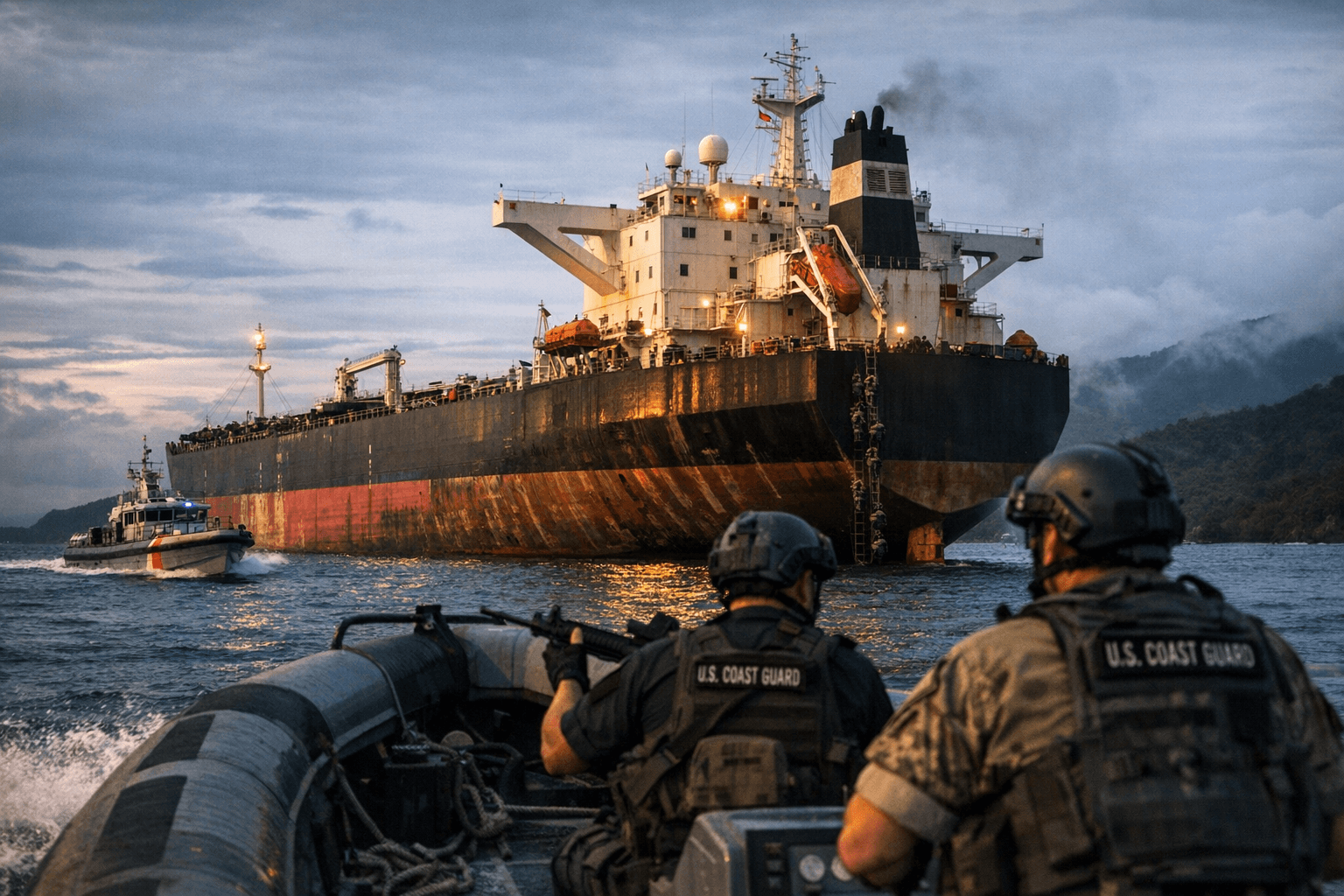
U.S. authorities moved to seize the Aframax tanker Olina in the Caribbean on Jan. 9, 2026, as part of a broader operation aimed at disrupting shipments of Venezuelan crude that Washington contends are being transported in breach of sanctions. The vessel had transited from Venezuela and was intercepted in Caribbean waters, officials said, marking one of the most visible enforcement actions in a campaign that U.S. agencies have expanded in recent months.
Aframax tankers typically carry several hundred thousand barrels of crude, and the Olina’s seizure is intended to strike at revenue streams that sustain Venezuela’s oil sector. The operation underscores an enforcement strategy that relies on maritime interdictions and legal forfeiture to deter shipowners and traders from participating in sanction-evasion networks. Seized vessels and their cargoes generally become subject to U.S. forfeiture proceedings, a process that can result in auction or other disposition under court supervision.
The seizure comes amid renewed scrutiny of ship-to-ship transfers and opaque trading arrangements that analysts say have allowed Venezuelan crude to reach global markets despite restrictions. Over the past three years, traders have increasingly used complex routing, reflagging and temporary identity changes to move barrels from PDVSA-controlled terminals to buyers in the Caribbean, Asia and elsewhere. U.S. enforcement actions aim to increase the cost and risk of those tactics by targeting the vessels themselves rather than only financial intermediaries.
Market implications are nuanced. Removing a single Aframax from trade will not materially alter global oil balances; the world consumes roughly 100 million barrels per day, and Venezuelan exports, while meaningful for certain refiners, represent a small share of that total. However, escalation of interdictions can raise risk premia for vessels and insurance covering shipments suspected of carrying sanctioned cargo. Insurers and protection-and-indemnity clubs may tighten underwriting, prompting higher freight rates and longer voyage times as owners avoid contested routes or require additional documentation.
For refiners that process heavy, sour crudes—grades for which Venezuela is a major supplier—consistent access has been uneven. Heightened enforcement could push buyers toward alternative sources or premium contracts that include tougher provenance verification. That substitution would have second-order effects on commodity price spreads, refining margins for certain configurations, and regional fuel supplies in parts of the Caribbean and Latin America that rely on Venezuelan shipments.
Politically, the seizure reinforces Washington’s objective of cutting hard-currency flows to the Venezuelan government while signaling to intermediaries that maritime assets are vulnerable to legal action. It also raises the prospect of retaliatory measures from Caracas or from trading partners that have facilitated past cargo movements. In the longer term, sustained interdiction pressure is likely to reshape the logistics of sanctioned crude trade—raising operational costs, incentivizing more clandestine transfers, and prompting both traders and insurers to redesign compliance systems to manage legal and commercial risk.
Sources:
Know something we missed? Have a correction or additional information?
Submit a Tip