Wall Street Bets Chinese Stocks Will Extend $2.4 Trillion Rally
Global fund managers are increasingly bullish that the $2.4 trillion rebound in Chinese equities will continue into 2026, citing heavy AI investment, stepped up policy support, and renewed engagement with foreign investors. The shift matters because rising allocations to China could reshape global portfolio flows and valuations while leaving investors exposed to geopolitical and domestic demand risks.

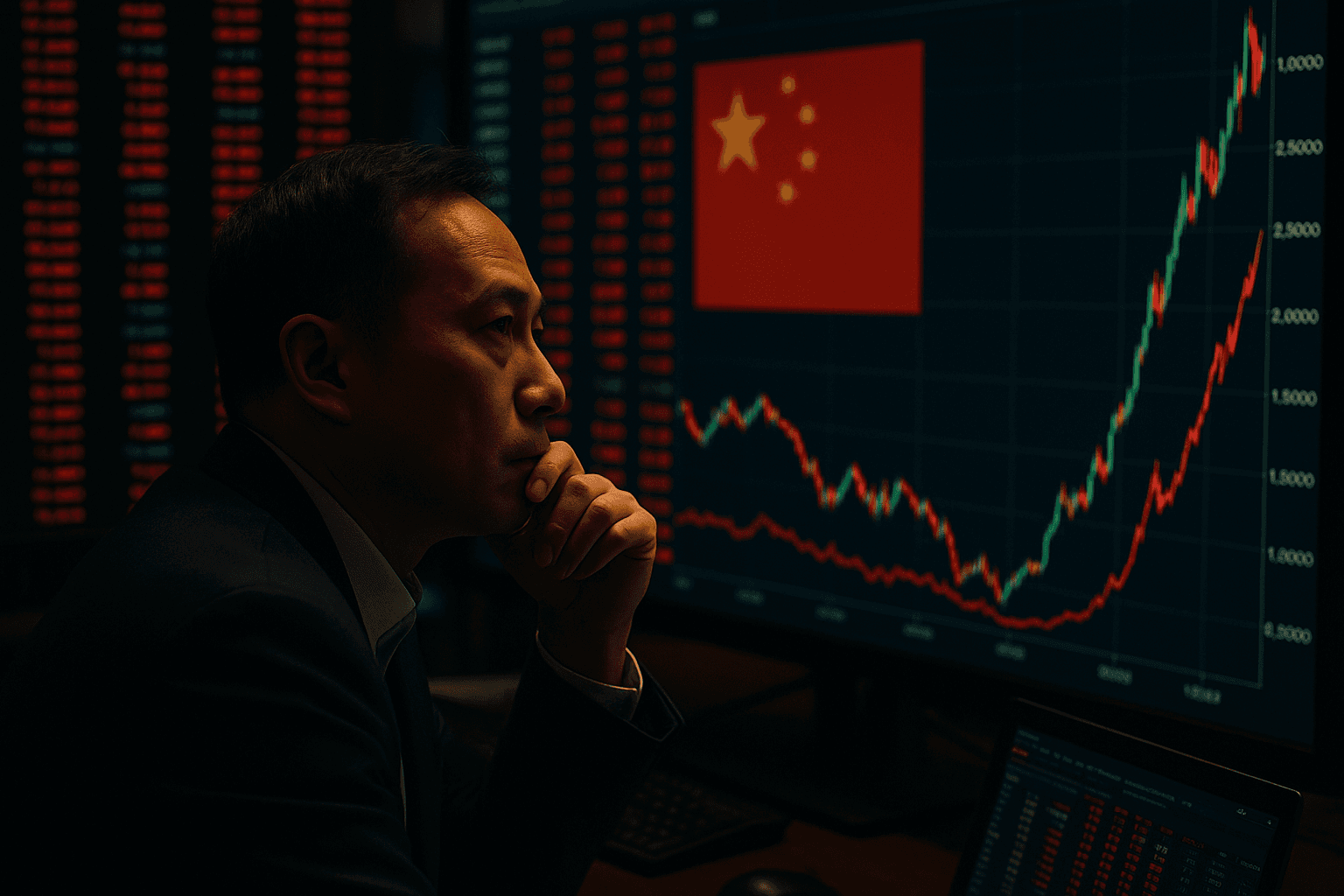
Global asset managers piled into Chinese equities over the course of 2025 and now expect the $2.4 trillion rally to press on into next year, according to a Bloomberg survey of institutional investors. Fund managers pointed to sustained corporate and state investment in artificial intelligence, clearer policy support from Beijing, and renewed re engagement with foreign funds as the core drivers behind their optimism.
The move reflects a broader recalibration on Wall Street. Several major houses raised their target allocations to Chinese shares heading into 2026, increasing demand for onshore A shares and Hong Kong listed stocks. The inflows have helped propel market capitalizations higher and narrowed valuation gaps between China and other major markets. For global investors, larger weightings in Chinese equities will lift exposure to a market that remains a sizeable component of international benchmarks.
Behind the bullish tone is a narrative of structural opportunity. Investors say China is deploying significant capital into data centers, chip development, and AI infrastructure that could underpin productivity gains and lift corporate earnings over the medium term. At the same time, policymakers have signaled a willingness to support growth through a mix of monetary and fiscal measures and to smooth regulatory uncertainty that had hampered sentiment in previous years. The renewed re engagement of foreign funds has reduced friction for cross border investing and prompted some managers to accelerate purchases rather than sit on the sidelines.
The market reaction is not without cost. Strong demand and rising allocations have pushed some valuation measures to levels that make the rally vulnerable to shocks. Fund managers surveyed by Bloomberg also flagged geopolitical tensions and domestic demand dynamics as the principal downside risks. Ongoing technology competition between Beijing and Washington and the potential for new restrictions on capital or technology flows could undermine investor confidence. Domestically, a fragile property sector and uneven consumer spending remain constraints on a broader cyclical recovery.
The implications for global markets are twofold. First, if inflows continue, China will exert outsized influence on global equity returns and portfolio volatility, increasing the importance of Chinese macro data and policy statements for international fund performance. Second, a sustained rally could prompt reassessments of risk premia across emerging markets as investors chase growth themes tied to AI and industrial upgrading.
For policymakers in Beijing, the market response creates a delicate balancing act. Authorities must sustain measures that support investment and foreign access while managing financial stability risks and the political economy of targeted industrial promotion. For asset managers, the question is how much incremental allocation is justified by the structural case for AI led growth versus the possibility of policy shifts or demand disappointments that could quickly reverse gains.
As 2026 approaches, the contest between bullish positioning and underlying macro and geopolitical risk will determine whether the $2.4 trillion rally becomes a durable shift in global capital flows or a cyclical rebound with limited staying power.
%3Amax_bytes(150000)%3Astrip_icc()%2F100901867_soybeans-60844bfb2b68432a8447f18fa34d28b5.jpg&w=1920&q=75)