Welch’s Longstanding Veterans Day Parade Anchors Community Identity and Needs
Welch’s long-running Veterans Day Parade, one of the nation’s longest continuously held events of its kind, remains a central ritual for McDowell County, honoring a high veterans-per-capita population and drawing families, civic groups, and visitors downtown. Beyond commemoration, the parade highlights local economic benefits for downtown businesses and surfaces ongoing public health and access challenges facing veterans in rural communities.

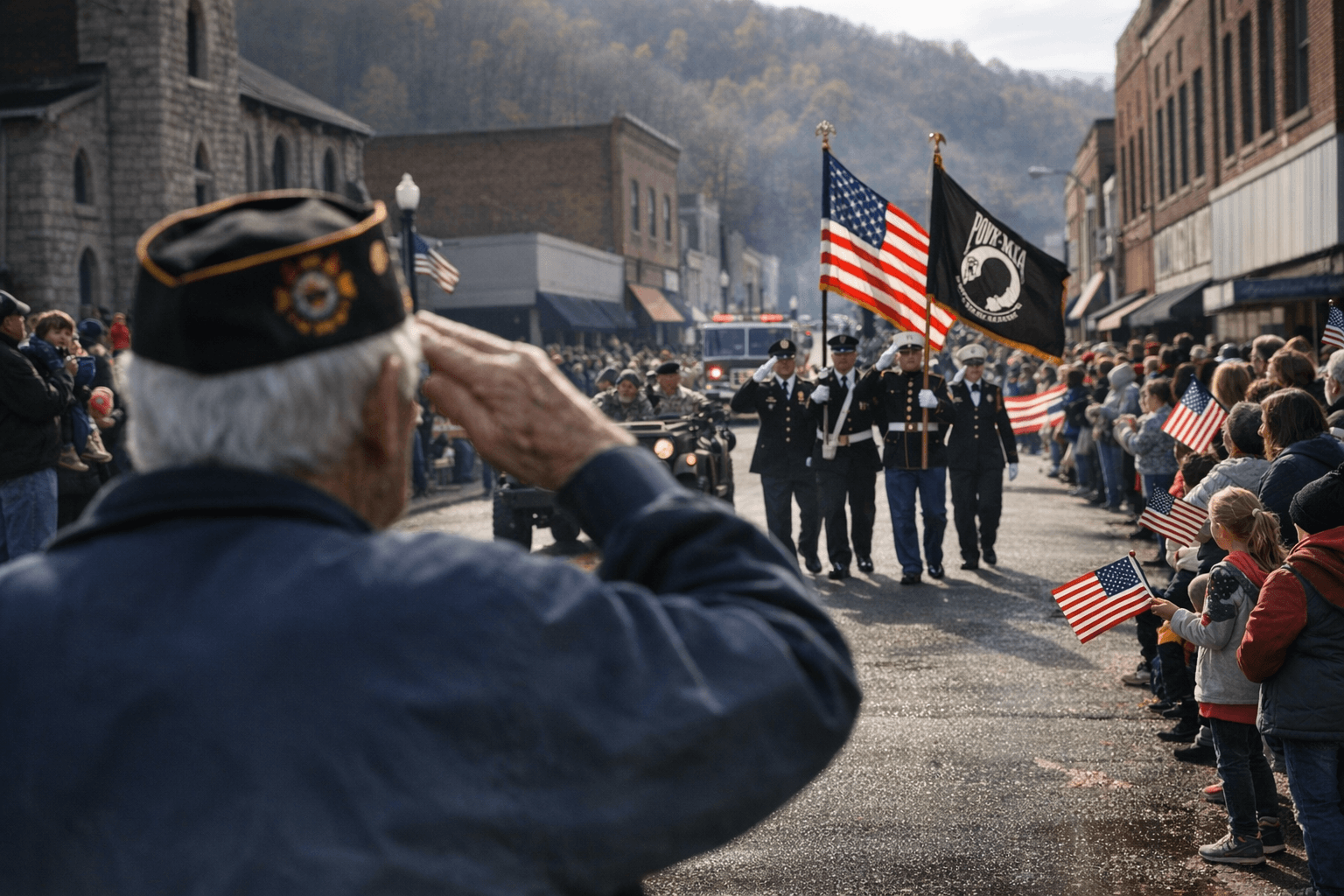
The Veterans Day Parade in Welch is more than a tradition; it is a civic anchor that shapes McDowell County’s identity. As one of the country’s longest-running continuous Veterans Day parades, the event gathers residents at downtown landmarks including the courthouse and riverfront memorials for speeches, performances, and ceremonies that knit together generations of families and neighbors.
Civic partners and volunteer groups organize the annual programming, coordinating marching units, musical performances, and community vendor presence that bring foot traffic to local shops and restaurants. The parade’s ability to draw visitors provides an influx of tourism dollars at a time when downtown businesses rely on seasonal boosts and community events to remain viable. For many residents, the procession and accompanying ceremonies serve as a vital expression of collective memory and recognition for a population that includes a comparatively high share of veterans.
The public health implications of such a demographic pattern are significant for McDowell County. Veterans frequently carry unique medical and mental health needs that require sustained access to care, transportation, and social supports. In a rural county, barriers such as provider shortages, long travel distances to clinics, and limited public transit can exacerbate disparities in access to primary care and specialty services. The parade’s visibility offers an opportunity to connect veterans with outreach programs and community resources, yet commemoration alone does not address gaps in services.
Organizers and civic leaders can build on the parade’s reach by integrating health-focused services into annual programming. Mobile clinics, enrollment stations for veterans’ benefits, mental health resource tables, and coordinated transportation information at vendor areas could translate recognition into tangible support. County-level health planning and state or federal policy efforts that prioritize rural outreach, telehealth expansion, and targeted funding for veteran services would align with the community’s demographic needs and strengthen equity.
As Welch prepares each year to line the streets, the parade remains a powerful reminder of civic solidarity and local history. To convert public gratitude into improved outcomes, community partners and policymakers must pair ceremonial recognition with sustained investments in health care access, social services, and economic supports that honor veterans not only in memory, but in daily life.
Sources:
Know something we missed? Have a correction or additional information?
Submit a Tip