White House Strategy Rebukes Europe, Asserts U.S. Control in Americas
The White House released a new national security strategy today that sharply criticizes European allies and signals a more assertive U.S. posture across the Western Hemisphere. The document recasts priorities under an "America First" doctrine and raises immediate questions about alliance cohesion, congressional oversight, and the legal bounds of U.S. action in the hemisphere.
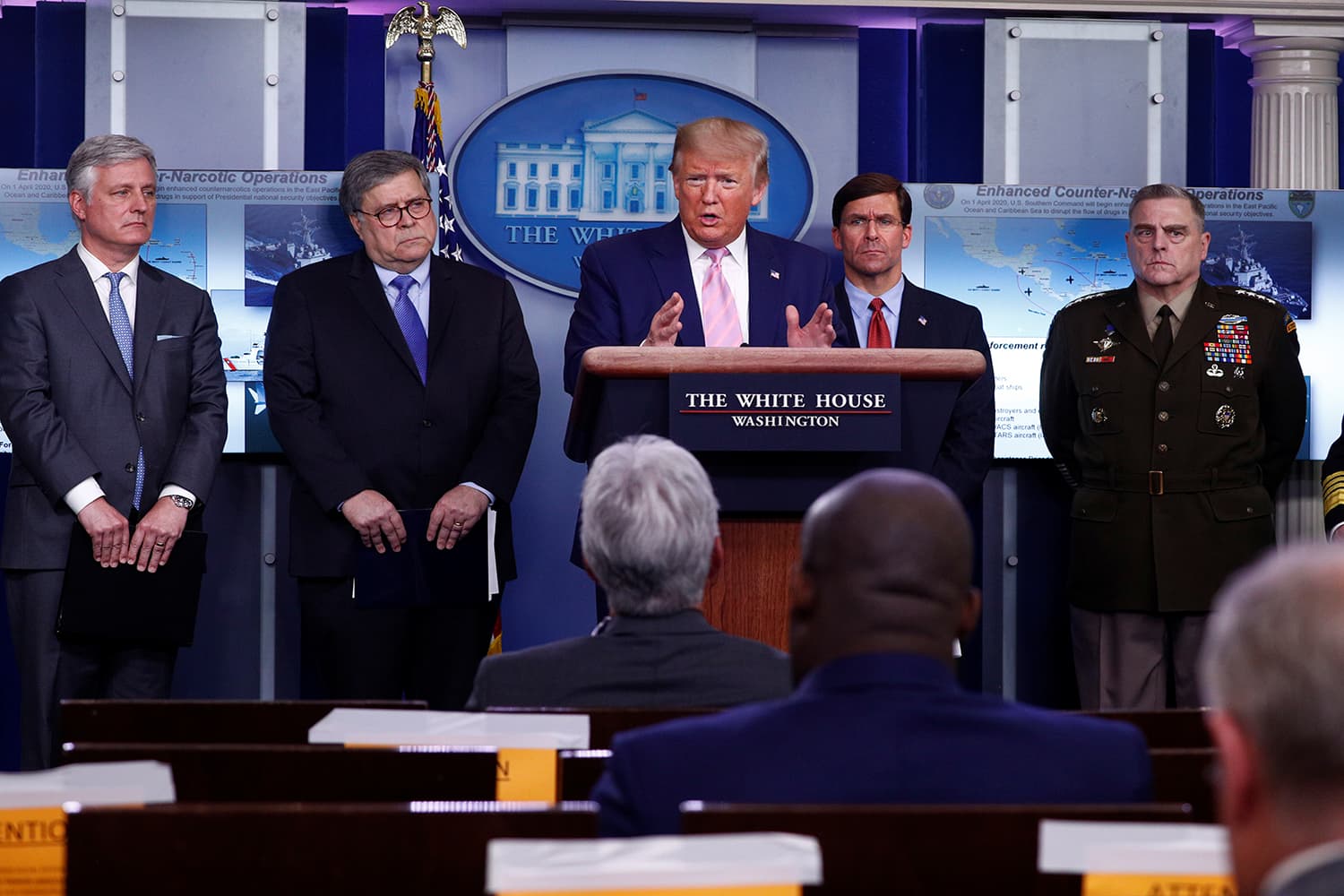
The White House published a 20 page national security strategy today that reframes American priorities around an "America First" doctrine, arguing the United States should prioritize what "works for America." The document mounts an unusually blunt critique of many European partners, while advancing a revived, more interventionist posture in the Western Hemisphere that officials say will rely on targeted deployments and the use of lethal force where necessary to disrupt drug trafficking and control migration.
The strategy accuses a number of European countries of economic stagnation and social policies that it claims risk "civilizational erasure" over the next two decades. It singles out migration policies, declining birthrates and restrictions on speech and political opposition as factors that have, in the administration's view, weakened those partners and cast doubt on their long term reliability as allies. The text urges European governments to increase defense spending and shoulder more of the collective security burden as the United States seeks to rebalance relationships.
In Latin America the strategy advances what it calls a modernized "Trump Corollary" to the Monroe Doctrine, elevating the hemisphere as a direct area of U.S. strategic responsibility. It signals expanded readiness to act militarily in the region, including targeted deployments and striking criminal networks with lethal force when deemed necessary to protect U.S. interests. The approach is framed as a response to sustained migration pressures and the flow of drugs that U.S. officials say threaten domestic security.
On the Middle East and China the document describes a shift away from efforts to reshape governance in the Middle East in favor of non intervention and closer economic partnerships, especially with Gulf nations. With respect to Beijing, the strategy seeks to "rebalance" relations while emphasizing continued U.S. military superiority to deter conflict over Taiwan, and it renews a call for allies to increase their defense contributions.

Perhaps most striking for American partners in Europe is the strategy's treatment of Russia and the war in Ukraine. The document calls for ending the conflict to restore strategic stability and indicates a willingness to improve relations with Moscow. That posture is likely to intensify concerns among capitals deeply involved in supporting Kyiv, and could complicate coordination on sanctions and military assistance.
Allied capitals and some U.S. officials reacted with alarm, warning that the language could undermine long standing alliances and isolate the United States at a moment of overlapping global crises. Supporters of the strategy describe it as a pragmatic reorientation toward direct protection of American interests. The Associated Press published the full strategy text with analysis and responses from allied capitals.
The document raises immediate policy and institutional questions at home. Congress faces potential fights over authorizations and appropriations tied to expanded deployments in the Americas and new operational authorities. Legal experts and civil society groups will press for clarity about the limits on the use of force, oversight mechanisms and the humanitarian consequences of intensified migration controls. For voters and civic organizations the strategy will be a test of how national security priorities intersect with migration politics, economic policy and transatlantic cooperation in the months ahead.