Zelenskiy orders emergency measures as strikes cripple Ukraine's energy grid
Zelenskiy will declare an energy sector emergency to speed repairs and imports after strikes left millions without heat in severe winter.
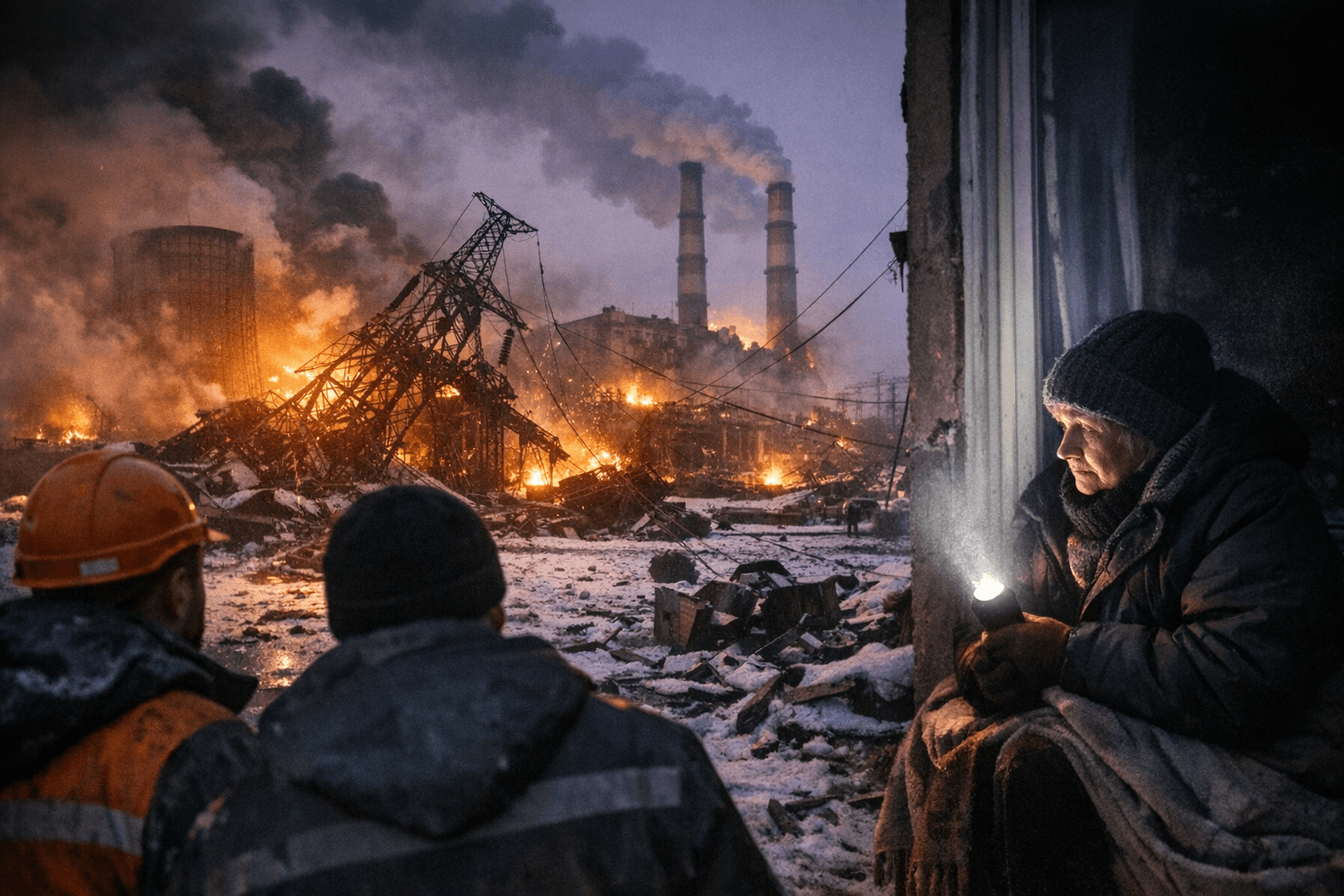
President Volodymyr Zelenskiy announced on January 14 that he will declare a state of emergency for Ukraine’s energy sector to accelerate repairs, coordinate relief and address widespread outages caused by sustained Russian attacks amid a severe winter. He said on X that "The consequences of Russian strikes and deteriorating weather conditions are severe," and that "Overall, a state of emergency will be declared for Ukraine’s energy sector … Many issues require urgent resolution."
The emergency designation is designed to centralize authority and speed decision making as crews work around the clock to restore power and heating. Zelenskiy ordered the creation of a permanent coordination headquarters in Kyiv, a continuous task force to prioritize restoring heat and electricity, and the assignment of First Deputy Prime Minister Denys Shmyhal to oversee the response. Officials also signaled an intensified push to increase electricity imports, to procure damaged equipment from abroad and to deregulate backup supplies where needed.
Operational pressure on the grid has been severe. Ukrainian officials reported that more than one million people in southeastern regions experienced hours without heating and water after recent strikes. Private operator DTEK, which serves roughly 5.6 million customers, said it is operating in "permanent crisis mode." Its chief executive, Maxim Timchenko, described the attacks as "waves of drones, cruise and ballistic missiles," and said the intensity has been so frequent "we just don't have time to recover." Repairs have been compounded by nighttime temperatures in Kyiv dipping close to -20°C (around -4°F), heightening humanitarian risk.
The government's immediate measures include expanding emergency help points in Kyiv to provide heat and power for residents and potentially relaxing the capital’s midnight curfew to facilitate access to aid. The legal timing, geographic scope and exact powers of the state of emergency were not published at the time of the announcement, and formal documentation is expected from the presidential office to clarify next steps and ministerial authority.
The move carries clear market and policy implications. Short-term, Ukraine’s plan to import more electricity and buy replacement equipment will raise demand in regional energy markets and require swift financial support from international partners. European utilities and grid operators will face operational and contractual adjustments if cross-border flows rise, and spot electricity prices in nearby markets could spike during winter supply crunches. For Ukraine, the fiscal cost of accelerated procurement and emergency logistics will add pressure to an economy already strained by war and reconstruction needs.
Politically, assigning Denys Shmyhal to lead the response concentrates accountability in a senior economic portfolio and signals Kyiv’s prioritization of energy security as core to national resilience. Strategically, the episode reinforces a longer-term trend: targeted strikes on power infrastructure as a tactic to amplify civilian hardship in winter months, which raises questions about the durability of the grid, the need for decentralized backup systems and the pace of international assistance for rapid restoration and modernization.
Key details remain to be confirmed, including the exact text and effective date of the emergency decree, the scale and timing of planned imports, and the locations and capacities of emergency heating points. For Ukrainians enduring freezing conditions, the declaration is intended to translate rapidly into restored heat and electricity; for regional markets and policy makers, it is a test of cross-border coordination under acute stress.
Know something we missed? Have a correction or additional information?
Submit a Tip