Australia commits A$1.2 billion reserve to secure antimony, gallium and rare earths
Canberra will prioritise antimony, gallium and rare-earth elements in a new A$1.2 billion strategic reserve to shore up defence and clean-energy supply chains.
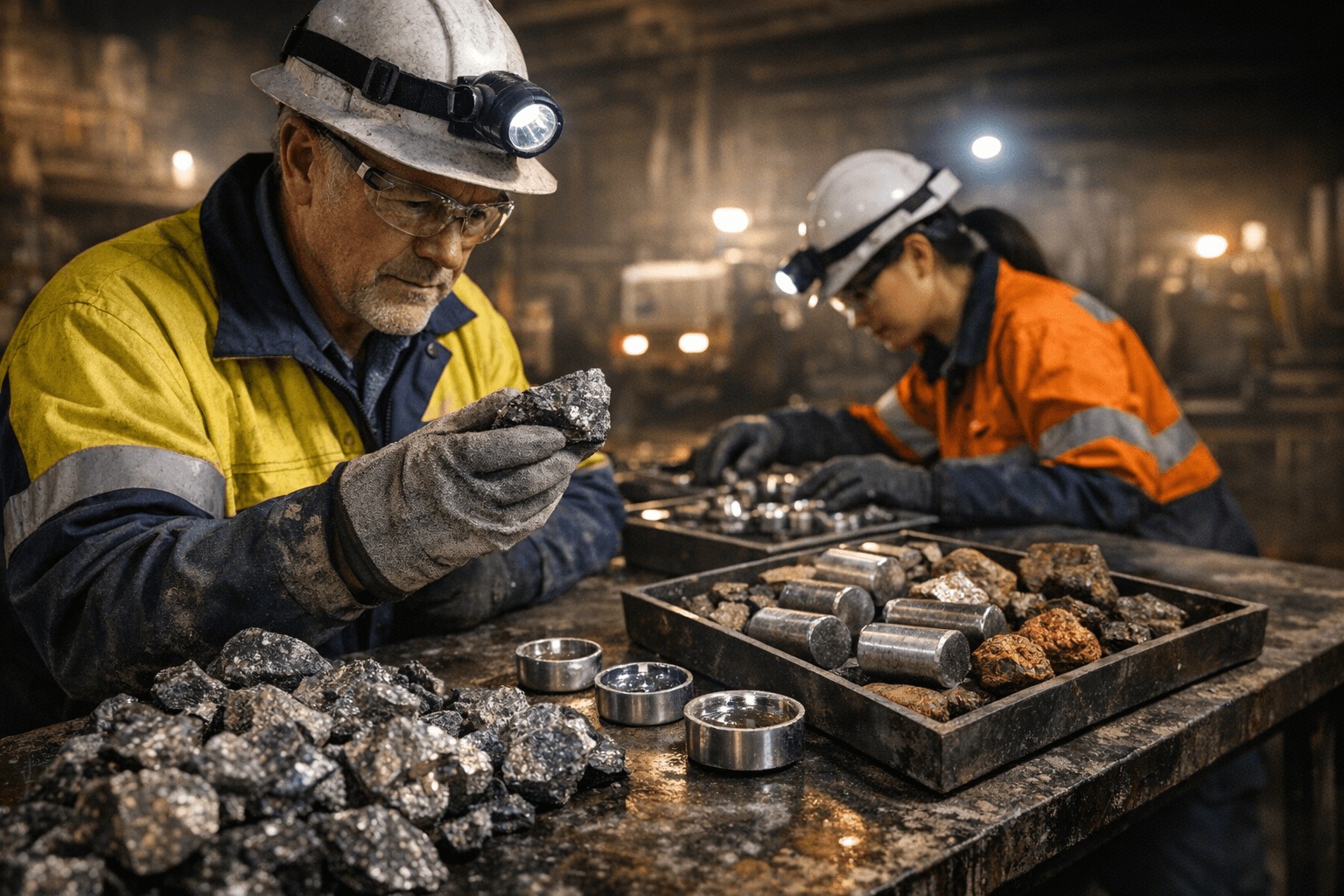
Australia will prioritise antimony, gallium and rare-earth elements in a new A$1.2 billion strategic critical-minerals reserve aimed at insulating defence, advanced electronics and clean-energy industries from supply shocks. The government says the reserve will buy and hold these materials to smooth access for manufacturers and to underpin investments in domestic processing and stockpiling capacity.
The policy follows a broader shift among advanced economies to treat certain minerals as strategic inputs rather than ordinary commodities. Antimony and gallium are used in munitions, radar, semiconductors and specialty alloys, while rare-earth elements are essential for permanent magnets in electric motors and wind turbines as well as missile guidance and other defence applications. Australia’s mining sector already accounts for roughly 10 percent of national GDP and this reserve is designed to capture more strategic value from that sector by securing critical upstream materials.
Market analysts say the reserve is intended to reduce short-term price volatility and give downstream manufacturers predictable access to feedstocks. A government buying program can tamp down spikes in times of shortage, but it could also encourage accelerated off-take and investment in processing by signalling guaranteed demand. Investors in junior miners focused on antimony and gallium projects are likely to see renewed interest, while companies planning refinery and separation capacity for rare earths may gain greater certainty for long-term projects.
Supply concentration remains the immediate policy problem the reserve targets. Processing and refining capacity for gallium and rare-earth oxides has been heavily concentrated in a few countries, creating vulnerability to geopolitical disruption or export curbs. Australia for years has been a major producer of many base metals and light rare-earth ores, but much of the higher-value separation and refining happens overseas. The reserve is intended to help bridge that gap by providing a buyer of last resort and lowering the investment risk for downstream facilities in Australia or allied jurisdictions.
From a fiscal perspective, A$1.2 billion is a meaningful outlay but modest relative to the mining sector’s annual capital flows. The purchase price for concentrates or separated materials will determine how far the reserve stretches. The government will need to balance purchases of raw ore, processed oxides and metal against the costs of storage, quality degradation and the technical challenge of maintaining stockpiles of chemically sensitive materials.
Policy trade-offs are clear. Stockpiling can bolster security of supply and catalyse domestic industrial development, but it risks market distortion and can crowd out private-sector contracting if not carefully managed. Complementary measures such as incentives for downstream refining, accelerated permitting for processing plants, and investment in recycling and substitution research will be necessary to convert a reserve into sustained supply-chain resilience.
Longer term, electrification and defence modernisation will lift baseline demand for these minerals. The reserve signals that Canberra sees critical-mineral policy as integral to both industrial strategy and national security. Whether A$1.2 billion proves sufficient to catalyse a resilient, diversified supply chain will depend on subsequent policy design, private investment responses and how quickly domestic processing capacity can be scaled.
Sources:
Know something we missed? Have a correction or additional information?
Submit a Tip