D.C. Police Chief Pamela Smith will step down, mayor announces
Washington Mayor Muriel Bowser announces that Police Chief Pamela Smith will step down at the end of 2025, a move that will heighten debate over public safety, federal intervention, and local policing oversight in the district. Smith's departure leaves city leaders to navigate a politically charged transition as federal agencies and community groups press competing visions for accountability and crime reduction.

Mayor Muriel Bowser announces that Pamela Smith, chief of the Metropolitan Police Department, will step down effective December 31, 2025. Smith, appointed in July 2023, is the first Black woman to hold the permanent post and cited a series of operational changes and reductions in violent crime and homicides during her tenure. Among the initiatives Smith helped bring online is a Real Time Crime Center that city officials credit with improving investigative coordination and response.
Smith’s resignation arrives at a moment of heightened federal involvement in district public safety. Deployments of federal agents and recent actions by the Pentagon and the Justice Department have drawn political scrutiny and sparked controversy about the balance of federal authority and local control. Those developments form a contentious backdrop to the chief’s decision and to the mayor’s decision making on succession and strategy.
Institutionally, the departure exposes questions about the future direction of the Metropolitan Police Department and the capacity of municipal governance to set public safety priorities. Smith leaves after a relatively short tenure that nevertheless saw changes to technology, deployment strategies, and crime metrics. City officials and public safety experts will now weigh whether to preserve the operational reforms she advanced, to pursue deeper structural changes, or to defer to federal partners where their resources have recently played a visible role.
The political stakes for local leaders are immediate. Public safety is a central issue for D.C. voters and civic organizations, and the chief’s exit is likely to sharpen debates among the mayor’s office, the D.C. Council, and community oversight bodies over transparency, accountability, and how success is measured. The resignation will also be monitored by advocacy groups focused on police reform, which have argued for stronger civilian oversight, and by constituencies that point to falling homicide and violent crime numbers as evidence of effective policing.
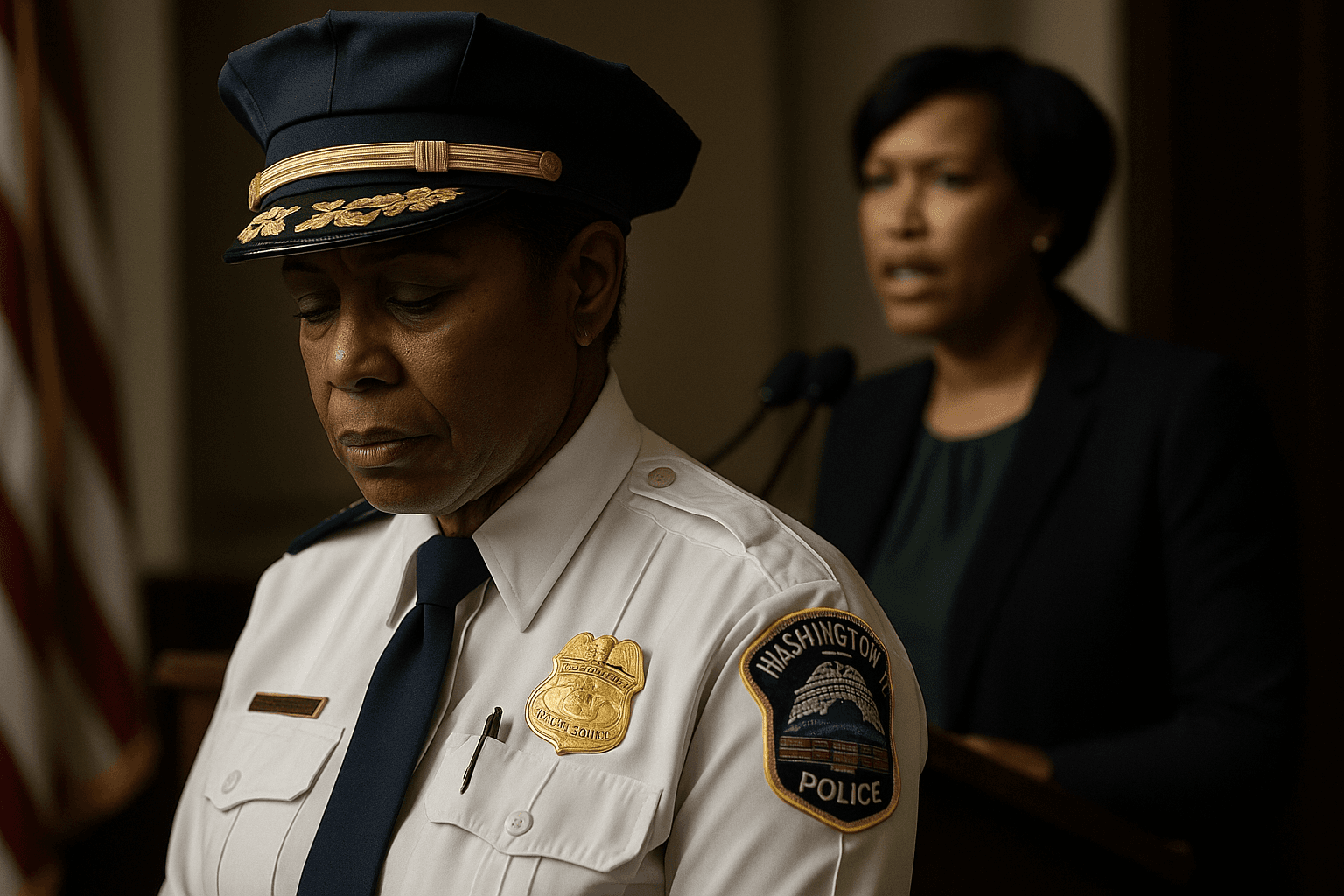
The national dimension of the controversy complicates the local calculus. Federal deployments and Justice Department initiatives have drawn congressional attention and prompted questions about the scope of federal authority in the district. For city officials, resolving those tensions while managing a leadership transition will require negotiating with federal partners even as local political actors press for accountability and greater community input.
Smith will remain in place through the end of the year, providing a window for the mayor’s office to chart a path forward. That transition period is likely to include hearings, stakeholder engagement, and urgent decisions on staffing and strategy. Community groups and elected officials will be watching how the mayor balances operational continuity with demands for reform, and how changes at the top of the department influence voter perceptions and civic participation in the months ahead. The resignation crystallizes a broader debate about public safety in Washington that will play out across city institutions and at the national level.