Federal Panel Narrows Newborn Hepatitis B Guidance, Experts Sound Alarm
A federal advisory panel appointed by Health Secretary Robert F. Kennedy Jr recommended limiting the routine birth dose of the hepatitis B vaccine to infants of mothers who test positive or whose status is unknown, a change that public health experts say could reverse decades of progress. The decision could weaken protections for newborns, complicate insurance and vaccine supply, and widen health inequities if federal authorities adopt the recommendation.

A U.S. advisory panel on Friday voted to change longstanding guidance that has called for universal hepatitis B vaccination of infants beginning soon after birth. The Advisory Committee on Immunization Practices recommended that the birth dose be given only when a mother tests positive for hepatitis B or when the mother’s status is unknown, and that parents should decide with clinicians when, or whether, to give hepatitis B vaccine in cases where the mother tests negative.
Since 1991 federal health authorities have recommended a three dose hepatitis B series starting in the newborn period. That policy coincided with a dramatic drop in new infections and has been credited with saving lives, federal data show. Disease experts warned that the panel’s move could reverse those gains if adopted by the Centers for Disease Control and Prevention acting director, which is required for the recommendation to take effect.
Panel members who supported the change include advisers appointed by Health Secretary Robert F. Kennedy Jr many of whom have expressed skepticism about vaccines. The committee offered no new evidence of harms from the birth dose, instead arguing that universal newborn vaccination is broader than necessary in a low risk setting and that U.S. practice differs from the approaches of some developed countries.
Public health specialists said the proposed rollback could lead to greater parental refusal and more children remaining unprotected. Hepatitis B can be transmitted within households by adults or other family members who do not know they are infected, leaving infants vulnerable even when a mother tests negative. Experts noted that many infections in young children result in chronic disease with long term consequences, making early protection critical.
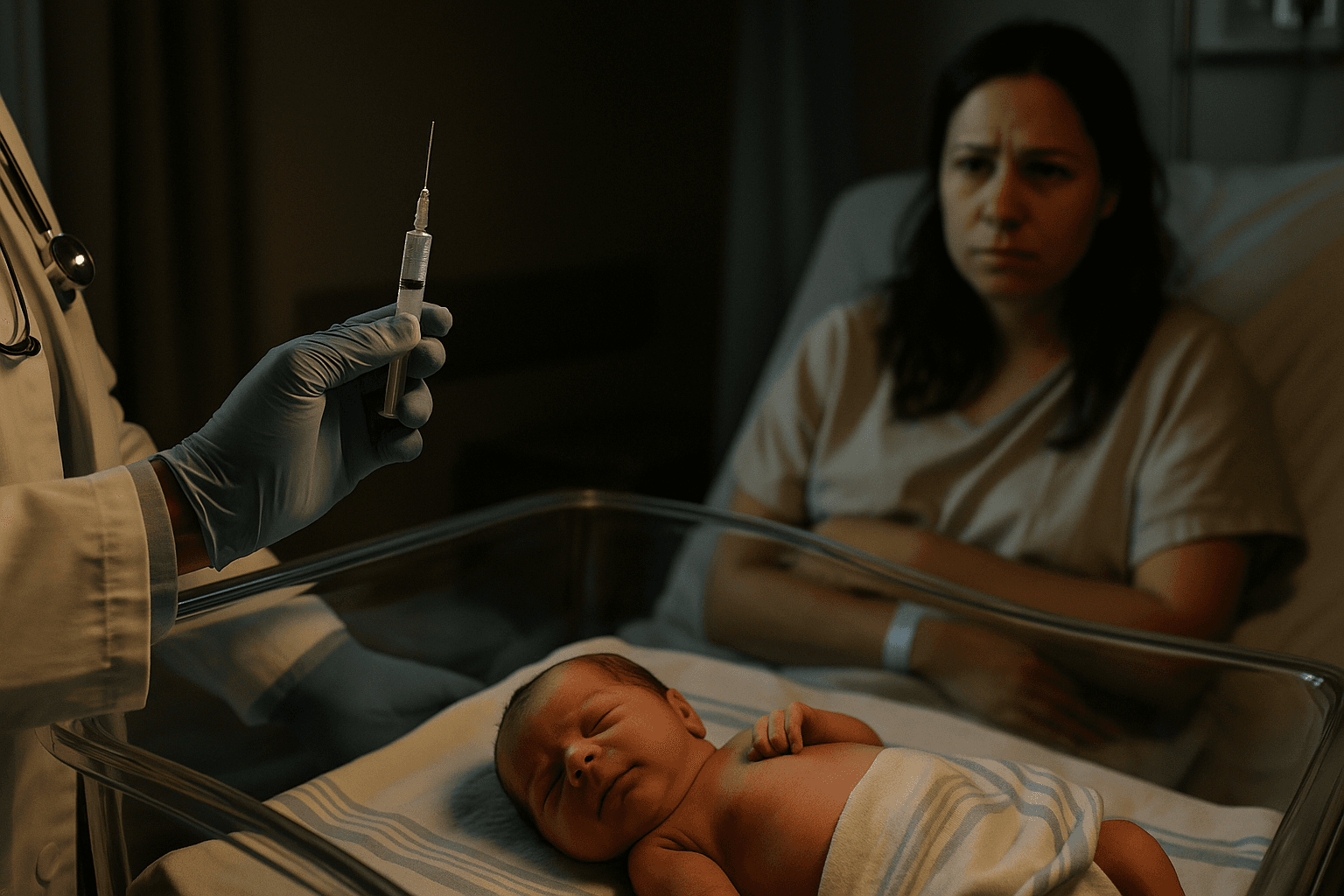
The recommendation intersects with a web of policies that determine coverage and access. A change adopted by the CDC could influence state immunization requirements, private insurance reimbursement, and procurement for the federal Vaccines for Children program, which provides vaccines at no cost to eligible children. Leading medical societies including the American Academy of Pediatrics and at least 12 states said they would ignore the panel’s guidance and continue to recommend the birth dose for all newborns. The states include Arizona, California, Colorado, Hawaii, Illinois, Massachusetts, Maryland, Michigan, New Jersey, New York, North Carolina and Rhode Island.
Public health advocates and pediatric clinicians highlighted the equity stakes. Communities with limited access to care rely heavily on federally supported programs and clear national guidance to maintain high vaccination coverage. Weakening federal recommendations risks uneven protection that could fall hardest on low income families, immigrants and other marginalized groups who already face barriers to consistent preventive care.
The committee’s action also raises questions about how scientific evidence will be weighed in future vaccine policy decisions. With the CDC acting director yet to rule on whether to adopt the recommendation, public health officials and state policymakers are preparing for a possible shift that would reshape newborn care practices and the safety net that helped suppress hepatitis B infections across generations.