First Year Review of Mayor Daniel Lurie Highlights Progress and Shortfalls
A long-form assessment published Jan. 8, 2026 reviewed Mayor Daniel Lurie’s first year, finding measurable gains on public safety and some neighborhood revitalization alongside persistent opioid deaths and missed shelter targets. The report matters to San Francisco residents because it links policy promises to concrete outcomes and identifies budget and operational decisions that will shape services and downtown recovery in year two.

A comprehensive review of Mayor Daniel Lurie’s first year in office, released Jan. 8, evaluated campaign commitments against outcomes across public safety, homelessness and shelter capacity, downtown economic revival, and municipal budgeting. The assessment concluded that the administration achieved visible improvements in some areas but fell short of several major promises, leaving critical choices for year two.
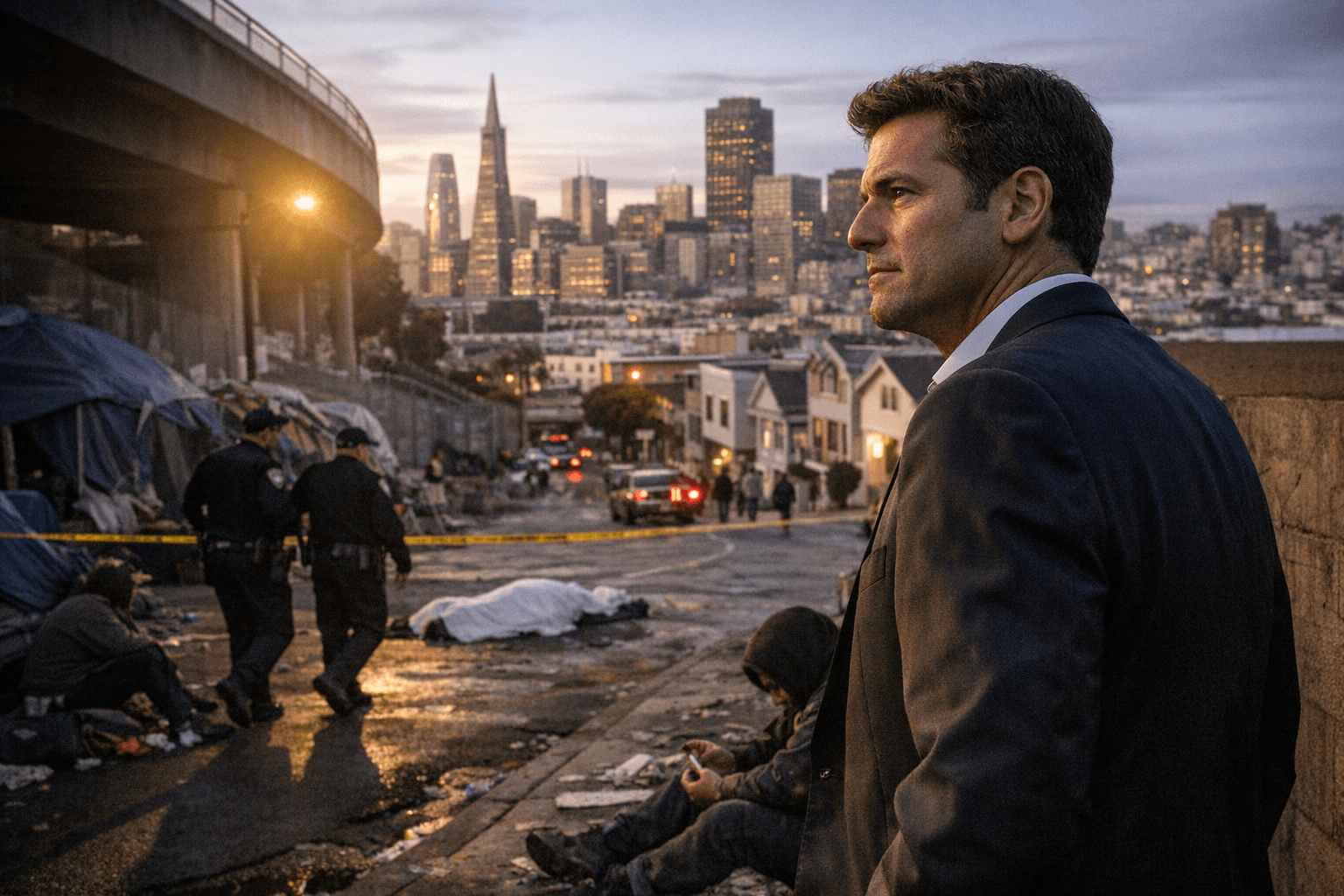
On public safety the assessment found overall declines in measured crime, contributing to improved public perception of safety among residents and business operators. However, the city continued to experience opioid overdose deaths, a public-health crisis that the administration has not yet reversed. The dual picture underscores a partial advance: safer streets in many neighborhoods without a decisive solution to substance-use fatalities.
Homelessness and shelter expansion were central campaign pledges. The review noted that the mayor promised a rapid expansion of shelter and treatment beds but delivered fewer beds than initially pledged. The administration did fast-track a stabilization center as a structural change aimed at offering immediate options for people living unsheltered, yet capacity increases fell short of the scale outlined on the campaign trail. That shortfall has practical implications for residents and neighborhood services, where demand for shelter and treatment continues to exceed available slots.
Economic recovery in downtown San Francisco showed mixed results. Some neighborhoods registered signs of revitalization, with new businesses and greater foot traffic in targeted corridors. The assessment described the downtown recovery as uneven, with parts of the central business district still struggling to regain pre-pandemic activity and office-to-residential transitions producing variable neighborhood impacts.
Municipal staffing and budgeting emerged as constraining factors. The report documented a larger-than-expected budget shortfall that limited the administration’s ability to implement more ambitious programs and hire needed personnel. Operational challenges at city departments have blunted swift deployment of new services, and the fiscal gap reshapes choices for the coming year.
The review included polling and approval-rating context as well as interviews and city data to show where the administration’s standing has risen and where vulnerabilities persist. It identified risks heading into year two: looming budget decisions that could force program cuts or tax choices, and potential political fights at City Hall over priorities and implementation strategies.
For San Francisco residents, the assessment offers both reassurance and warning. The city has recorded measurable improvements in public safety perception and instituted some new service structures, but persistent public-health harms, a shortfall in promised shelter capacity, and a sizable budget deficit mean that the outcomes citizens experience will depend heavily on the next round of policy choices and civic oversight at City Hall.
Sources:
Know something we missed? Have a correction or additional information?
Submit a Tip