France Proposes Nationwide Ban on Social Media for Under-15s
The French government has circulated a draft law that would make it illegal for online platforms to offer social‑networking services to anyone under 15, extend school mobile‑phone bans to high schools, and introduce a digital curfew for 15‑ to 18‑year‑olds. The measure, backed by President Emmanuel Macron and filed by MPs from his Ensemble pour la République group, is scheduled for parliamentary debate in January 2026 and could take effect with the 2026–27 school year.
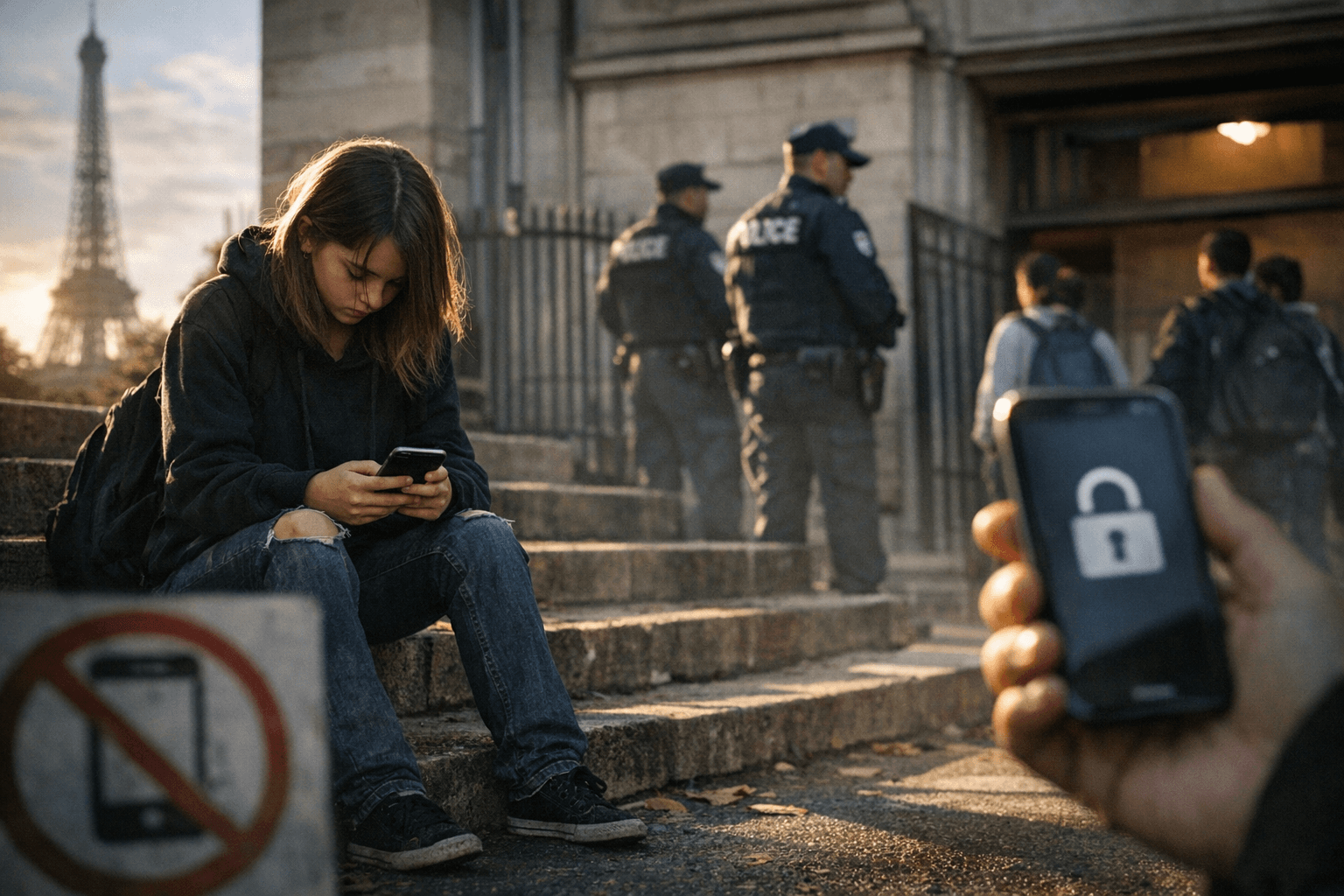
A government-drafted bill filed on Nov. 18, 2025 by MPs aligned with President Emmanuel Macron would criminalize the provision of social networks to minors under 15, extend existing mobile‑phone restrictions into high schools and create a new digital curfew for older teenagers. Parliament is scheduled to debate the draft in January 2026, with proponents aiming for the law to take effect on Sept. 1, 2026 to coincide with the 2026–27 school year.
The draft is compact in form, organized into two principal articles. The first would make it illegal for an online platform to provide "an online social media service to a minor under 15." The second seeks to extend a 2018 prohibition on mobile phones in preschools and middle schools to include secondary schools, bringing high schools under the same national restriction. The proposal also includes a proposed digital curfew for 15‑ to 18‑year‑olds; the draft cites "numerous studies and reports" that it says document risks including "exposure to inappropriate content," "cyberbullying," and "sleep disturbances."
President Macron has publicly framed the initiative as a priority for child protection, stating that "We will protect our children and teenagers from social media and screens." Sponsors argue the measures respond to mounting concerns among parents and educators about the mental health and safety of adolescents online; an August 2025 poll cited by government figures found strong parental backing, with 79 percent supporting restrictions.
But the proposal faces significant legal and practical hurdles. French authorities and lawmakers alike must square national limits with European law and cross‑border realities. A 2023 parliamentary text that sought to restrict minors' social‑media access was adopted domestically but never enacted because it did not comply with European legislation. Past enforcement of the 2018 mobile‑phone ban at lower school levels has been uneven; authorities acknowledge that rules exist on paper but are "rarely enforced" in practice. The draft contains no detailed mechanism for age verification, penalties for platforms or parents, or an operational design for enforcing a curfew, leaving the most consequential technical and jurisdictional questions unresolved.
Implementation would require new regulatory tools. Platforms would need reliable age‑verification systems and cross‑border compliance strategies; French regulators would have to define penalties and oversee enforcement across services headquartered outside the country. Civil liberties and child‑rights advocates are likely to press for clarity on privacy safeguards, due process for content moderation disputes and proportionality of sanctions.
The political timeline is compressed. The government plans legal scrutiny early in January 2026 ahead of the parliamentary debate, where amendments and coalition dynamics will determine whether the bill advances. Lawmakers will have to balance public demand for stronger protections with constitutional and European legal constraints and the technical realities of policing the global internet. The debate will test how national legislatures can shape digital life for young people while navigating institutional limits and enforcement capacity.
Know something we missed? Have a correction or additional information?
Submit a Tip