Jakarta Office Blaze Tied to Drone Batteries, 22 Dead
A fire ripped through a seven storey office block in Central Jakarta on Tuesday, killing at least 22 people and prompting a criminal and forensic probe. The blaze, which authorities say began on the ground floor and spread upward, raises urgent questions about battery safety, urban building standards, and corporate accountability in a region where battery powered devices are proliferating.

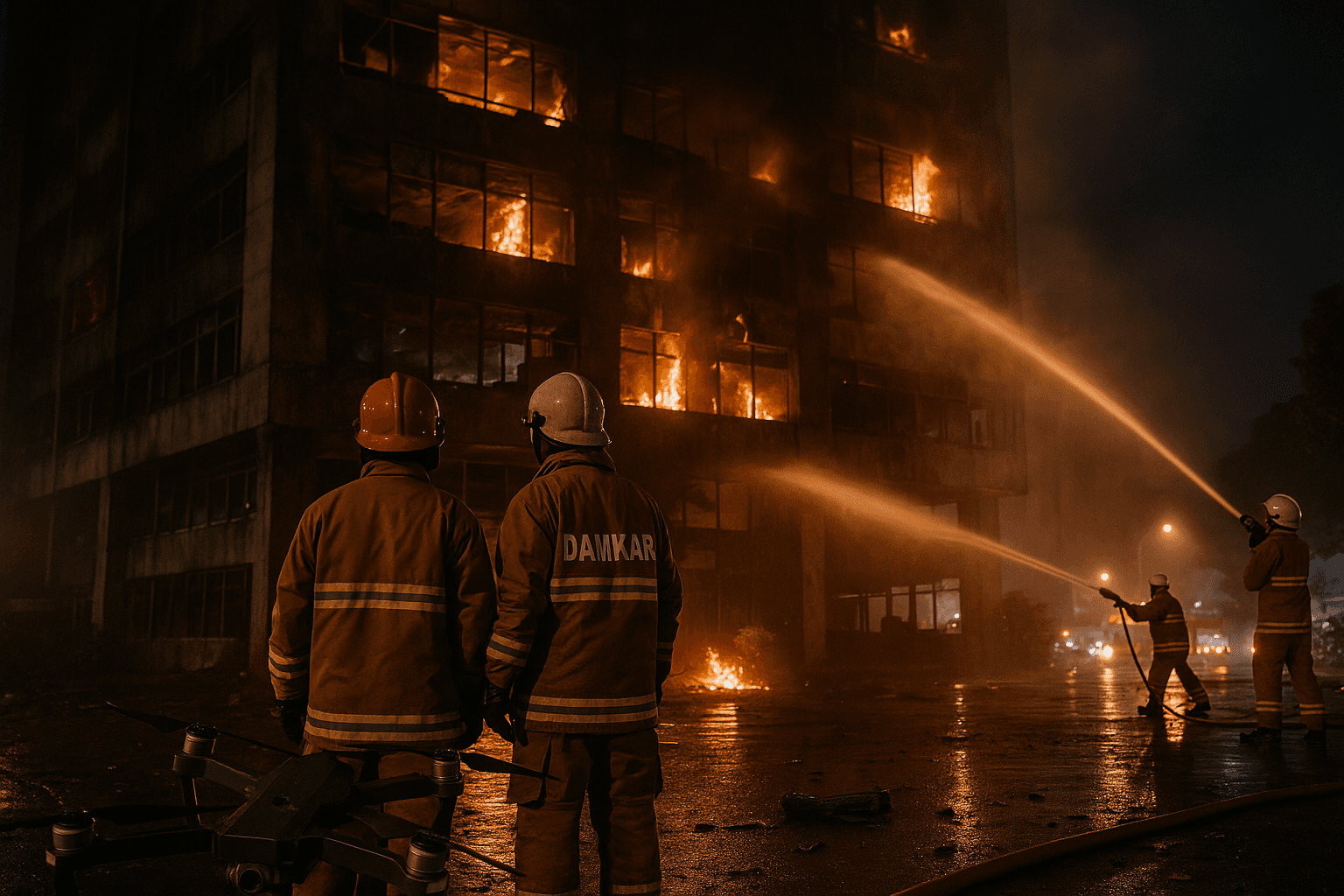
A fast moving fire tore through a seven storey office building in Central Jakarta on Tuesday, killing at least 22 people and sending dozens more to hospital, authorities said. Central Jakarta police said the blaze began on the first floor around midday and quickly raced upward through stairwells and common areas, complicating evacuation and rescue efforts.
Police forensic teams arrived at the scene as investigators worked to establish the precise point of origin. Recovered bodies were taken to a hospital for identification. Authorities said they would question company officials and the building owners as part of a wider inquiry into cause and liability.
The building housed Terra Drone Indonesia. Company representatives issued an apology on Tuesday and said they were assessing the human and business impacts. Early information supplied to investigators suggested batteries from a drone may have caught fire, though officials cautioned that work to determine the ignition point remained under way.
Television footage from local broadcasters captured firefighters carrying out recovery operations while other occupants escaped from upper floors using portable ladders. Fire crews focused on preventing structural collapse and limiting smoke damage in a tightly packed city centre neighbourhood where tall office blocks and narrow streets complicate emergency access.
The incident underscores broader challenges across Southeast Asia as lithium ion batteries and other high energy storage cells become ubiquitous in commercial and consumer devices. Battery failures can trigger intense thermal runaway events that are difficult to extinguish with conventional methods, and storage or charging practices can increase risk. Regulators in several countries have tightened rules on battery handling, transport, and certification after similar catastrophic blazes.
Indonesian authorities face pressure to clarify whether building safety protocols, emergency escape routes, and electrical and hazardous materials management met national standards. The probing of both the company that occupied the premises and the owners of the building reflects a familiar pattern in urban industrial accidents where corporate responsibility and property management practices are examined alongside technical causes.
The international dimension is immediate. Terra Drone Indonesia operates in a sector that moves components and devices across borders, raising questions about standards for imported batteries and the responsibilities of foreign manufacturers and local operators. Any regulatory response could affect global suppliers and industries that rely on drone technologies for mapping, agriculture, logistics, and infrastructure inspection.
Families of victims will seek swift answers about how a fire that began on a single floor could consume multiple levels and produce such a high death toll. Courts and regulators will assess whether failures were systemic or the result of isolated lapses. For Jakarta and other growing megacities in Asia, the disaster is a stark reminder of the risks that accompany technological adoption when safety regimes do not keep pace.
As forensic teams continued their work, the immediate priorities remained recovery and identification of the dead, care for the injured, and stabilising the site to prevent further harm. The findings of the investigation will determine criminal and civil accountability, and may prompt changes to how batteries are stored and managed in urban workplaces.