McConnell Offers Short Impeachment Trial Option, Splitting Republicans
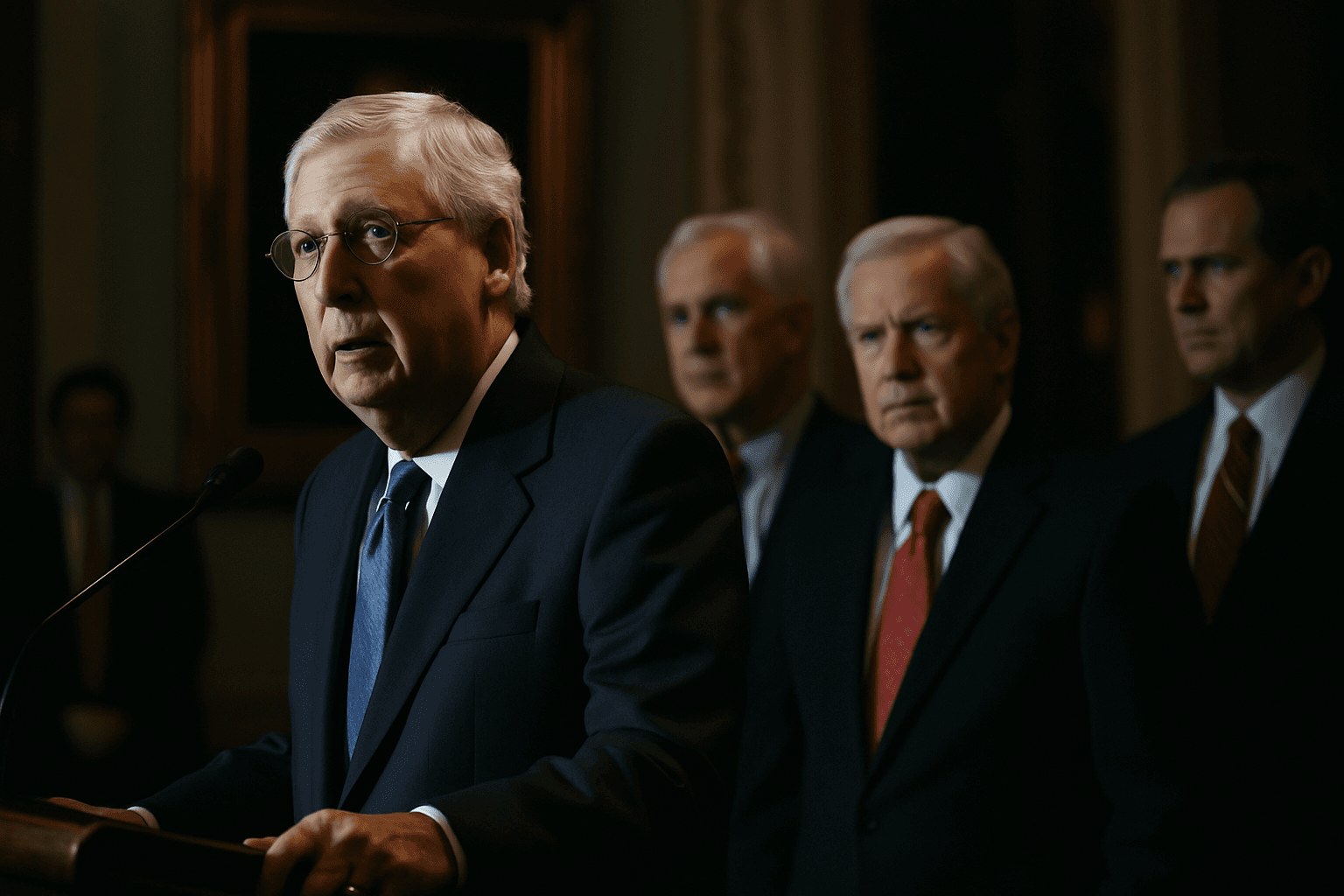
Senate Republican leader Mitch McConnell on Wednesday suggested the Senate could hold a short impeachment trial that might not call witnesses, a stance at odds with President Trump who is insisting on a full trial with witnesses. The public debate over trial format will shape how quickly the matter is resolved, and it carries consequences for domestic politics and American credibility abroad.

Senate Republican leader Mitch McConnell opened the possibility on Wednesday that the Senate could pursue a brief impeachment trial that would forgo witness testimony, setting up a high stakes debate within his party as the Democratic controlled House prepares a vote to impeach the president next week. McConnell framed the option as a way to move the Senate decisively, while President Trump is pressing for a comprehensive proceeding that would include witnesses.
The disagreement highlights a deeper strategic split within the Republican caucus over how to manage an extraordinary constitutional confrontation. McConnell’s comments suggest he is weighing political and institutional calculations that differ from the president’s public demands. A shorter proceeding with no witnesses would speed a resolution and spare senators from extended national attention, but it would intensify criticism from Democrats and some foreign partners who view transparency as important to democratic norms.
The Senate’s choices over trial rules will determine how quickly the episode can conclude. Rules decisions will settle whether subpoenas for testimony or documents are in play and whether senators will have time to deliberate fully. Those procedural determinations are consequential for how the public and international observers judge the legitimacy of the outcome. In recent presidential impeachments, the format adopted by the Senate shaped perceptions at home and abroad about the robustness of American checks and balances.
International reaction is likely to be muted at first, as capitals and markets watch for signals about the continuity of U.S. policy. Governments with close security ties to Washington are assessing how an abbreviated trial might affect ongoing negotiations on trade and defense cooperation. Diplomats say uncertainty at the top of the U.S. government complicates planning in crises and could provide openings for strategic competitors who prefer to see Washington distracted.
Legal scholars and former lawmakers noted that the constitutional framework gives the Senate wide latitude to set its own procedures, but those choices carry political risk. A tightly managed trial could secure a swift acquittal and allow Republican leaders to argue that the chamber fulfilled its constitutional role efficiently. Opponents counter that avoiding witness testimony risks making the process appear partisan and incomplete, eroding public trust in institutions already strained by polarization.
The unfolding debate will test McConnell’s control of the Senate agenda as well as the discipline of Republican senators who must balance loyalty to the president with institutional anxieties about precedent and legitimacy. With the House scheduled to move toward impeachment next week, the timeline for action is compressed. If the House votes to impeach, the Senate will confront an immediate and difficult set of procedural choices that will echo beyond the chamber.
For international audiences, the dispute is more than domestic theater. It is a measure of how the United States manages constitutional crisis under pressure and how it projects stability. Whatever path the Senate chooses, the shape of the trial will be interpreted by allies and adversaries alike as an indicator of American political resilience.
Sources:
Know something we missed? Have a correction or additional information?
Submit a Tip