Navy 3D-printed JHMCS visor prototype slashes cost, speeds delivery
A Navy collaboration produced a 3D-printed JHMCS visor for training, cutting costs by about 65% and reducing delivery from years to weeks. This enables on-demand production across fleet print sites.
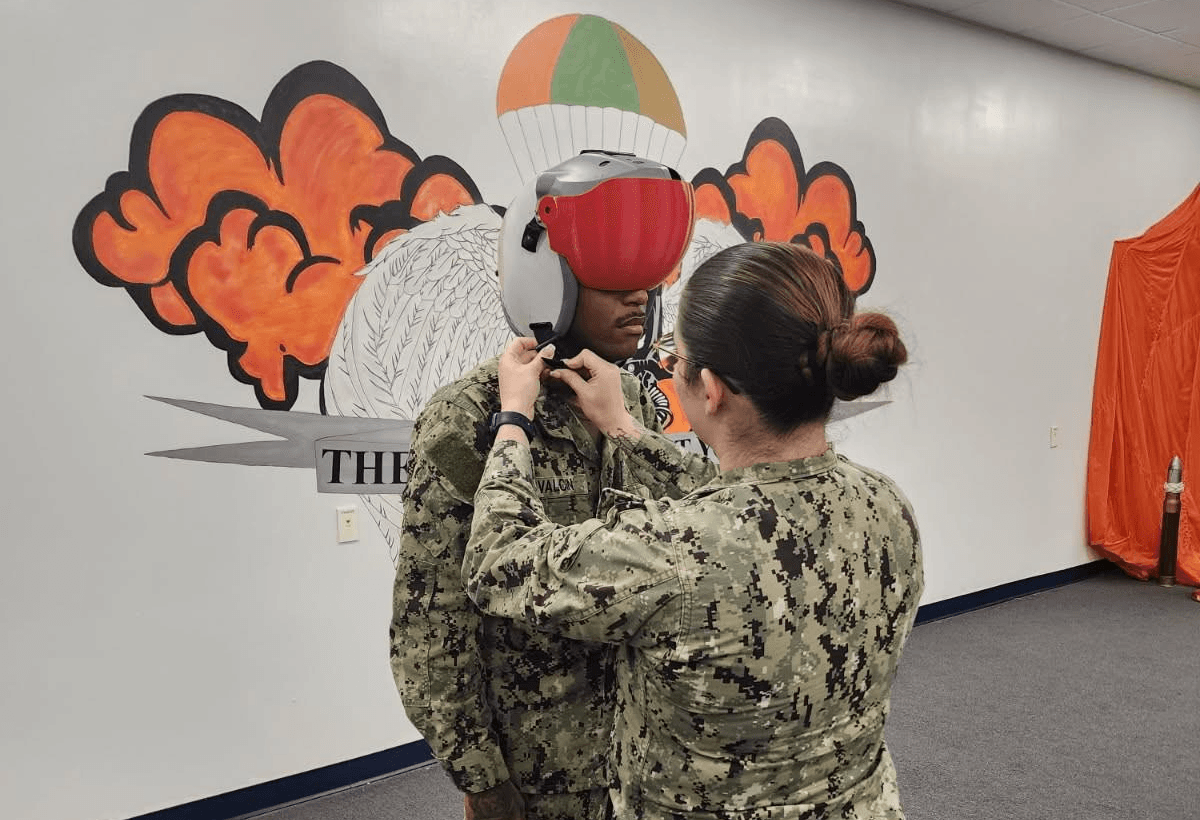
A joint effort across several Navy commands produced a 3D-printed Joint Helmet Mounted Cueing System (JHMCS) visor prototype intended to support aircrew survival-equipmentman training and to reduce lifecycle costs. The collaboration brought together PMA-205, NETC, CNATT and CNAF N7 to prototype a replacement for a legacy training part that has long lead times and high per-unit cost.
The team printed the visor in ABS and verified it met dimensional and integration requirements for use with existing helmet systems. The legacy visor cost roughly US$870 per unit; the 3D-printed ABS prototype achieved roughly a 65% cost reduction and produced delivery timelines measured in weeks rather than years. The reduced cost and faster turnaround directly lower training program expenses and remove a major bottleneck in preparing aircrew equipmentman personnel.
To make the solution repeatable across the fleet, the project produced a technical data package designed for reproducible printing at fleet intermediate-level maintenance print sites. That package enables scalable, on-demand production tailored to training needs and reduces supply-chain risk by moving production closer to the user. The Navy commands involved describe the initiative as a step toward increased readiness and sustainment agility.
Practically, this matters because training spares and non-flight hardware often sit at the end of long procurement chains. Bringing printing capability into intermediate maintenance shops turns those lead times into schedule-manageable tasks. For maintainers and local print operators familiar with desktop FDM workflows, ABS provides a familiar balance of toughness and heat resistance suitable for training wear items, and the use of a formal technical data package helps standardize print settings, post-processing and QA across multiple sites.

For community makerspaces, repair shops and municipal print labs, the project demonstrates a clear pathway for defense-industry collaboration: validate dimensional fit, test integration with existing hardware, and create documentation that other sites can follow. The biggest wins come from pairing a verified CAD/print workflow with repeatable quality checks so parts printed on different machines remain interoperable.
The takeaway? Treat this as a proof that on-demand production can shave costs and shorten lead times, but don’t skip verification. Verify dimensional fit on your printer, establish a basic QA checklist, and document your print and post-processing steps so others can reproduce the result. That simple discipline is what turns a one-off prototype into fleet-scale sustainment.
Sources:
Know something we missed? Have a correction or additional information?
Submit a Tip