NTSB finds cracked bearing race in UPS MD-11 engine pylon failure
NTSB identifies fatigue cracking in a small bearing race on the UPS MD-11 that crashed, triggering fleet groundings and renewed scrutiny of inspections and design changes.
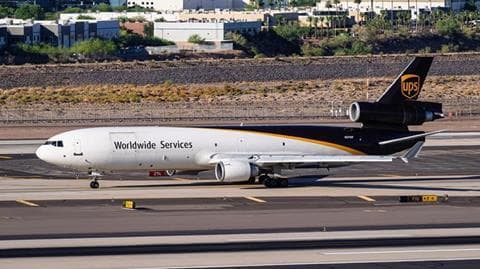
Investigators have identified fatigue cracking in a spherical bearing race inside the left engine pylon of the UPS McDonnell Douglas MD-11 freighter that broke away after takeoff from Louisville, Kentucky, on Nov. 4, 2025, the National Transportation Safety Board said. The failure of the roughly 3-inch-wide metal race and the fracture of the pylon lugs preceded separation of the engine assembly, a subsequent wing fire and a destructive debris field that killed 15 people.
NTSB images released with the update show the bearing race split into forward and aft halves and clear cracking on the interior surface of the race originating in a specific region; the two lugs that house the bearing assembly were fractured. Investigators said the damage shows evidence of fatigue that would have developed over time. During the accident sequence the bearing-race and lug fragments were sufficiently damaged that the left pylon and engine assembly detached, the engine flew up and over the wing, the wing ignited and burning debris spread across roughly a half-mile, striking a petroleum recycling facility and a UPS warehouse.
The finding links the failed component to a known durability issue Boeing documented in a 2011 service letter. That communication described four prior bearing-race failures on three MD-11 airplanes and recommended visual inspections at the normal five-year (60-month) maintenance interval and optional installation of a redesigned bearing race. Boeing's 2011 assessment concluded the failures would not constitute a safety-of-flight condition, and the design replacement was not mandated. The NTSB said investigators are reviewing maintenance records to determine whether the accident airplane had received the recommended redesign and are examining correspondence between Boeing and the Federal Aviation Administration as part of an active inquiry.
Federal and industry actions have been immediate: all MD-11s and 10 related DC-10s have been grounded since the crash while the investigation continues. The agency cautioned that its update does not establish the exact causal role of the bearing-race failure in the accident; metallurgical and fracture analyses remain underway alongside a review of operator compliance with Boeing’s 2011 guidance.
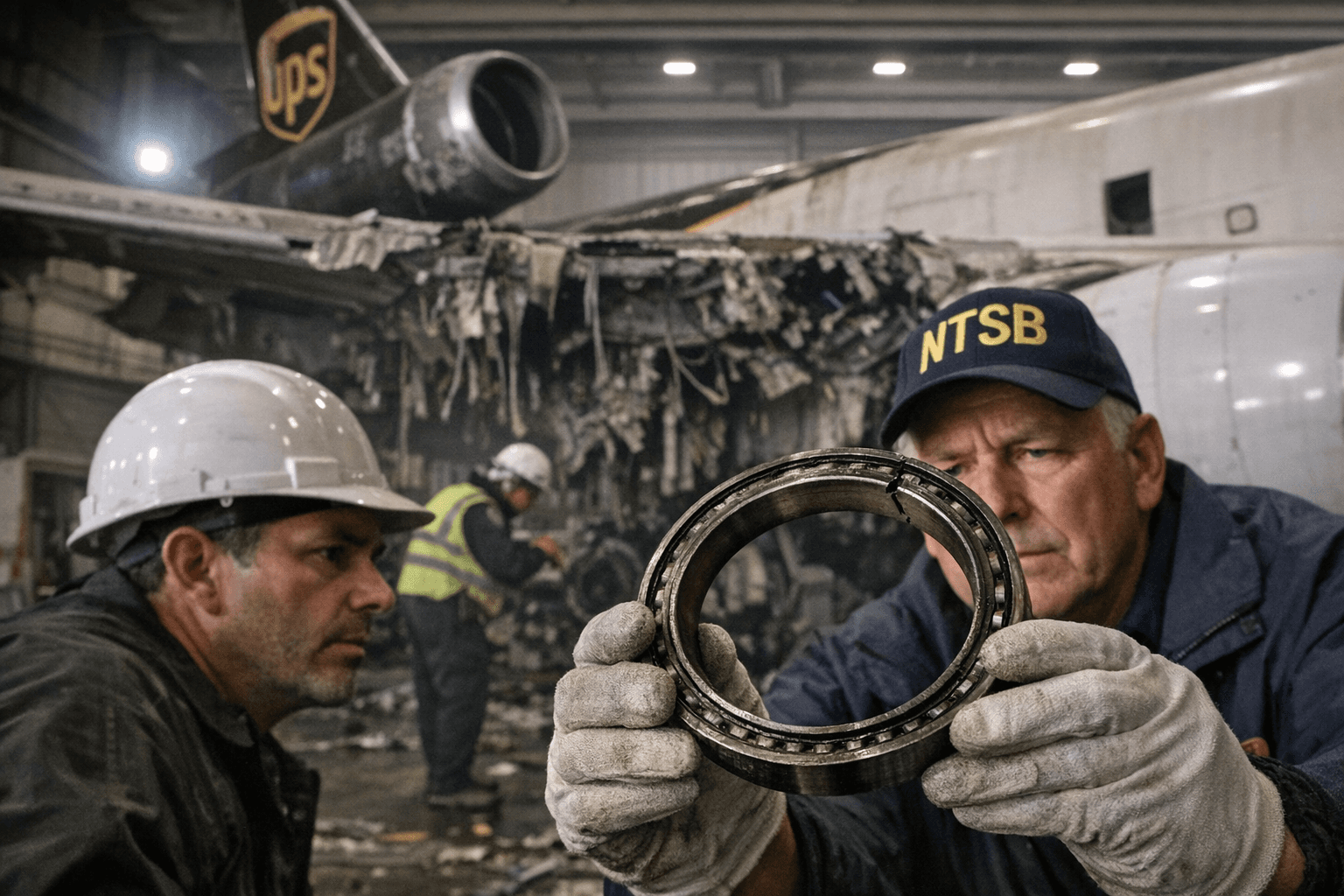
The discovery underscores the outsized risk posed by small structural components in legacy airframes. A roughly 3-inch part failing appears to have precipitated a catastrophic sequence, recalling past accidents in which engine separations led to major disasters. The case also highlights longer-term questions about aging freighter fleets and the post-merger stewardship of legacy designs: Boeing acquired the MD-11 product line after its 1997 merger with McDonnell Douglas and provided ongoing support to operators.
Market and policy implications will likely be significant. The temporary grounding removes a class of long-range cargo capacity from international and domestic supply chains, straining carriers that rely on MD-11s and older DC-10s and potentially pressuring freight rates and logistics schedules. Insurers, lessors and operators face rising uncertainty about inspection burdens, retrofit costs and potential liabilities. Regulators will weigh whether airworthiness directives or mandatory retrofit programs are necessary; the NTSB’s final recommendations and the FAA’s response will determine whether the industry adopts sweeping, costly corrective action or a more targeted inspection regime.
For now, investigators continue to piece together how a small bearing race developed fatigue cracking, whether preventative inspections were adequate, and what regulatory steps are needed to prevent a repeat of a tragedy that has left 15 dead and an industry watching closely.
Know something we missed? Have a correction or additional information?
Submit a Tip