Police raid on UNRWA compound in Sheikh Jarrah escalates tensions
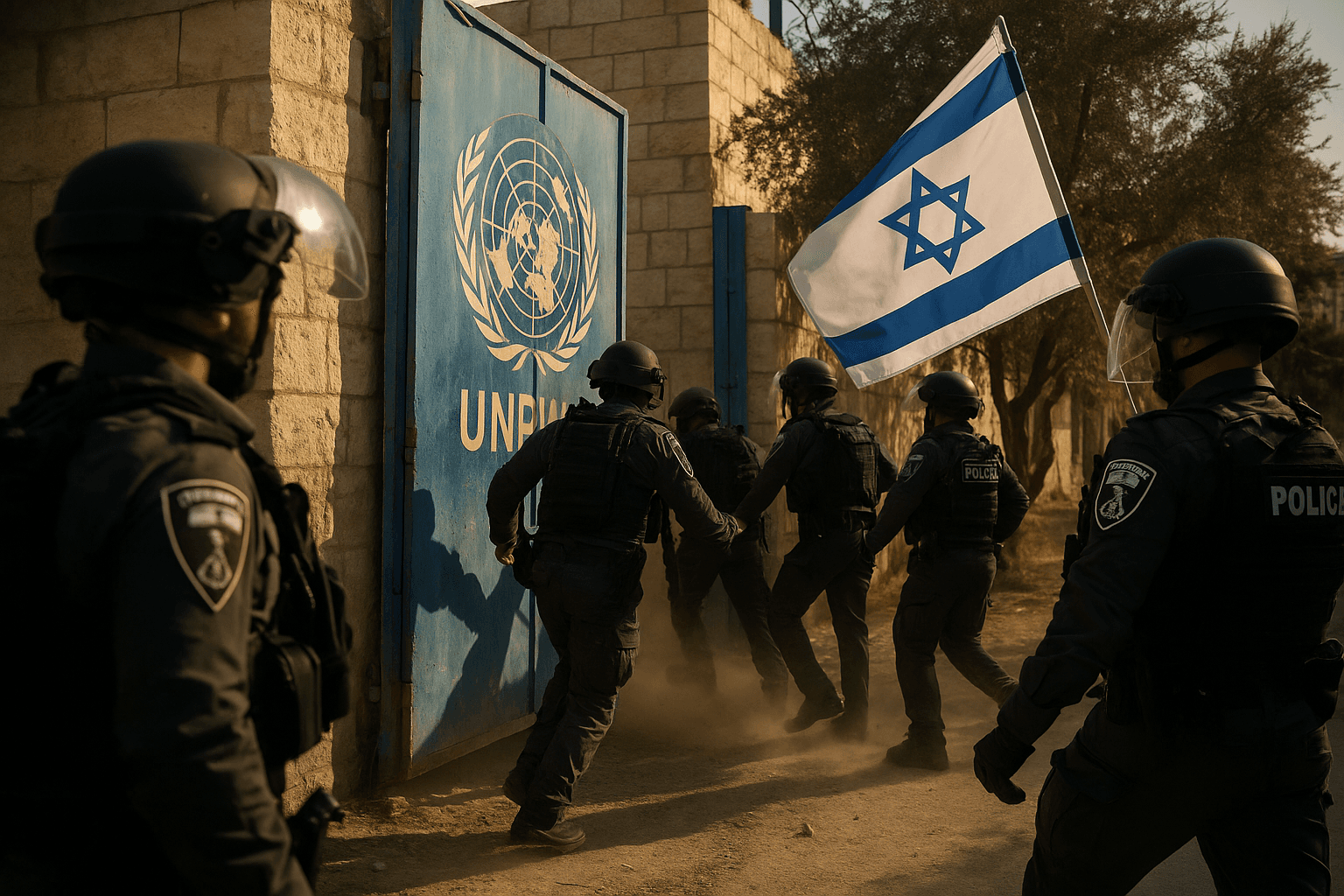
Israeli police entered the UNRWA compound in Sheikh Jarrah on December 9, seizing equipment and, according to witnesses, replacing the U.N. flag with an Israeli flag, a move the U.N. secretary general said violated U.N. privileges and immunities. The action risks disrupting a key aid provider for millions of Palestinians and prompted immediate diplomatic concern from European missions and humanitarian organizations.

Israeli police entered the compound of the United Nations Relief and Works Agency for Palestine Refugees in Sheikh Jarrah on December 9, seizing equipment and, according to witnesses, removing the U.N. flag and replacing it with an Israeli flag. UNRWA described the entry as "unauthorized and forceful." U.N. Secretary General António Guterres publicly condemned the operation, saying it violated U.N. privileges and immunities.
Israeli authorities said the operation was part of a municipal debt collection procedure. They framed the action as enforcement of local obligations, while UNRWA and several diplomatic missions treated it as an exceptional breach of the normal protections afforded to U.N. premises. European diplomatic representations and humanitarian organizations raised immediate concerns about the precedent the move could set for U.N. operations in occupied territory.
UNRWA is a primary relief provider across the Palestinian territories and beyond. The agency serves more than five million registered Palestinian refugees and employs tens of thousands of staff, predominantly from Palestinian communities. Disruptions to its operations in East Jerusalem have the potential to cascade through education, health, and social services that many Palestinians rely on, particularly in areas where public sector capacity is limited.
Economically the raid introduces two kinds of risk. In the short term, the immediate effect is operational. Seizure of equipment and restricted access to a compound can delay service delivery and complicate logistics, particularly for municipal services that interface with UNRWA programs. In the medium term, the action may affect donor confidence. Governments that provide the agency with the bulk of its funding have expressed alarm and may seek assurances about the safety and neutrality of aid delivery before approving payments. That could tighten liquidity for an agency that depends on predictable flows to operate schools, clinics, and social safety nets.
Market implications for Israel and the broader region are likely to be indirect unless the incident triggers wider escalation. Political risk premiums can tick up in the wake of diplomatic rows, particularly if European partners move from protest to sanctions or restrictions on cooperation. For now Israeli financial markets are unlikely to face material stress from a single administrative raid, but cumulative deterioration in diplomatic ties could weigh on foreign direct investment and tourism over time.
Policy questions center on the legal status of U.N. agencies and the separation of municipal enforcement from international immunities. The U.N. has long maintained that its premises and operations enjoy protections to ensure neutral humanitarian access. A unilateral enforcement action in a contested city raises complex questions about how those protections are upheld and litigated.
The Sheikh Jarrah incident underscores a longer trend of increasing politicization of humanitarian space in protracted conflicts. For Palestinians who rely on UNRWA for basic services, the economic stakes are immediate. For donors and policymakers, the event presents a test of how to preserve aid effectiveness while navigating fraught political terrain.
Sources:
Know something we missed? Have a correction or additional information?
Submit a Tip