Prosecutors Say Yoon Tried to Provoke North Korea to Justify Martial Law
South Korea’s special prosecutor announced that former president Yoon Suk Yeol attempted to induce a North Korean military response to create a pretext for declaring martial law in December 2024, a move that prompted indictments of 24 people including Yoon and senior officials. The allegations deepen political turmoil in Seoul and raise questions about civil governance, military oversight, and economic stability as a high profile insurrection trial proceeds.

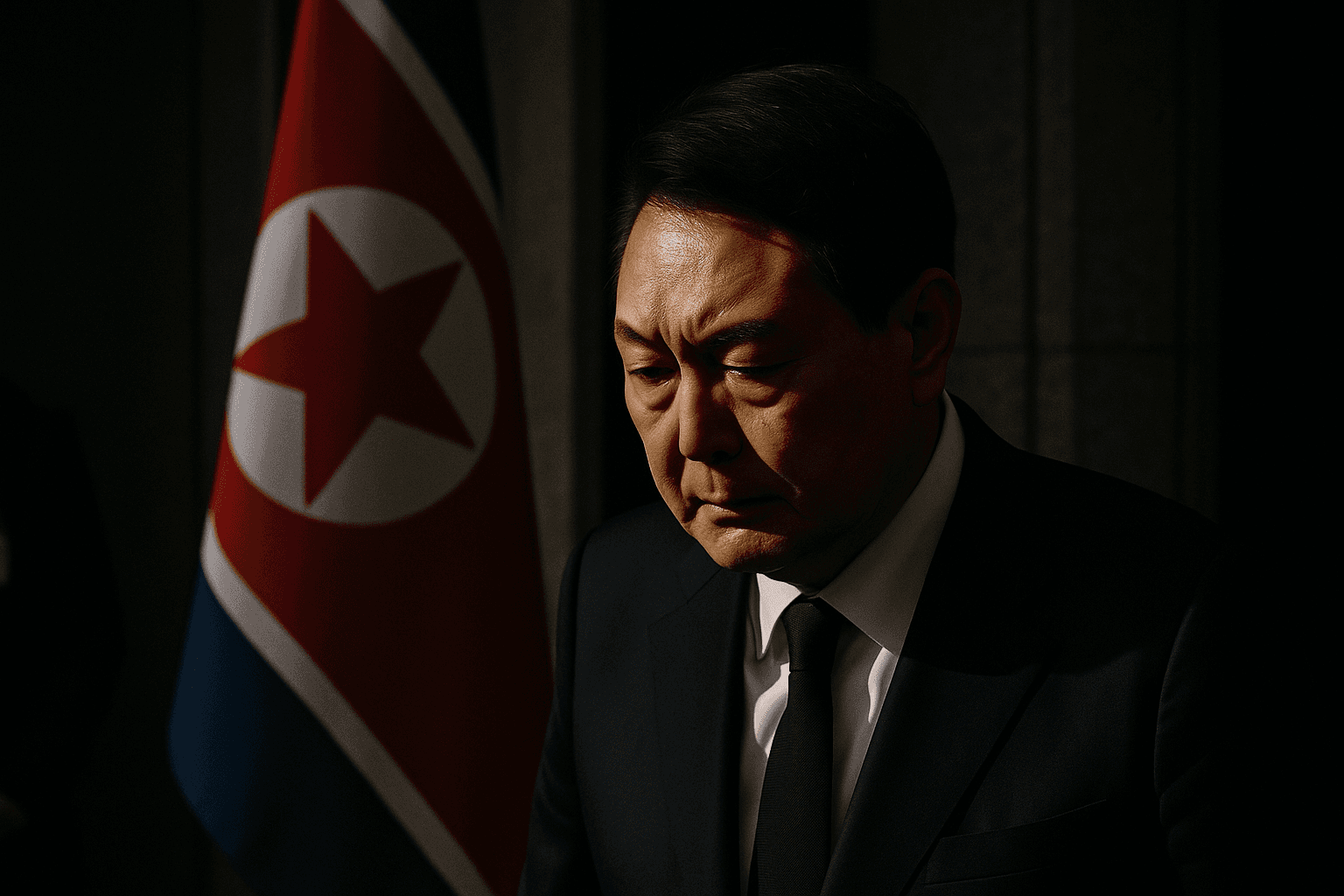
South Korea’s special prosecutor held a televised briefing in Seoul on December 15, 2025 to disclose findings from a roughly six month inquiry that has produced indictments against 24 people, including former president Yoon Suk Yeol and multiple senior members of his administration. Chief special prosecutor Cho Eun seok said investigators concluded Mr. Yoon prepared a plan to impose martial law before October 2023 with the objective to monopolize and maintain power, and that elements of that plan sought to induce an armed response from the Democratic People’s Republic of Korea through what prosecutors termed abnormal military operations. The attempt failed because North Korea did not respond militarily.
Cho framed the motive in stark terms, saying “We known well from historic experience the justification given by those in power for a coup is only a facade and the sole purpose is to monopolize and maintain power.” Prosecutors have charged the group with insurrection and related counts. The 24 indicted include at least five cabinet members, a former prime minister, a former deputy prime minister for economic affairs, ministers, presidential secretaries and other senior officials. Separate prosecutors have also indicted former acting leader Choi Sang mok and charged former prime minister Han Duck soo with dereliction of duty in connection with the episode.
The legal stakes are severe. Yoon is in custody and is on trial for insurrection. If convicted on rebellion charges the penalties can include life imprisonment or capital punishment. Dozens of other officials and military commanders associated with the Yoon administration have been arrested, indicted or are under investigation, according to the special prosecutor. A separate special prosecutor is pursuing a corruption investigation into Yoon’s wife, Kim Keon Hee, tied to activities during and before the presidency.
The sequence that precipitated the current legal crisis began with Mr. Yoon’s decree declaring martial law late on December 3, 2024. Parliament, controlled by the liberal Democratic Party, voted within hours to void the decree and later moved to impeach him. The Constitutional Court removed Mr. Yoon in April, a decision that led to a snap presidential election won by Lee Jae Myung and the appointment of the special prosecutor team now bringing the insurrection case.
Beyond the immediate criminal exposure, the case carries fiscal and geopolitical implications. Political instability of this scale can undermine investor confidence, complicate fiscal planning and raise the cost of capital if perceived institutional risk expands. It also puts fresh scrutiny on civilian control of the military and on procedures for declaring martial law in a nation that faces a persistent external security threat. For policymakers the episode underscores the tension between emergency powers and democratic safeguards, and will likely prompt legislative and procedural reviews aimed at tightening oversight of extraordinary security measures.
The trial promises to be a defining test of accountability for South Korea’s highest office and a barometer of the country’s democratic resilience. Investigators and courts now face the task of assembling a precise record of the alleged operations, the chain of command and the decision making that led to the December 2024 decree. The outcomes will shape political dynamics and institutional norms for years to come.
Sources:
Know something we missed? Have a correction or additional information?
Submit a Tip