Qatar warns Gaza truce talks at critical moment, mediators press next phase
Qatar’s prime minister said talks to solidify a United States backed pause in Gaza are precarious and described the situation as a pause rather than a full ceasefire, underscoring the fragile nature of recent gains. Negotiators are racing to agree the architecture of a second phase that would include an international security force, Gaza governance arrangements, disarmament and a phased Israeli withdrawal, with humanitarian relief and hostage releases hanging in the balance.
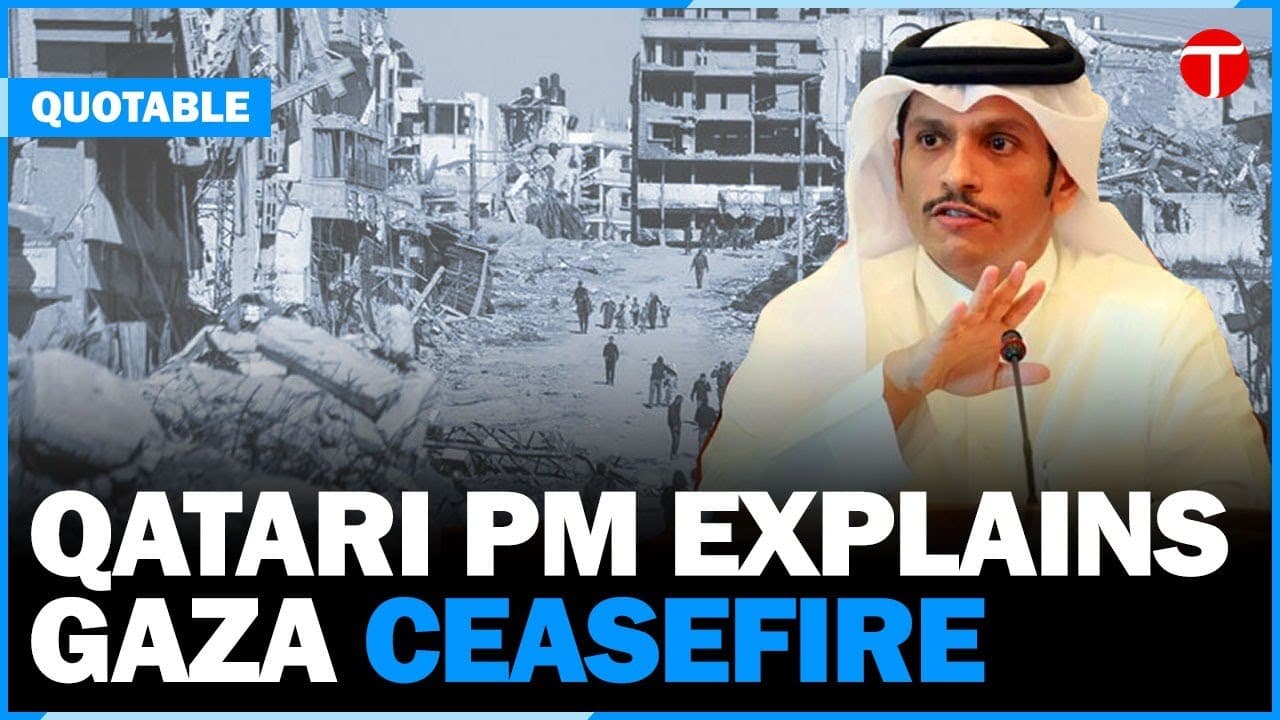
Sheikh Mohammed bin Abdulrahman al Thani told delegates at the Doha Forum on December 6, 2025 that talks to lock in a United States backed pause in Gaza have reached a precarious stage. He cautioned that what exists now is a pause rather than a durable ceasefire, and that movement to a second phase depends on resolving deep differences about the structure and mandate of an international security presence and other core implementation details.
The second phase under discussion aims to address four interlinked objectives. Negotiators have identified an international security force, a technocratic Palestinian administration for Gaza, the disarmament of Hamas, and a phased Israeli withdrawal from population centers as essential components. Progress toward these goals is being shaped by disagreement over how any security force would operate, who would contribute troops or police, and what legal and operational authorities it would possess.
Reuters reported that Israeli and Palestinian delegations, together with mediators, are still negotiating sensitive elements including the return of remains and the release of the remaining hostages. Sporadic violence on the ground and recurrent disputes over humanitarian access continue to threaten the fragile pause and complicate the political momentum generated by recent talks.
The debate over an international security force highlights broader tensions between sovereignty and protection. States and international organizations must weigh whether the force should be placed under United Nations auspices or operate as an ad hoc multinational mission, and which countries would be acceptable contributors to both sides. Questions of rules of engagement, accountability, and legal jurisdiction are central, because any security presence will need to operate under international law while being perceived as legitimate by Palestinians and acceptable to Israeli security concerns.
Proposals for a technocratic administration aim to ensure essential services and humanitarian relief while governance arrangements are negotiated. Yet such interim governance raises difficult issues for Palestinian political rights and representation, and will require explicit safeguards to avoid perceptions of external control that could inflame local resistance.
Disarmament of armed groups will be among the most technically and politically challenging elements. Verification, sequencing, reintegration of fighters, and enforcement mechanisms must be designed to prevent a security vacuum. All measures must comply with international humanitarian law and the obligations of occupying powers to protect civilians and maintain access for aid agencies.
Qatar’s role as mediator places it at the center of an intense diplomatic effort that includes the United States and other regional actors. The coming days will test whether mediators can convert a stoppage in violence into a sequenced agreement that balances Israeli security needs with Palestinian governance rights and humanitarian imperatives. Failure could reignite wider instability, while success would require difficult trade offs and rigorous international guarantees to protect civilians and sustain a political process.