San Francisco Immigration Court to Close at Montgomery Street
The main federal immigration court at 100 Montgomery St. will close after the federal lease ends next year, and staff are expected to relocate as soon as summer 2026 to the federal courthouse in Concord. The move follows a prolonged staffing crisis and could increase travel, delay hearings, and strain local legal and translation services for immigrants and their advocates.
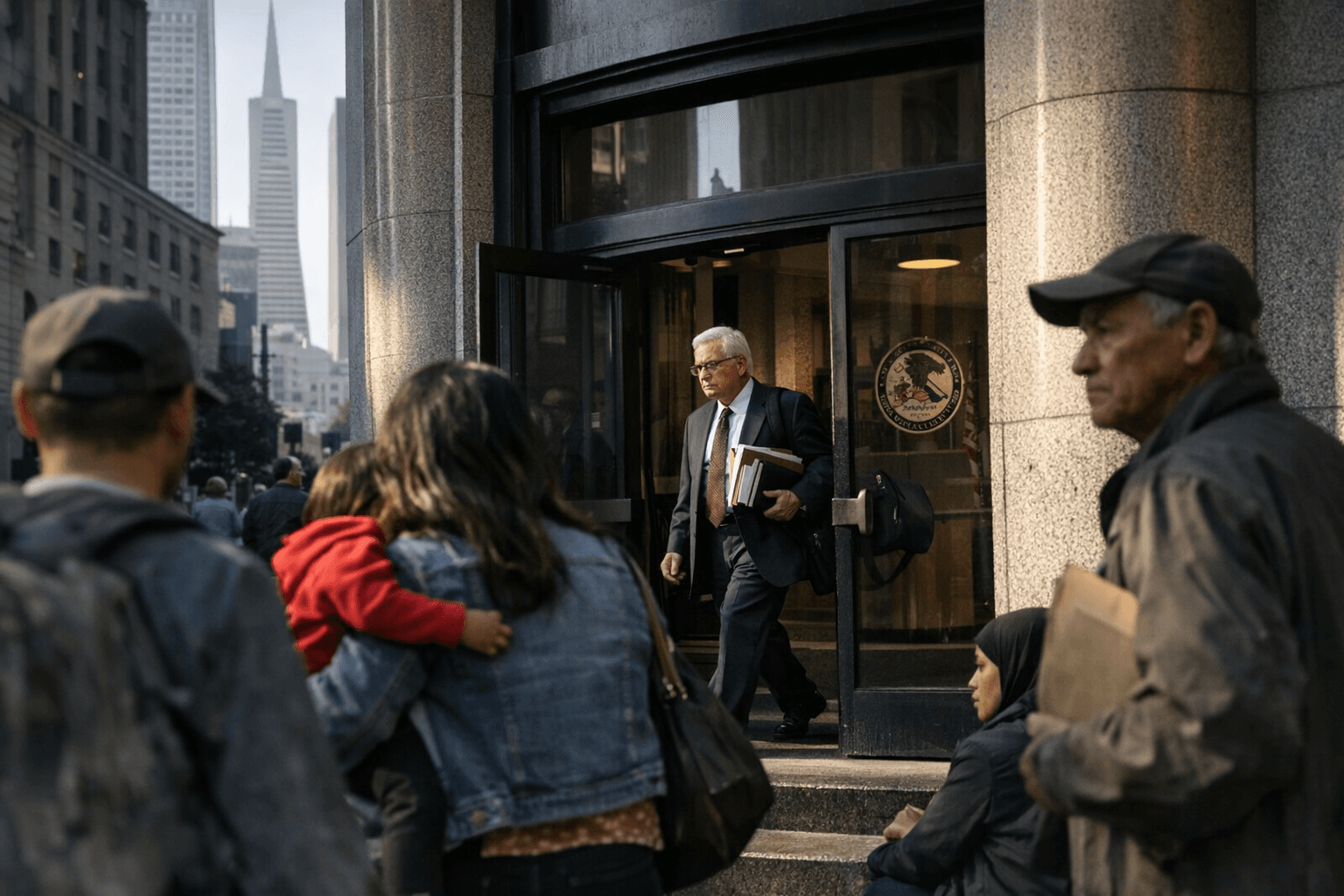
The Executive Office for Immigration Review will not renew the lease for the San Francisco immigration court at 100 Montgomery St., and the office will close after the federal lease expires next year. A phased relocation of court staff is likely to begin as soon as summer 2026, with many operations expected to shift to the federal courthouse in Concord. The government-owned immigration court at 630 Sansome St. is expected to remain open.
The decision comes amid a severe staffing shortfall that has left the San Francisco immigration docket stretched thin. During the previous administration, 12 immigration judges in San Francisco were removed from their posts. Since then three judges have retired and another is scheduled to retire soon, leaving only a handful of judges to handle one of the busiest immigration dockets in the nation and a large pending backlog of cases.
For residents of San Francisco County, the closure of 100 Montgomery St. represents more than a change of office space. Many immigrants, attorneys, witnesses and community organizations routinely travel within the Bay Area to attend hearings. Moving a significant portion of the court's workload to Concord will likely lengthen travel times and complicate scheduling for clients and legal service providers, particularly for low-income immigrants who rely on public transit or who work multiple jobs.
Local legal aid groups, pro bono attorneys and translation services face operational disruption as caseloads and logistical demands shift. Organizations that coordinate transportation, interpretation and client preparation may need to adjust staffing, outreach and funding strategies to support clients coming from San Francisco neighborhoods. Longer commutes for witnesses and family members could also affect attendance rates at hearings and the timely progression of cases.
City and court officials have not provided full public explanations for the decision or for the timeline of the planned moves. The lack of detailed public guidance leaves affected individuals and service providers seeking clarity about where hearings will be scheduled, how evidence and records will be transferred, and what accommodations will be made for those with limited mobility or limited financial resources.
The relocation is scheduled to unfold over the coming months, with the lease expiry next year setting the formal deadline for closing Montgomery Street operations. Community organizations and legal providers in San Francisco are already evaluating how to adapt to the shift in court geography and the ongoing shortage of judges that has contributed to lengthy delays in immigration proceedings.
Sources:
Know something we missed? Have a correction or additional information?
Submit a Tip