Senate Committee Advances Jared Isaacman Nomination to Lead NASA, Vote 18 to 10
The Senate Commerce Committee voted 18 to 10 on Monday to advance billionaire private astronaut Jared Isaacman’s nomination to head NASA, clearing the way for consideration by the full Senate. The outcome places questions about the agency’s workforce, commercial partnerships, and the race to the Moon at the center of the confirmation debate.
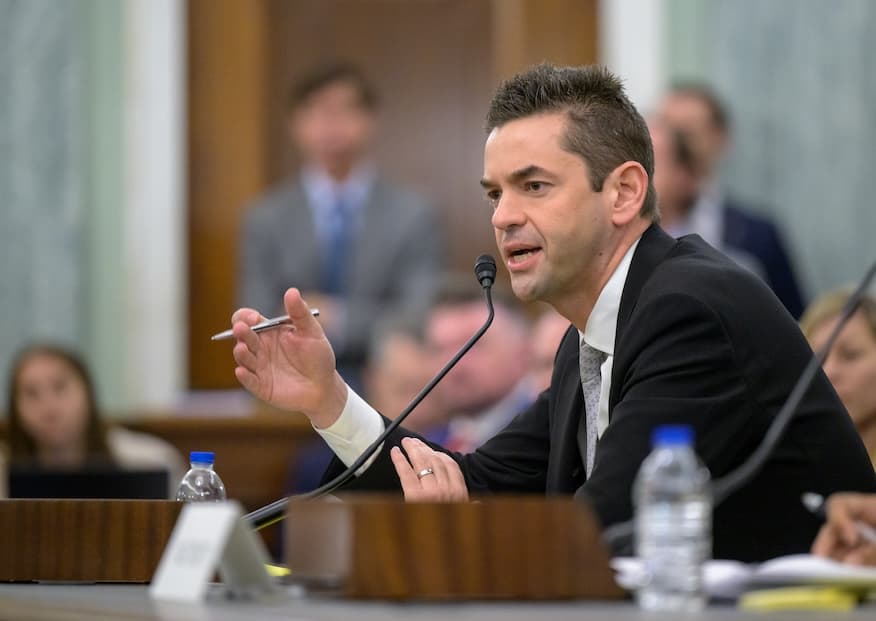
The Senate Commerce Committee voted late Monday to advance President Donald Trump’s nominee to lead NASA, Jared Isaacman, sending the nomination to the full Senate after an 18 to 10 vote. The committee action marks a key procedural step for a nominee whose private sector background and experience flying on commercial orbital missions have reshaped discussions about the agency’s direction and its role in competition with China.
Isaacman, an e commerce entrepreneur and billionaire who has participated in private orbital flights, centered his recent testimony on the strategic priority of returning Americans to the Moon before China. He also sought to diminish concerns about preferential treatment of any single commercial partner by stressing his independence from SpaceX CEO Elon Musk. Both Republican committee chair Sen. Ted Cruz and the panel’s top Democrat Sen. Maria Cantwell publicly expressed support during the hearings, a bipartisan signal that could affect floor dynamics as senators weigh the nomination.
During scrutiny over workforce issues, Isaacman noted that more than 4,000 employees left NASA following a buyout program under a prior administration. He told the committee that a large scale reorganization might not be necessary now given the time that has passed and other changes at the agency. That assessment raises immediate policy and management questions for senators focused on program continuity, institutional capacity, and the agency’s ability to sustain long term human spaceflight projects while integrating commercial partners.
Committee consideration highlighted recurring tensions within national space policy. Lawmakers and experts have debated how far NASA should rely on private companies to supply crewed launches, lunar landers, and logistical services while preserving the agency’s technical competencies and oversight responsibilities. Isaacman’s nomination crystallizes those policy choices by placing a leader with deep commercial ties at the helm of an agency charged with national security adjacent missions and ambitious exploration goals.

Advocates of expanded commercial partnerships argue that private capital and operational experience can accelerate timelines and reduce costs. Skeptics counter that private interests could complicate procurement integrity and workforce morale if safeguards are not robust. Isaacman’s emphasis on independence from a leading commercial provider is likely intended to allay concerns about conflicts of interest, but senators on both sides of the aisle are expected to probe procurement practices, ethics arrangements, and transition plans as the nomination moves to the Senate floor.
The vote also has electoral and civic implications. Voters who view space policy as a national prestige issue will watch how senators balance competitiveness with institutional stewardship. The Senate’s final decision will shape NASA’s leadership at a moment when geopolitical competition and technological change are converging on the agency’s mandate.
With committee approval complete, the nomination is set for consideration by the full Senate. The outcome there will determine whether Isaacman assumes responsibility for guiding NASA’s management, workforce strategy, and partnership framework during a consequential era for American space policy.